Last updated October 31, 2026
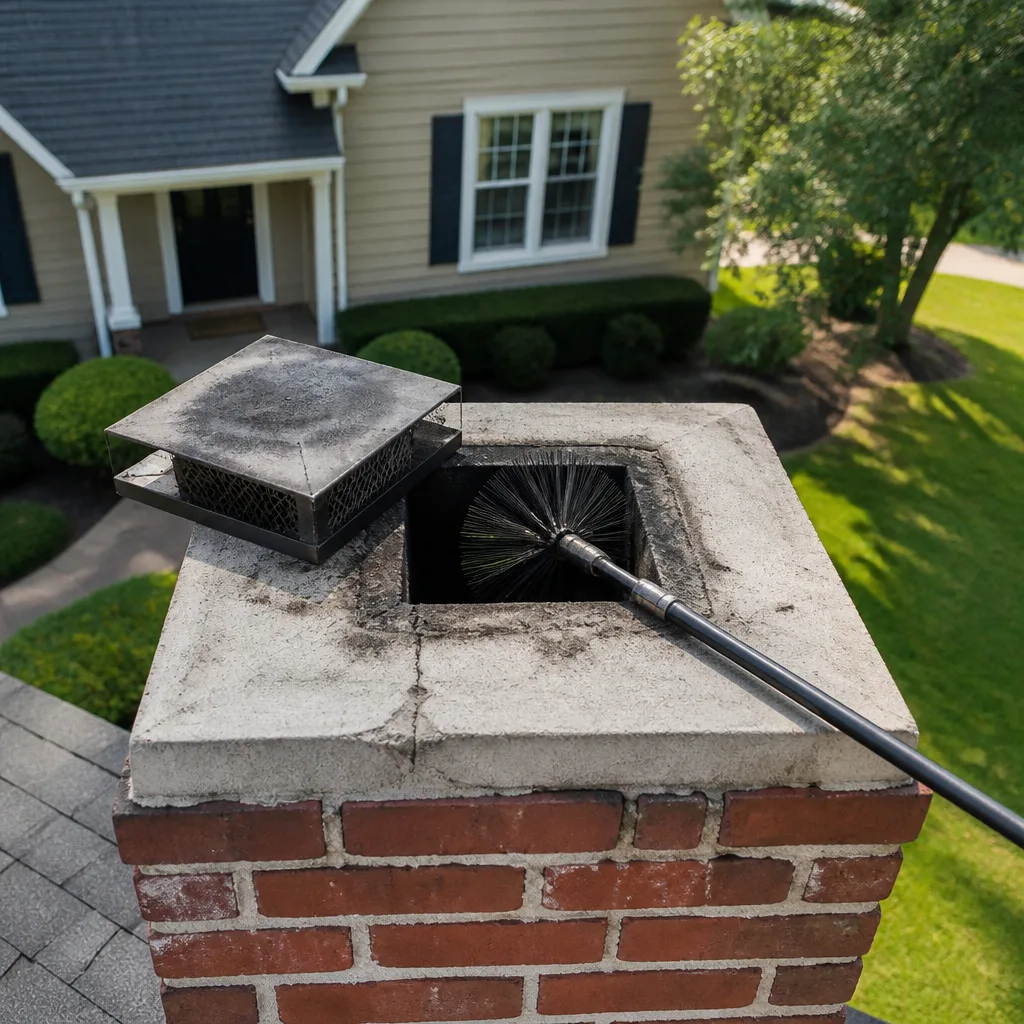 Sweep & inspection
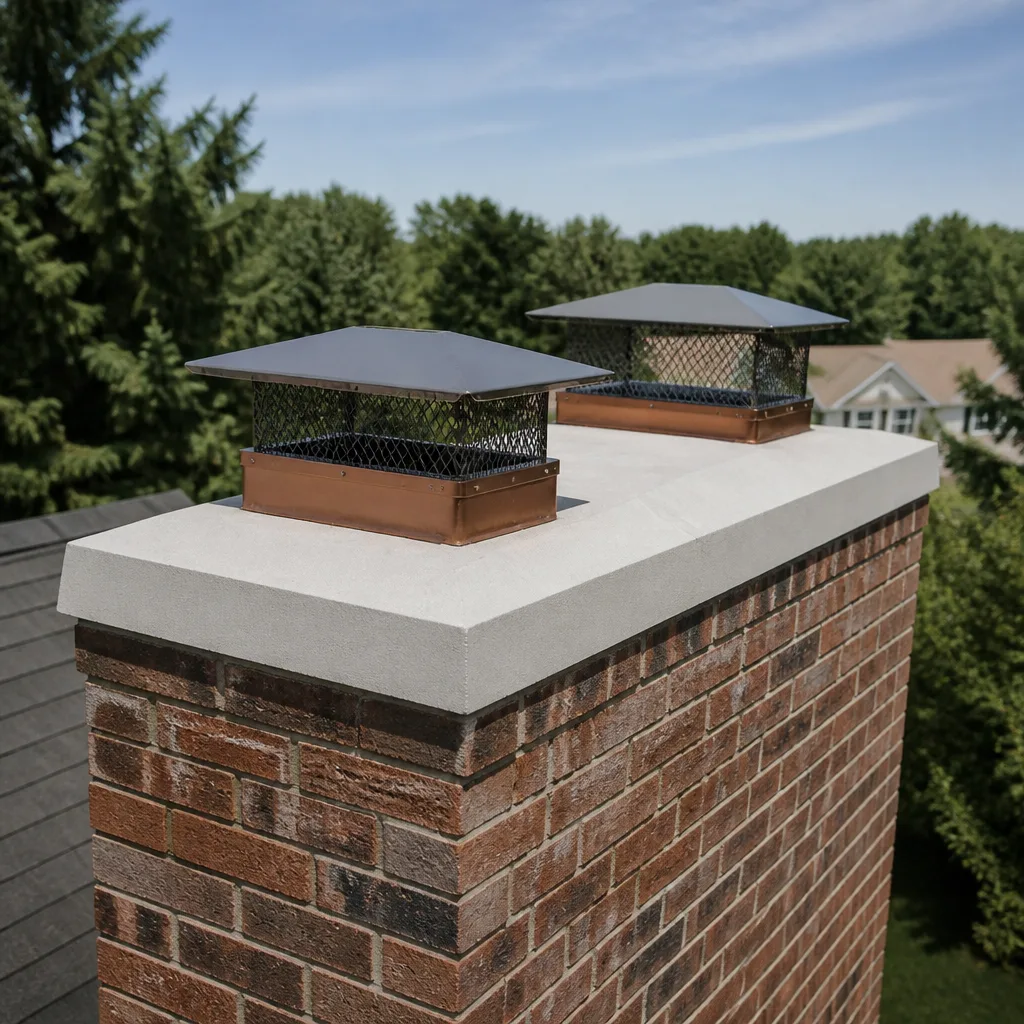 Caps & crowns
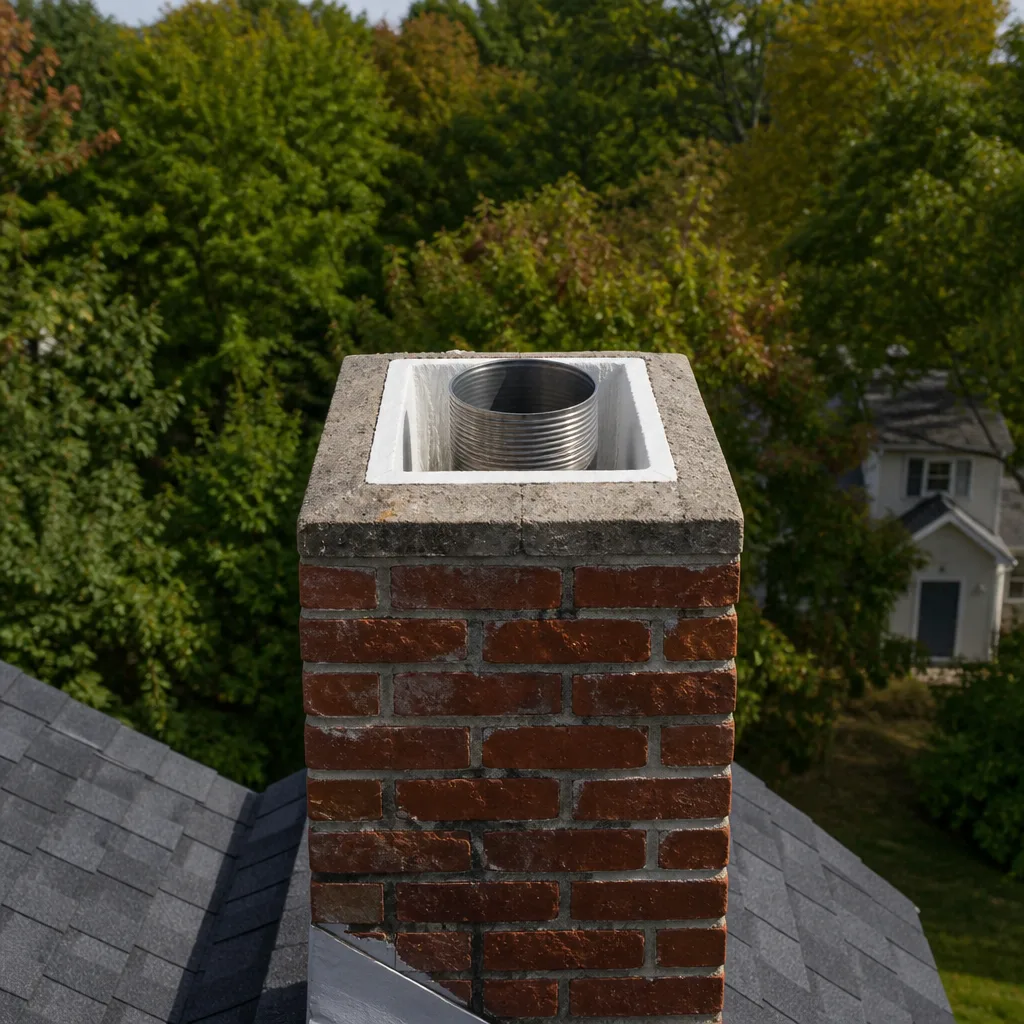 Flue relining
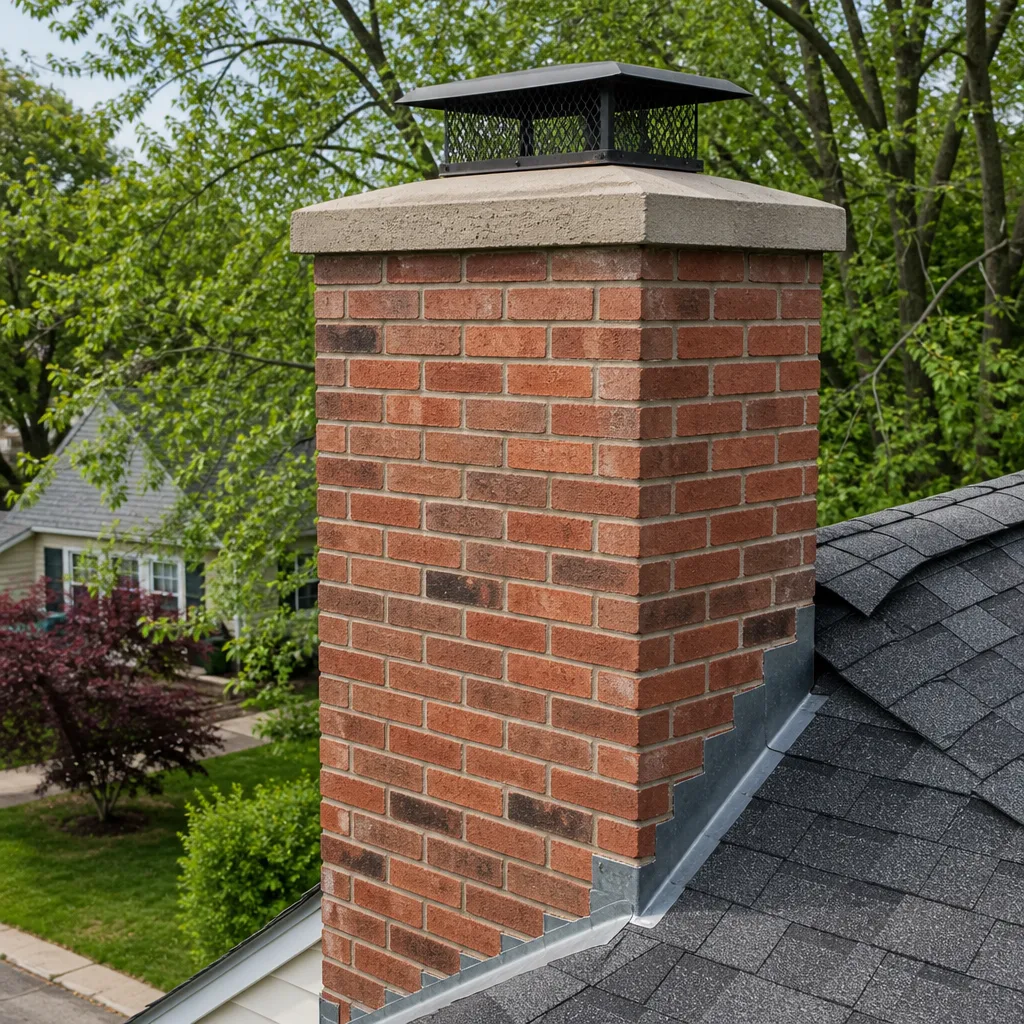 Masonry repair
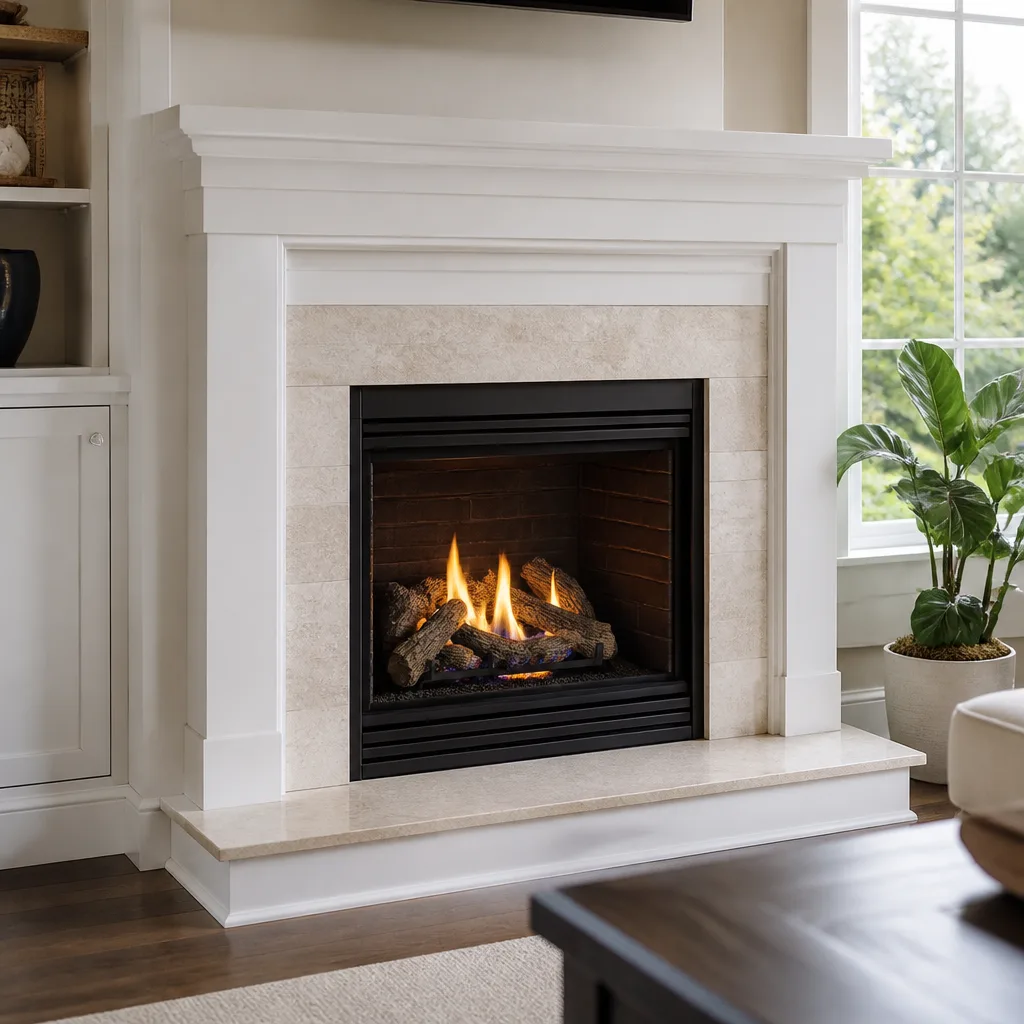 Gas fireplace service
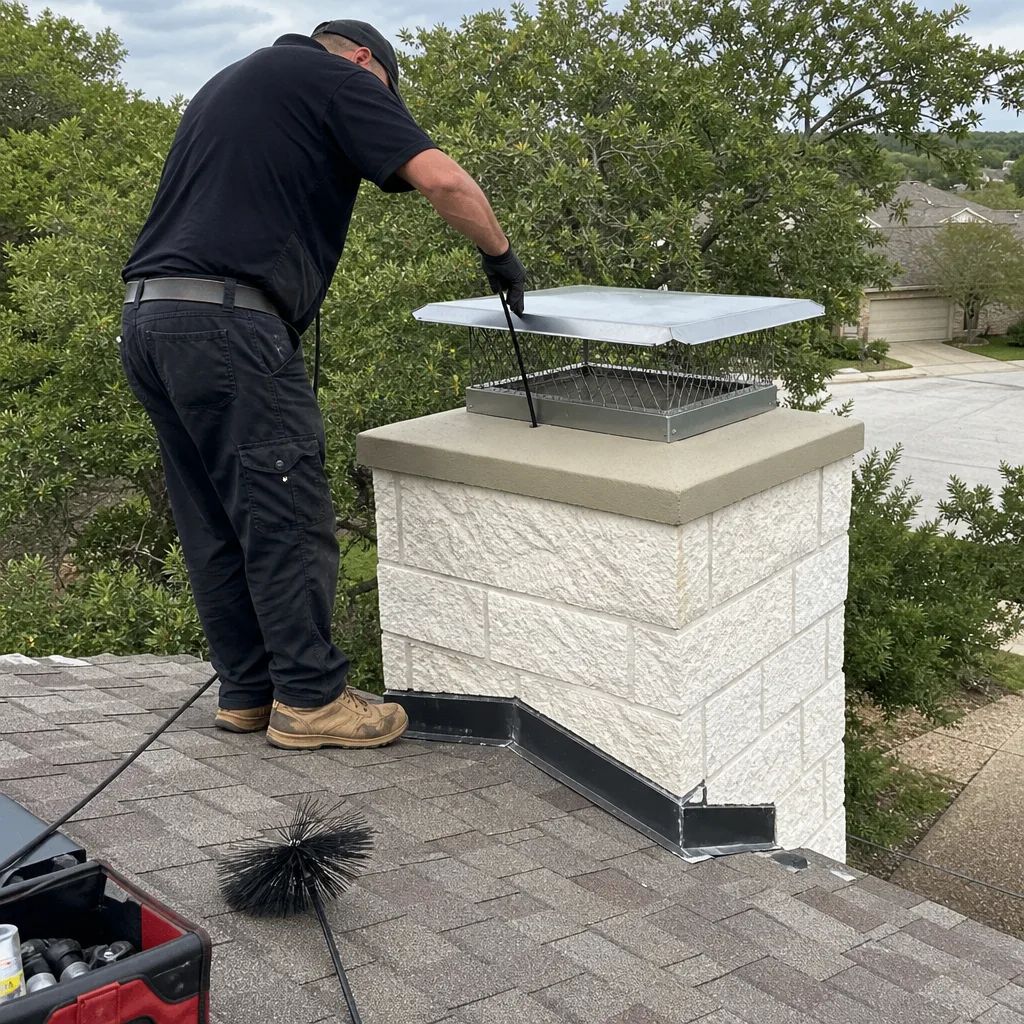
Level 1 sweep and inspection to the NFPA 211 annual standard - flue, crown, cap, and flashing checked and photographed
Chimney sweep logs do not sweep chimneys. They loosen some creosote - which then falls where a brush and vacuum still have to collect it.
Choosing the Right Chimney Cleaning Brand: A Buyer’s Guide for Cedar Park
Here’s a counterintuitive fact about the chimney trade: the single most reliable predictor of a contractor’s work quality is not their Google rating. It’s their supply chain. A company that stocks Gelco, HeatShield, or Copperfield products has made a financial and educational commitment to the trade that a contractor buying generic rods and brushes from a big-box hardware store simply hasn’t. In Cedar Park, where summer heat bakes chimney crowns and winter cold snaps drive fireplace use, that distinction determines whether you get a cleaning or a genuine safety inspection. This guide explains how to evaluate a chimney cleaning company by looking past the marketing and into the materials, methods, and reporting they bring to your home, and you can find The Complete Guide to Chimney Cleaning in Cedar Park for deeper detail on the process.
Styles & brands we work with
Quick Answer
The right chimney cleaning brand for your Cedar Park home is one that uses professional-grade materials from recognized industry suppliers like HeatShield, Gelco, or Olympia Chimney, performs camera inspections with documented reports, and offers repair capability rather than cleaning alone. A company that names its products and stands behind its inspection findings is a fundamentally different business than one that offers a low price and a verbal summary, as explained in DIY vs Professional Chimney Cleaning: The Cedar Park Homeowner’s Decision Guide. Ask about containment equipment, camera reporting, and material brands before you book.
Table of Contents
- What a Supply Chain Tells You About a Chimney Company
- Professional-Grade vs. Consumer-Grade Materials
- Scope of Services as a Quality Signal
- What CSIA Certification Actually Requires
- Using the Inspection Report as a Benchmark
- Containment Equipment and Cleanup Protocol
- Cedar Park Specific Considerations
- Common Mistakes to Avoid
- When to Call a Professional
- Frequently Asked Questions
- The Bottom Line
What a Supply Chain Tells You About a Chimney Company
Every chimney company buys its tools and materials from somewhere. Where they buy – and what they buy – reveals more about their standards than any mission statement on their website. A contractor who sources from professional chimney supply distributors is purchasing equipment built for daily commercial use: stiffer rods, commercial-grade brushes, HEPA-rated vacuums, and repair materials tested to specific UL and NFPA standards. A contractor who grabs a chimney brush kit from a home center shelf is buying equipment designed for occasional homeowner use, not repeated professional service.
This distinction plays out in Cedar Park homes every day. A professional-grade rotary brush system, for instance, can remove glazed creosote from a flue that a basic wire brush simply polishes over. The same logic applies to repair materials. HeatShield joint repair compound, Gelco water repellents, and Copperfield chimney caps are products specified by chimney professionals because they are engineered for the thermal cycling, moisture exposure, and acidic flue gases that a chimney actually endures. They are not interchangeable with general-purpose sealants or sheet metal caps from a hardware aisle.
When a chimney sweep in Cedar Park names the products they install – DuraFlex for liners, HeatShield for flue restoration, Gelco for waterproofing – you know exactly what is going into your home. That transparency is itself a quality signal. It means the company has made a deliberate choice to use materials that cost more and perform better, and they are willing to explain why.
Professional-Grade vs. Consumer-Grade Materials
Let’s be specific about the difference, because the phrase “professional grade” gets thrown around loosely. In the chimney industry, there are a handful of manufacturers whose products are specified by building codes, referenced in technical standards, and carried by supply houses that serve only the chimney trade. DuraFlex stainless steel liner systems are one example: they are UL-listed for specific fuel types, come in specific alloy grades for wood versus gas versus oil applications, and are installed with proprietary connectors rather than generic hardware. A consumer-grade alternative might be unlisted flexible aluminum duct sold for dryer vents – a product that would fail dangerously if used in a chimney flue.
Olympia Chimney and Famco are two more names that matter in this context. Olympia manufactures chimney caps, dampers, and related components designed to fit specific flue dimensions and withstand decades of weather exposure. Famco produces venting and termination products for gas appliances. When a chimney company stocks these brands, it signals that they are doing repair and installation work, not just cleaning, and that they understand the engineering behind the components they install.
We name the products we install – Gelco, HeatShield, Olympia, Famco – so Cedar Park homeowners can verify exactly what is going into their chimney system. You should be suspicious of any contractor who cannot or will not tell you what brands they use. Vague answers like “we use top-quality materials” or “only the best products” usually mean whatever is cheapest at the local hardware store that week.
Scope of Services as a Quality Signal
Here is a structural truth about the chimney trade: a company that only sweeps chimneys is a fundamentally different business than one that also repairs, relines, and waterproofs. The sweep-only company has a single revenue stream – cleaning fees – and a structural incentive to keep visits short and schedule rotation fast. The full-service company has multiple revenue streams and a different incentive: to inspect thoroughly enough to identify repair opportunities, which requires better diagnostic equipment and more skilled technicians.
This matters for you as a Cedar Park homeowner because cleaning and repair are not separable activities. A proper chimney sweep is also an inspection, and a proper inspection frequently finds issues that need repair. Cracked flue tiles, deteriorated mortar joints, damaged crowns, missing caps – these are common findings in Cedar Park chimneys, especially after the freeze-thaw cycles of a Central Texas winter. If your chimney company cannot fix what they find, you are now managing a hand-off to a second contractor, with all the scheduling friction and accountability gaps that implies.
At Ashton Chimney, one company handles the sweep, the repair, and the sign-off. Our chimney repair in Cedar Park capability includes liner relining with DuraFlex systems, HeatShield flue restoration, and component replacement with Olympia and Famco products. We also offer dryer vent cleaning in Cedar Park, which addresses a household fire risk that most chimney-only companies simply ignore. Your dryer vent is a venting system too – and just as likely to cause a fire if neglected. A company that understands both venting and chimney systems can evaluate your home’s exhaust pathways as a whole, not just the masonry stack.
What CSIA Certification Actually Requires
The Chimney Safety Institute of America (CSIA) is the most recognized certifying body in the chimney industry. When a company advertises “CSIA-certified company” membership, what does that actually mean? The honest answer is nuanced, and that nuance matters for your evaluation.
CSIA offers two distinct credentials. Individual technicians can earn the Certified Chimney Sweep (CCS) designation by passing a comprehensive exam on chimney codes, fire science, inspection methodology, and safety practices. This is a rigorous individual certification that requires ongoing continuing education. A company, however, can also become a “CSIA-certified company” – a membership designation that requires the company to employ at least one CCS-certified technician and to adhere to certain business standards. The distinction matters because “certified technicians” on a website without specific names, certification numbers, or verification is a claim that is easy to make and hard to verify.
Here is what we recommend for Cedar Park homeowners: ask the company to name their certified technicians, provide certification numbers, and explain what continuing education their team has completed in the last two years. A company that hesitates or gives vague answers is telegraphing something. A company that can answer immediately and specifically is demonstrating that certification is an ongoing operational commitment, not a website badge. Pair that certification question with the materials question from earlier – certifications tell you someone passed a test; materials tell you what they actually install in your home.
Using the Inspection Report as a Quality Benchmark
Here is one of the most reliable quality benchmarks in the chimney industry, and one that almost no Cedar Park homeowner knows to ask about: the format and depth of the inspection report. A verbal summary – “everything looks good” or “you have some creosote buildup” – is not an inspection report. It is a conversation. A professional deliverable includes documented evidence: camera images with annotations, measurements, condition assessments, and specific recommendations with enough detail that another contractor could read the report and understand the findings.
Camera inspection technology is the dividing line here. A professional chimney company runs a video camera through the flue during every inspection, not just when problems are suspected. The camera captures the full length of the flue, including areas that are physically inaccessible to the naked eye – the smoke chamber, the flue liner interior, the area around the damper. The best companies extract still images from that video, annotate them with findings (cracked tile at 12 feet, creosote accumulation of X thickness, deteriorated mortar joint at the smoke shelf), and include those images in a written report you keep for your records.
We’ll tell you what we found, what it means, and what your options are – in plain language, with the images to prove it. If a chimney company cannot provide a camera inspection report with documented findings, ask why. In 2026, there is no equipment cost barrier to this standard – a professional camera inspection system costs less than a reliable work van. The absence of documented reporting is a choice about service quality, not a technological limitation.
Containment Equipment and Cleanup Protocol
Chimney sweeping is, by definition, a dirty job. The question that separates thorough companies from fast-in-fast-out operations is how seriously they take containment and cleanup. A professional chimney sweep is also a cleaning specialist for the inside of your home, and the equipment they bring should demonstrate that.
Here is what to look for, and what to ask about specifically:
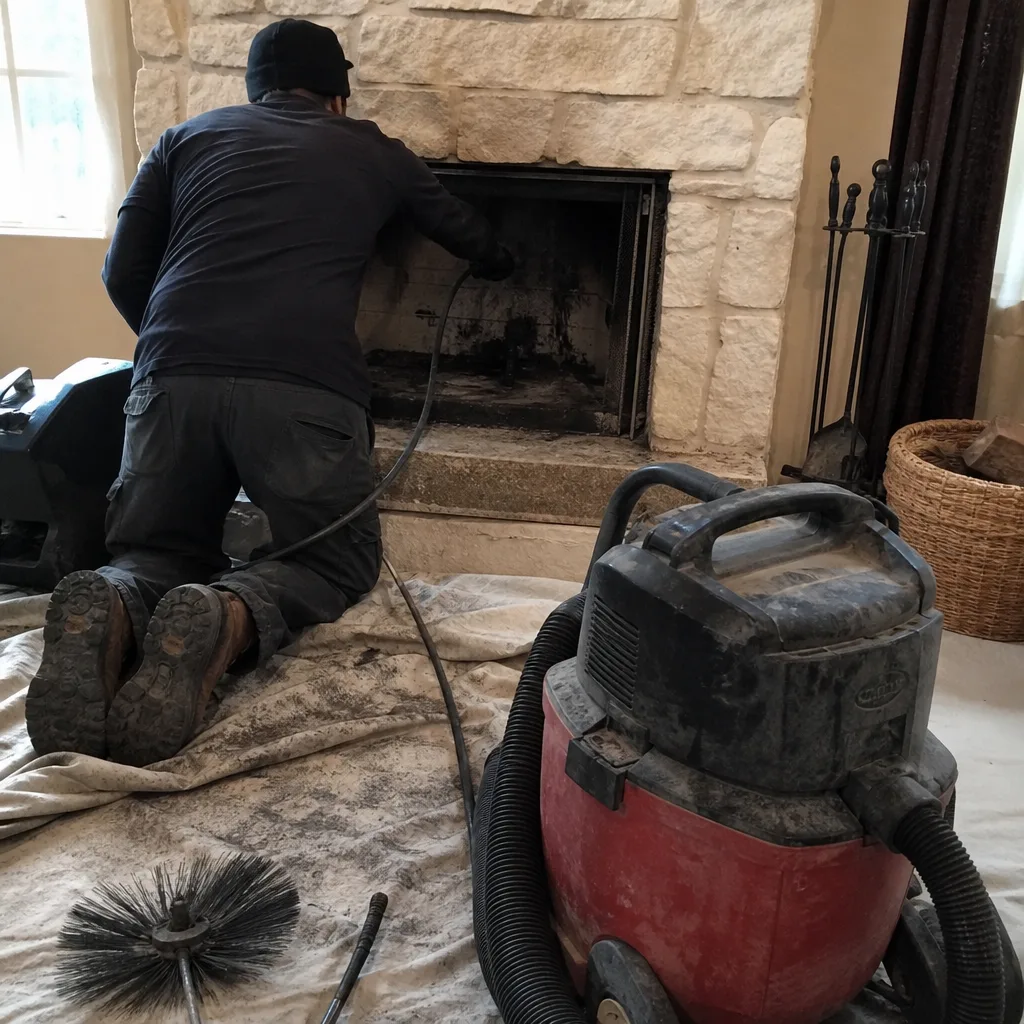
- HEPA vacuum systems. A professional chimney company uses a high-powered vacuum with HEPA filtration to capture the dust and soot removed from the flue. A standard shop vacuum filters to perhaps 5 microns. A HEPA system filters to 0.3 microns – a 94% difference in particle capture. The vacuum should run continuously during the sweep, not just at the end.
- Poly drop cloths and firebox sealing. The firebox opening should be sealed with plastic sheeting or a specialized firebox cover during the sweep to contain particulate inside the work area. Drop cloths should extend several feet from the hearth to protect flooring and furniture.
- Negative air pressure or positive seal techniques. Different companies use different containment methods, but the goal is the same: soot and creosote dust should never enter your living space. Ask how the company prevents dust migration during the sweep.
- Post-sweep inspection of the work area. Before you sign off on the service, walk the area around the fireplace. There should be no visible soot, no dusty film on nearby furniture, and no debris left behind. A company that leaves your home cleaner than they found it is a company that respects the work.
Cedar Park Specific Considerations
Cedar Park’s climate creates specific chimney challenges that homeowners in other parts of Texas rarely face. We are close enough to the Hill Country to get genuine freezes in winter – the same freeze-thaw cycles that crack limestone and expand concrete also stress chimney crowns, mortar joints, and flue tiles. A chimney that survives a mild Houston winter without issue may crack and spall after a Cedar Park freeze. That’s why waterproofing with a product like Gelco is a practical recommendation here, not an upsell.
Summer in Cedar Park brings its own issues. Temperatures routinely exceed 100 degrees in July and August, which bakes unprotected chimney crowns and accelerates the deterioration of any existing cracks. The thermal cycling between our hot days and relatively cool nights causes masonry to expand and contract continuously. Over years, that movement widens hairline cracks and creates pathways for water intrusion.
There is also a local housing stock factor. Cedar Park grew rapidly through the 2000s and 2010s, which means many chimneys in the area are between 10 and 25 years old. That is exactly the age range where original components start to fail: the factory-built chimney pipes in newer construction, the masonry crowns on custom homes, the damper assemblies in both. If your Cedar Park home was built during this period and the chimney has never been professionally inspected, there is a reasonable chance it has issues that a cleaning alone won’t address.
Common Mistakes to Avoid
- Choosing based on price alone. A $99 chimney cleaning in Cedar Park is either a loss leader designed to upsell you, or it is a company cutting corners on equipment, training, or time. A proper sweep with camera inspection, containment, and documentation takes time and costs more than $99.
- Assuming Google reviews equal work quality. Reviews measure customer satisfaction with the interaction – punctuality, friendliness, price – not the technical quality of the sweep. A company can be charming and punctual while doing mediocre flue work. Look for reviews that mention camera inspection, documented reports, or specific findings.
- Skipping the camera inspection. If a chimney company quotes you a price without a camera inspection, you are paying for a visual assessment of the first three feet of your flue. The other 15 to 25 feet – where most problems live – goes uninspected.
- Ignoring dryer vents. Many Cedar Park homeowners treat chimney cleaning and dryer vent cleaning as unrelated services. They are both venting systems that carry combustion byproducts or lint out of your home. Neglected dryer vents are a leading cause of house fires, and a company that does both can evaluate your venting as an integrated system.
- Accepting a verbal summary as an inspection. “Everything looks good” is not a deliverable. If there is no written report with findings documented, there is no record of what was inspected, what was found, or what was recommended. That’s a problem for insurance purposes and for future maintenance planning.
- Deferring repair recommendations indefinitely. A cracked flue tile or damaged crown doesn’t get better with time. Deferring repair work that was documented on an inspection report means the damage worsens and the repair cost increases. If a company documents an issue with your chimney, ask what happens if you wait – and ask for that answer in writing.
When to Call a Professional
Call a chimney professional if you notice any of these specific conditions: smoke backing up into the room when you use the fireplace, a strong odor coming from the fireplace when it is not in use, visible soot or staining around the firebox or on the ceiling near the chimney, crumbling mortar or brick on the exterior chimney, a chimney cap that is missing or damaged, or water stains on the ceiling or walls near the chimney. If your home has a gas fireplace or gas appliance venting through the chimney, schedule an inspection if the appliance has not been serviced in the last two years. If your dryer takes longer than 45 minutes to dry a standard load, that is a vent restriction warning sign that deserves prompt attention. Ashton Chimney offers free estimates in Cedar Park – call (855) 507-9184 to schedule an inspection or ask questions about your system.
Frequently Asked Questions
A professional chimney cleaning in Cedar Park typically costs between $180 and $350 for a standard fireplace and flue system, with the price varying based on flue height, creosote level, and whether a camera inspection is included. The lowest advertised prices – under $100 – almost always exclude camera inspection and proper containment. Call (855) 507-9184 for an exact quote specific to your home.
The National Fire Protection Association recommends annual chimney inspection and cleaning as needed, with the cleaning frequency depending on usage, a topic covered thoroughly in The Complete Chimney Sweep Guide for Cedar Park Homeowners. Homes that burn wood regularly during Cedar Park’s winter months – say, three or more fires per week from November through February – should be swept annually. Homes that use the fireplace occasionally may go two years between cleanings. Gas fireplaces should be inspected annually for ventilation issues even though they produce less creosote.
A sweep is the physical removal of creosote, soot, and debris from the flue. An inspection is the diagnostic evaluation of the chimney system’s condition – the liner, the crown, the damper, the smoke chamber, the flashing. In professional practice, every sweep includes at least a Level 1 inspection, and a camera inspection provides visual evidence of the flue interior that a naked-eye assessment cannot. A company that separates these services and charges extra for a basic inspection should be treated with skepticism.
It depends on the condition of the existing liner, which is why a camera inspection is the prerequisite for any liner recommendation. Minor cracking or joint deterioration can sometimes be addressed with HeatShield resurfacing, which restores the flue interior without full replacement. Significant cracking, spalling, or a liner that has separated from the chimney structure typically requires a full reline with a DuraFlex stainless system. A reputable company will show you the camera evidence and explain both options, including cost and expected lifespan. Call (855) 507-9184 to have your liner evaluated.
Skipping chimney cleaning allows creosote to accumulate inside the flue. Creosote is a flammable byproduct of wood combustion, and heavy accumulation is a chimney fire waiting to happen. Beyond fire risk, accumulated creosote restricts airflow, which pushes smoke and carbon monoxide into your living space. Moisture trapped in a dirty flue also accelerates masonry deterioration. In short: skipping a cleaning saves $200 now and risks a $5,000 liner replacement or a house fire later.
Ask three specific questions: ask for the names and CSIA certification numbers of the technicians who will perform the work, ask what brands of repair materials they use for liner work and waterproofing, and ask for a sample inspection report so you can see the format and depth of documentation. Companies that answer all three questions clearly and specifically are operating at a professional standard. Companies that hesitate, hedge, or give vague answers are not. Call (855) 507-9184 and ask us these questions directly – we’ll answer all of them.
The Bottom Line
Choosing a chimney cleaning company in Cedar Park comes down to evaluating what a contractor brings into your home: the materials they install, the equipment they use, the reports they generate, and the standards they hold themselves to. Professional-grade materials from manufacturers like HeatShield, Gelco, Olympia Chimney, and Famco are a reliable signal that the company has made a commitment to the trade. Camera inspection reports with documented findings separate thorough professionals from quick-turn operators. And a company that can repair what it finds – rather than handing you off to another contractor – gives you single-account accountability from inspection through sign-off. Ask the questions in this guide before you book. The answers will tell you everything you need to know.
Written by the team at Ashton Chimney, serving Cedar Park since 2014. Learn more about our approach at Ashton Chimney.
See the difference
 Before
 After
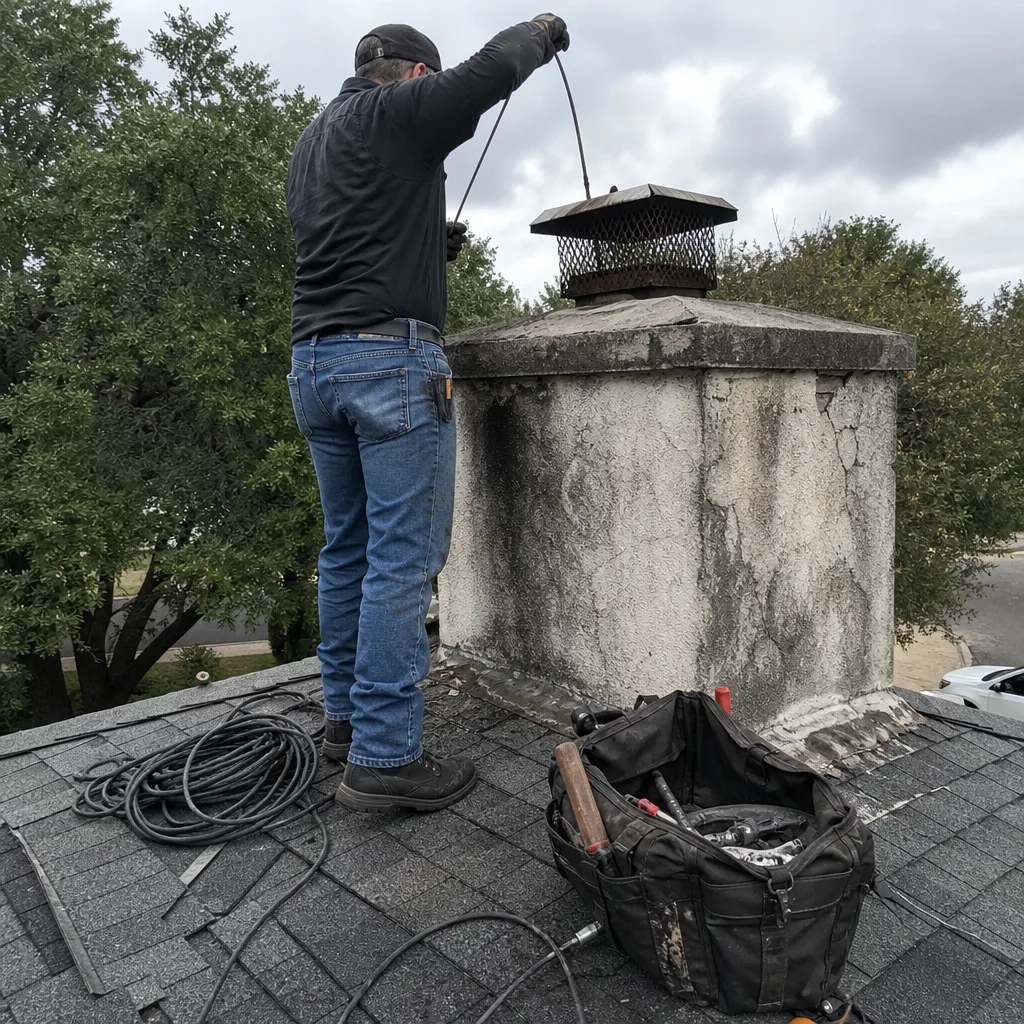 Before
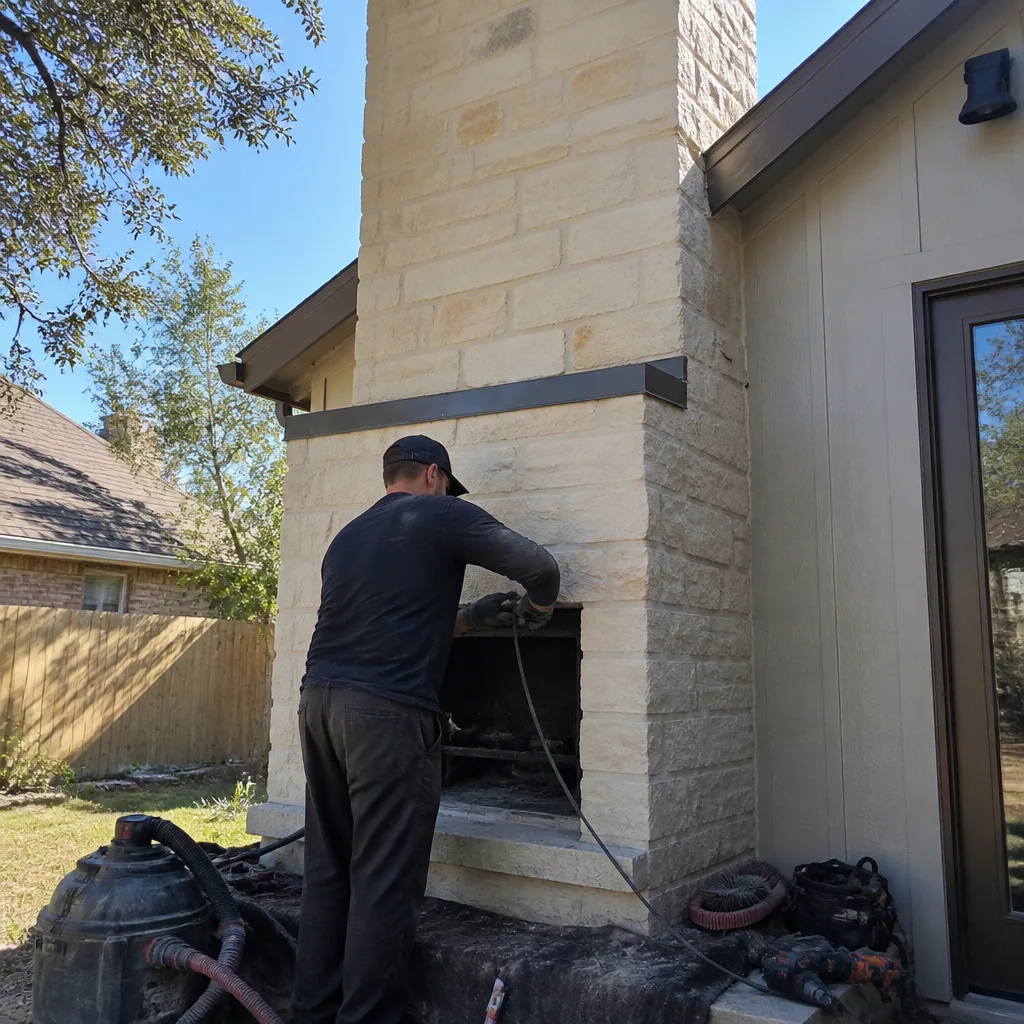 After
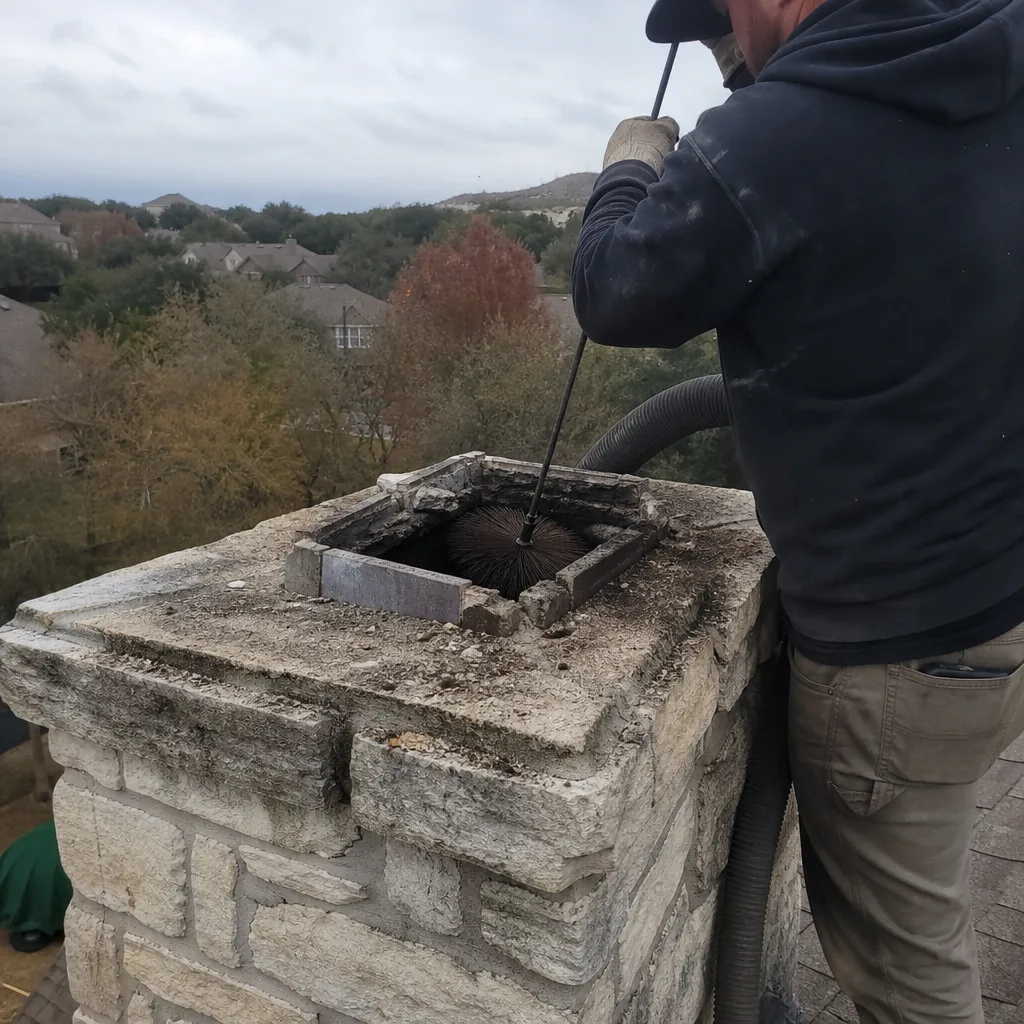 Before
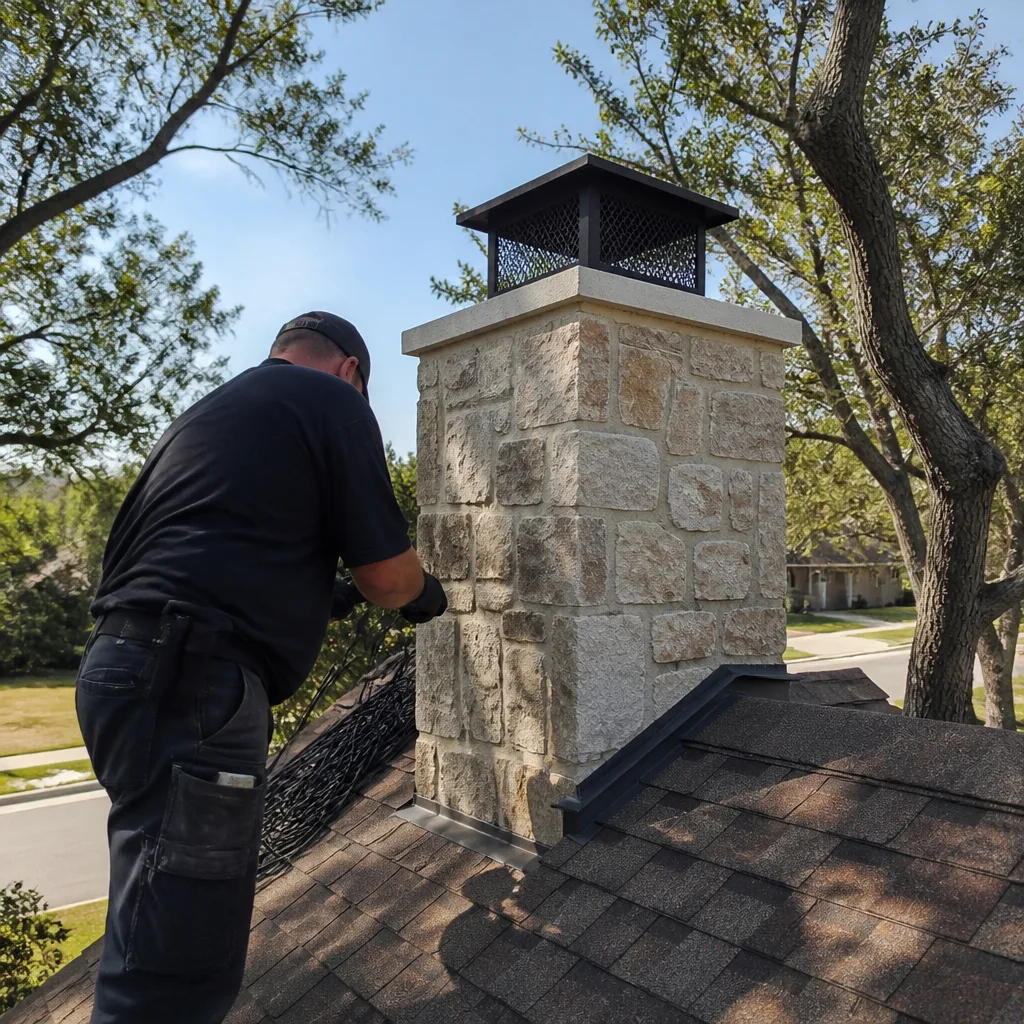 After