Last updated October 31, 2026
 Sweep & inspection
 Caps & crowns
 Flue relining
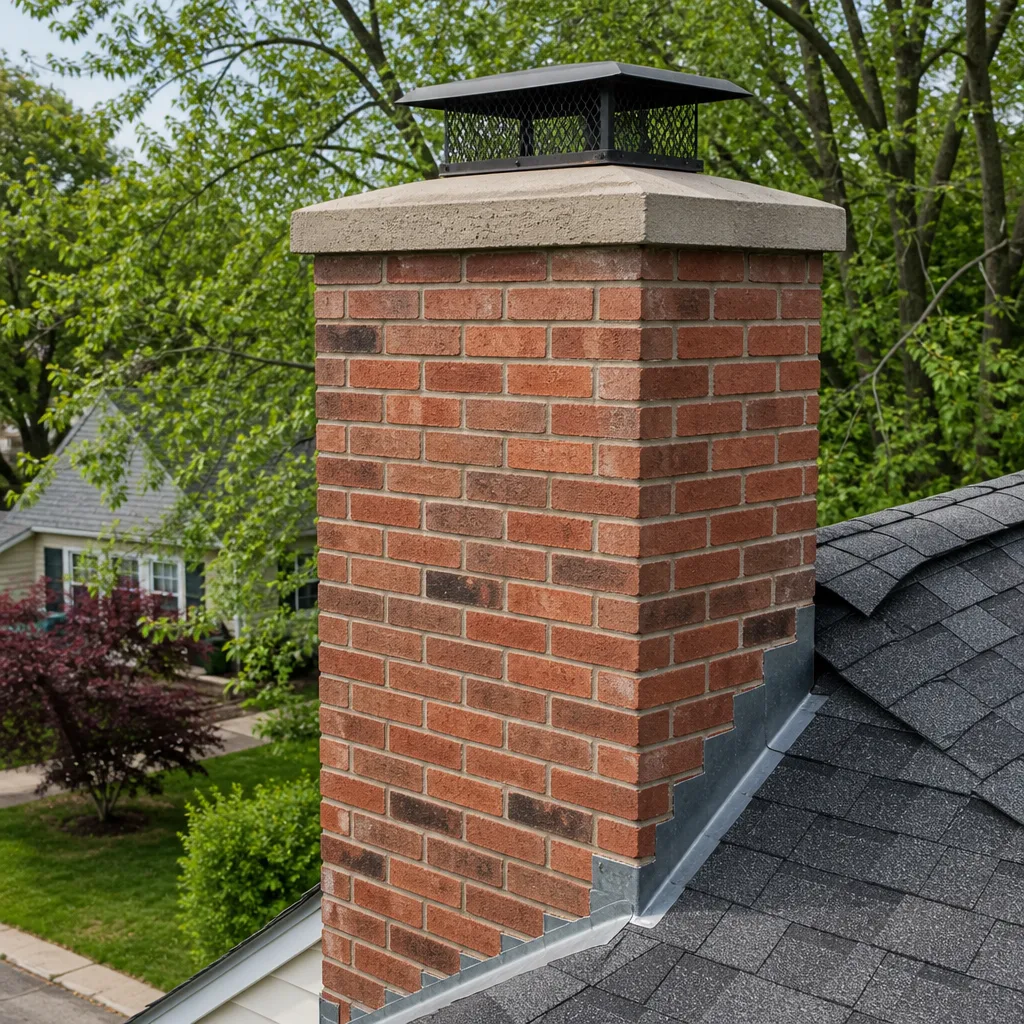 Masonry repair
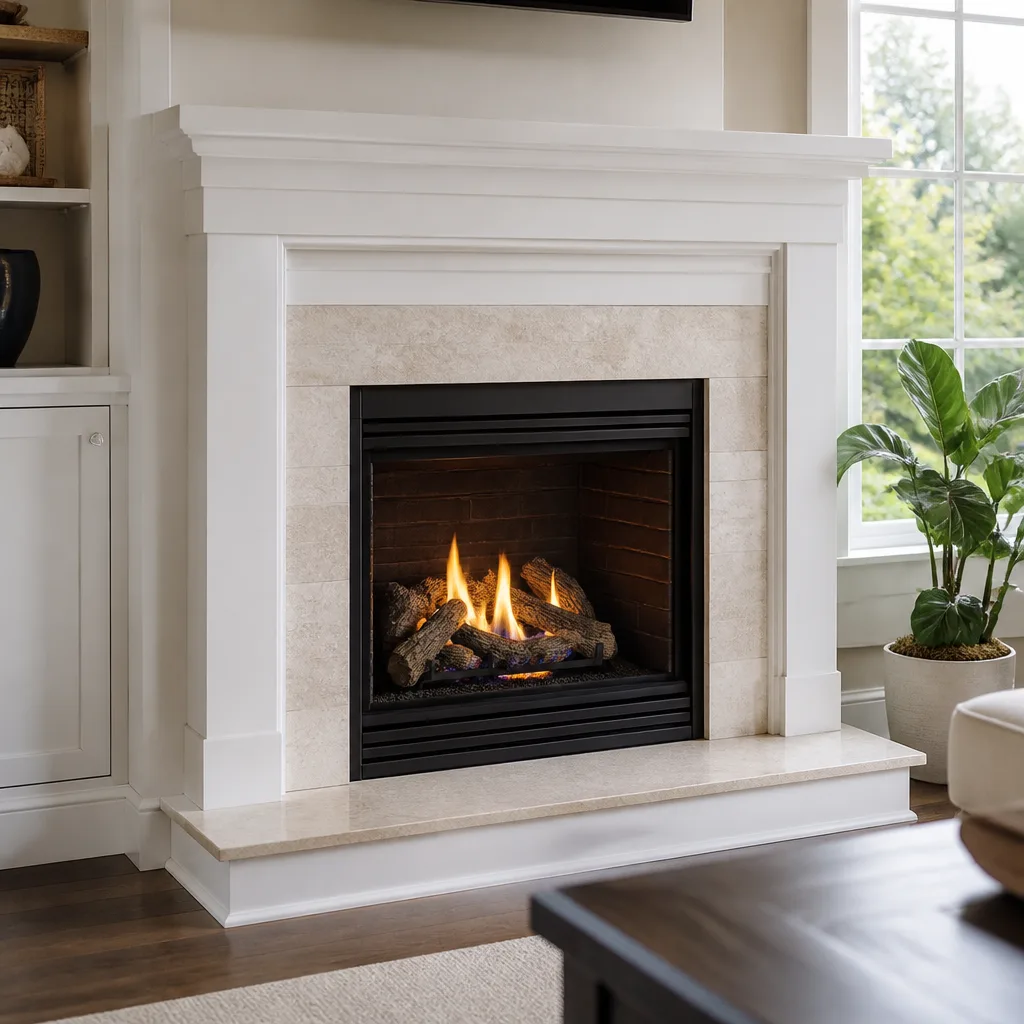 Gas fireplace service
Level 1 sweep and inspection to the NFPA 211 annual standard - flue, crown, cap, and flashing checked and photographed
Chimney sweep logs do not sweep chimneys. They loosen some creosote - which then falls where a brush and vacuum still have to collect it.
The Complete Chimney Sweep Guide for Cedar Park Homeowners
Most Cedar Park homeowners light their fireplace fewer than 20 times a year. That’s not a criticism, it’s the reality of a Texas Hill Country climate where “winter” means six to eight weeks of intermittent cold snaps rather than four months of continuous burning. But here’s what most national chimney guides get wrong: low usage doesn’t mean low maintenance. In fact, a fireplace that sits dormant for ten months out of the year in Cedar Park develops its own set of problems, from moisture intrusion to animal nesting, that a “burn it clean” approach won’t touch. This guide maps the full maintenance calendar, inspection checklist, and local firewood realities specific to how Cedar Park homeowners actually use their fireplaces. For The Complete Guide to Chimney Cleaning in Cedar Park, see our dedicated resource.
Quick Answer
Our Chimney Sweep services in Cedar Park TX should be treated as an annual inspection that includes cleaning, not just a soot-removal service. Even with light usage, the National Fire Protection Association (NFPA 211) recommends a Level 1 inspection every year, and Cedar Park’s specific combination of cedar and live oak firewood, short intense burn seasons, and active chimney swift and squirrel populations makes that recommendation more relevant than a generic national average would suggest.
Styles & brands we work with
Table of Contents
- Why an Annual Sweep Still Matters in Cedar Park’s Short Burn Season
- How Cedar and Live Oak Burn: The Local Firewood Profile
- The Critters in Your Chimney: Swifts, Squirrels, and Paper Wasps
- What a Full-Service Sweep Actually Includes
- How to Read a Sweep Report
- When a Level 2 Camera Inspection Is Warranted
- What Does a Chimney Sweep Cost in Cedar Park?
- Your Cedar Park Chimney Maintenance Calendar
Why an Annual Sweep Still Matters in Cedar Park’s Short Burn Season
The logic most homeowners apply goes like this: “I only use my fireplace a dozen times between December and February, so creosote can’t possibly build up.” The first half of that is true. Cedar Park’s burn season is compressed, and light usage does mean less creosote accumulation than you’d see in a Minnesota or Vermont chimney burning daily for five months. But creosote is only one of four things a sweep addresses, and it’s not even the most common problem we find in Cedar Park chimneys.
The NFPA 211 standard for Level 1 inspections says chimneys should be checked annually regardless of burn frequency. Why? Because the chimney is a structural and venting system exposed to Texas weather year-round, not just when you light a fire. A chimney that sits unused from March through November is still subject to:
- Moisture intrusion through cracked crown seals, damaged flashing, or a missing cap. Cedar Park’s spring storm season dumps inches of rain on exposed masonry and mortar joints.
- Animal nesting during the long dormant months. Squirrels and chimney swifts don’t check whether you plan to use the fireplace before moving in.
- Debris accumulation from live oak leaves, cedar needles, and the occasional hail storm that sends twigs into an uncapped flue.
- Mortar joint deterioration accelerated by Central Texas freeze-thaw cycles, even if those freezes are brief and intermittent.
When we perform a sweep in Cedar Park, we’re inspecting the entire venting path from firebox to cap, not just removing soot. The cleaning is the means, the inspection is the point. A chimney that’s been dormant since March may have a squirrel nest in the smoke shelf, a rusted damper plate, or a cracked flue tile that a quick visual check from the hearth would never reveal. The annual cadence matters because these issues compound. One year of moisture intrusion is a repointing job. Three years is a liner replacement.
How Cedar and Live Oak Burn: The Local Firewood Profile
Walk into any firewood seller in Cedar Park, Round Rock, or Leander, and you’ll find the same two species dominating the stacks: cedar (Ashe juniper, if we’re being precise) and live oak. Both are abundant, both are relatively cheap, and both burn differently than the hardwoods most national fireplace guides assume you’re using. Those differences affect what accumulates in your flue and how your sweep approaches the cleaning.
Cedar (Ashe Juniper) is a resinous softwood. It lights fast, burns hot and quick, and produces a pleasant crackle that makes it popular for casual winter evenings. The trade-off is resin. Cedar’s high sap and resin content generates more volatile organic compounds during combustion, which means more soft, flaky creosote deposits in the early stages. This type of creosote, called Stage 1, is relatively easy to remove with standard rotary brush cleaning. But if you burn cedar exclusively and frequently, Stage 1 can build faster than you expect, especially in a flue that’s running cooler than optimal because the fire is too small or the damper is partially closed.
Live Oak is a dense hardwood. Seasoned properly, it burns long and steady, produces excellent coals, and deposits less creosote by volume than cedar. But live oak takes longer to season than most people realize. Green live oak, cut and split less than 12 months ago, burns inefficiently, smokes heavily, and produces a different problem: rapid creosote accumulation combined with low flue temperatures that encourage Stage 2 creosote, the hard, tar-like glaze that a basic brushing won’t remove. The moisture content of hastily seasoned live oak is the single biggest variable we see affecting creosote buildup in Cedar Park fireplaces.
The practical takeaway: if you burn locally sourced firewood, your chimney profile is likely a mix of Stage 1 creosote from cedar and compacted deposits from whatever live oak wasn’t fully seasoned. A professional sweep with a rotary brush system handles both, but the technician needs to know what species you’ve been burning to adjust the brush type and cleaning approach. We always ask. It’s not small talk, it’s diagnostic.
The Critters in Your Chimney: Swifts, Squirrels, and Paper Wasps
Cedar Park sits in a migration corridor and a residential habitat zone that makes chimneys unusually attractive to three specific pests. Each requires a different response, and none of them are solved by “just light a fire and smoke them out.” That approach is dangerous, often illegal in the case of protected species, and leaves behind the exact debris that causes chimney fires.
Chimney Swifts are federally protected under the Migratory Bird Treaty Act. They build small, cup-shaped nests made of twigs and saliva, glued to the interior flue walls. During spring and summer, a chimney in Cedar Park without a proper cap is effectively an invitation. Swifts are beneficial birds, but their nests are highly flammable and partially block the flue. If you hear rapid chirping from your fireplace in May or June, you likely have an active nest. The legal and practical response: do nothing until the birds leave in late summer, then have the nest removed and a proper cap installed. We’ve talked more than one Cedar Park homeowner out of lighting a fire under an active swift nest, which would have resulted in a chimney fire and a federal violation in one motion.
Squirrels are the more persistent problem. Fox squirrels are common in Cedar Park’s oak-heavy neighborhoods, and a chimney without a cap is a hollow tree to them. They build large leaf and twig nests, often in the smoke chamber or directly on top of the damper. Squirrel nests block airflow, create odor problems when they decompose, and are a primary fuel source for chimney fires. Removal is straightforward: sweep the nest out, confirm the damper and flue are intact, and install a cap with proper mesh sizing. The key detail is the cap, because squirrels return to familiar nesting sites year after year.
Paper Wasps are the surprise entry. In Central Texas, paper wasps establish nests in chimney caps, dampers, and smoke chambers, especially in chimneys that aren’t used between March and October. A wasp nest in the smoke chamber can ignite during the first fire of the season, and a nest near the cap can block the flue entirely. Part of every sweep we do in Cedar Park includes checking for and removing wasp nests. It’s not just a courtesy, it’s a fire hazard and a stinging-insect problem combined.
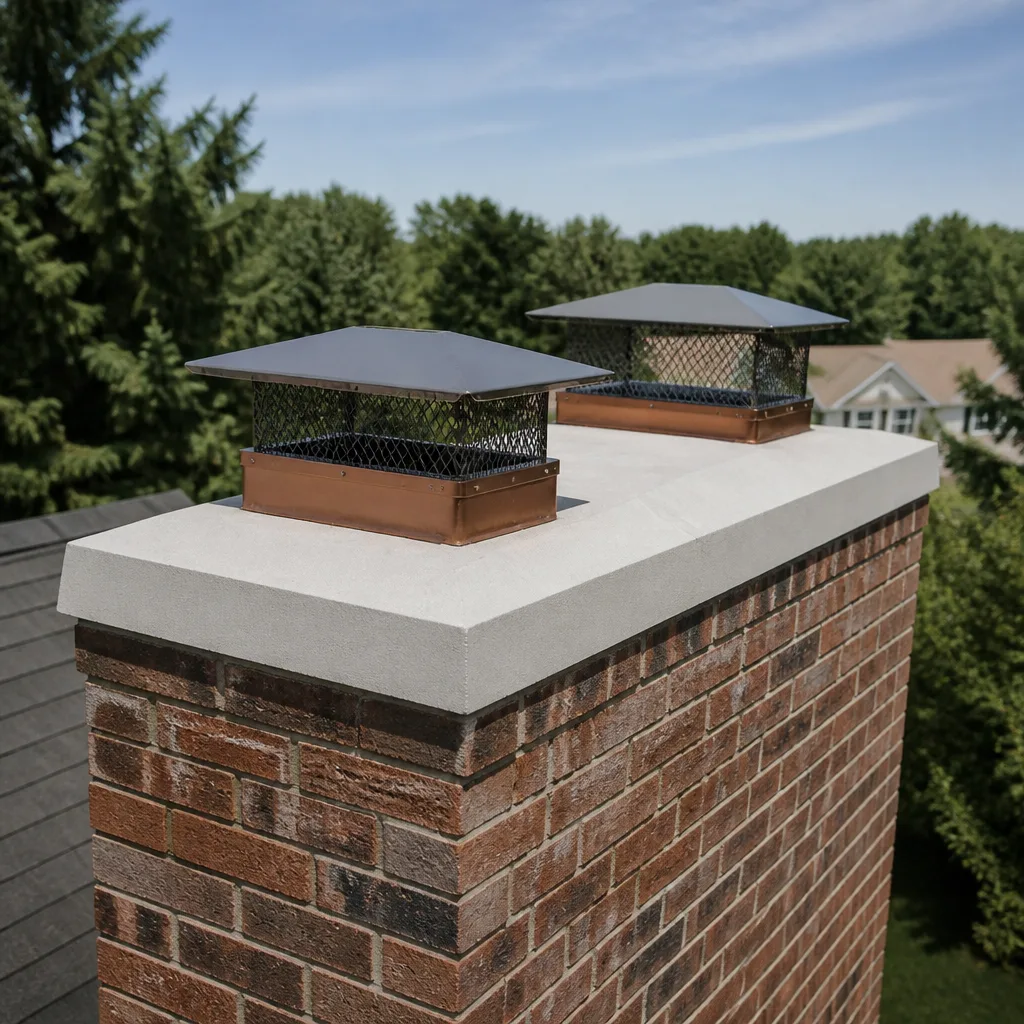
The common theme: all three of these pests exploit an uncapped or improperly capped chimney. A professional sweep includes cap inspection and, in many cases, cap replacement as part of the service. If your cap is the mesh-screened, $35 hardware store variety, be aware that it’s likely inadequate for squirrel prevention and can rust through within three to five years in Central Texas humidity.
What a Full-Service Sweep Actually Includes
There’s a meaningful difference between hiring a guy with a brush and hiring a chimney specialty company that performs a full inspection alongside the cleaning. In Cedar Park, the going rate for a sweep includes some variation of the following, but the order and the equipment matter. Here’s what a proper full-service sweep should include, step by step:
- Interior protection setup: Drop cloths, floor runners, and hearth protection. A professional sweep never walks into your living room with a dirty brush and no floor covering. If a company doesn’t lead with this, consider it a red flag.
- Visual pre-inspection: The technician examines the firebox, damper, and flue opening before cleaning. This identifies obvious blockages, animal activity, or damage that affects how the cleaning proceeds.
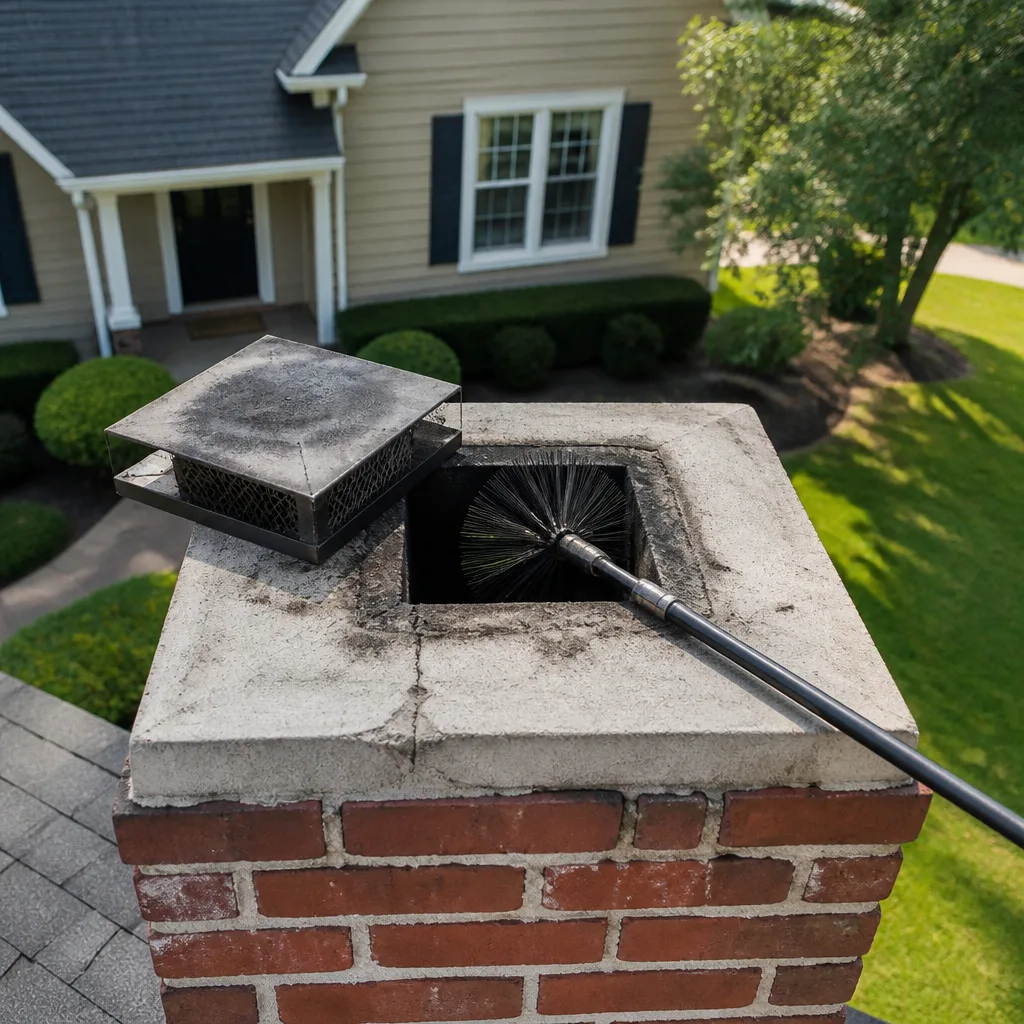
- Rotary brush cleaning from the top down or bottom up: Modern chimney sweeps use a rotary brush system, typically nylon or poly with replaceable heads, driven by a drill. Rotary brushes clean flue tile surfaces more thoroughly than old-school fixed brushes, especially in terracotta tile flues common in Cedar Park homes built in the 1990s through 2010s.
- High-powered vacuum containment: A HEPA-filtered vacuum runs continuously during the sweep to contain soot and dust. This is a non-negotiable in our view. A sweep that fills your living room with dust is a company that skipped a step.
- Smoke chamber inspection: The smoke chamber, the tapered area above the damper, is where creosote accumulates most heavily in short-season burners because flue gas temperatures drop as they pass through this wider space. Many budget sweeps skip this area entirely. We don’t.
- Flue cap and screen check: The cap is your chimney’s umbrella. We check for rust, missing mesh, bent hardware, and proper fitment. A missing or damaged cap is the single most common reason we’re called to a Cedar Park home for a second opinion after another sweep.
- Post-cleaning inspection: After the flue is clean, the technician re-inspects with a flashlight and documents what they can see. This is when we determine whether the chimney needs a Level 2 inspection (more on that below).
The entire process for a standard sweep takes 45 to 90 minutes, depending on flue condition, roof access, and the amount of creosote present. If a company quotes you a 20-minute chimney sweep, you’re getting a brush run and a bill, not an inspection.
For more detail on how we approach sweeps specifically, see our page on Chimney Sweep in Cedar Park.
How to Read a Sweep Report
After a professional sweep, you should receive a written report. If you don’t get one, that’s a problem. A verbal “all good” is not documentation, and it’s not enough for insurance purposes or future real estate transactions. Here’s what a legitimate sweep report includes and how to interpret each section:
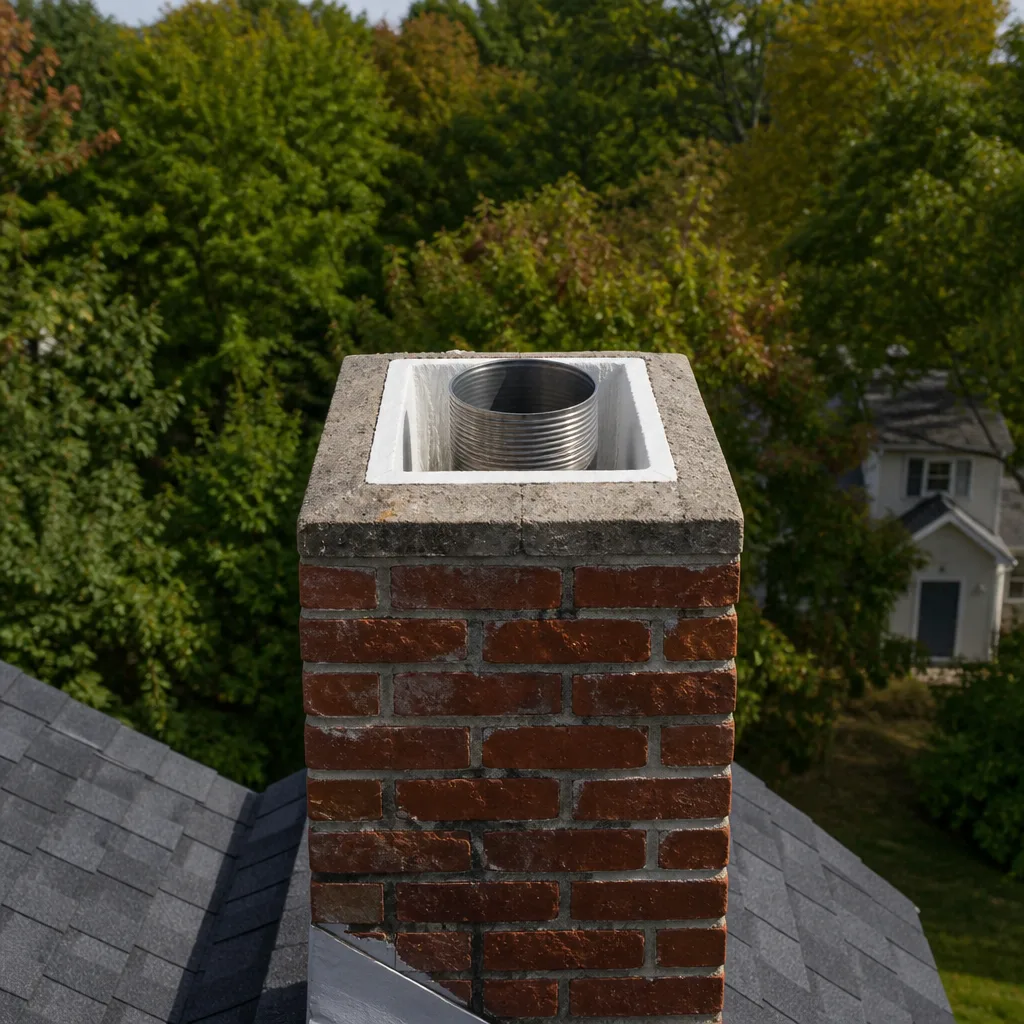
- Flue size and material: Typically terracotta tile for Cedar Park homes built before 2015, stainless steel liner for newer construction or converted gas systems. This tells you what you’re working with and matters if you ever switch fuel type.
- Creosote level and type: Stage 1 (flaky, brushable), Stage 2 (glazed, requires chemical treatment or rotary scrubbing), or Stage 3 (hardened tar, requires professional removal). Understanding this tells you whether your burning habits need to change.
- Damper condition: Functioning, rusted, stuck, or missing. A damper that doesn’t seal creates a permanent draft and energy loss, even in summer.
- Cap condition: Present, absent, rusted, mesh damaged, or improperly sized. This is your primary defense against the pests we discussed above.
- Smoke chamber notes: Any cracks, creosote buildup, or debris. This area isn’t visible from the firebox, so the report’s notes here are your only window into it.
- Firebox condition: Cracked refractory panels, missing mortar, or rusted grate. These affect burn efficiency and safety.
- Recommended follow-ups: Any repairs, cap replacements, or Level 2 inspection recommendations should be documented with photos and a written explanation, not a vague “you might want to get that checked.”
In our experience, a good sweep report reads like a mechanic’s inspection: specific findings, specific locations, specific recommendations, with the reasoning attached. If a sweep company hands you a receipt and says “looked fine,” you didn’t get an inspection, you got a brush run. In Cedar Park, where many homes are 20 to 35 years old and on their second or third owner, thorough documentation matters for resale. A documented annual sweep history is a selling point, not a paperwork burden.
When a Level 2 Camera Inspection Is Warranted
The NFPA defines three levels of chimney inspection. Level 1 is the visual inspection performed during a routine sweep. Level 2 adds a camera scan of the entire flue interior and is required in specific circumstances. Level 3 is invasive, involving partial demolition, and is rare.
A Level 2 camera inspection is warranted in Cedar Park when any of the following apply:
- You just purchased the home: A home inspector’s chimney check is not a substitute for a Level 2 inspection. Home inspectors in Texas are generalists. A camera scan by a chimney specialist can reveal hidden flue tile cracks, missing mortar joints, or improper liner installation that a flashlight inspection from the roof can’t catch.
- The home has changed hands and you don’t have sweep records: If you bought a home in the Buttercup Creek, Ranch at Brushy Creek, or Twin Creeks neighborhoods and can’t find chimney maintenance records, the chimney’s history is unknown. Level 2 establishes a documented baseline.
- You experienced a chimney fire, lightning strike, or hailstorm: Central Texas hail storms can crack chimney caps, damage crowns, and knock mortar loose. A camera scan verifies the flue survived structurally intact.
- You’re changing fuel type: Switching from wood to gas, or from a decorative gas log set to a vented gas insert, changes flue requirements. Level 2 confirms the existing flue is compatible, properly sized, and safe for the new appliance.
- The Level 1 inspection found something that needs a closer look: Cracked flue tiles, visible moisture staining, or an obstruction that’s partially removed. This is the most common path in our work: a Level 1 finding triggers Level 2 confirmation before any repair recommendation is made.
The camera itself is a flexible, high-resolution probe that documents the entire flue interior on video. You can see the footage in real time or after the fact. A chimney company that recommends liner replacement without camera evidence is making an unverified claim. We won’t recommend structural repair work without a camera scan to document the actual condition of the flue. For a deeper look at repair paths, see our page on Chimney Repair in Cedar Park.
What Does a Chimney Sweep Cost in Cedar Park?
Pricing in Central Texas varies, but here’s the range a Cedar Park homeowner should expect for a standard Level 1 chimney sweep as of 2026:
- Standard wood-burning fireplace sweep with Level 1 inspection: $180 to $280
- Sweep with minor cap replacement (standard galvanized or stainless cap): Add $60 to $150
- Sweep with creosote treatment for Stage 2 glaze: Add $50 to $120
- Level 2 camera inspection: $150 to $350 standalone, often discounted when combined with a sweep
- Sweep with dryer vent cleaning bundled: Many companies, including us, offer a combined rate that saves $50 to $80 versus booking separately
These are Cedar Park market ranges, not quotes. The variables are flue size, creosote stage, roof pitch and access difficulty, and whether repairs are bundled into the same visit. A flat-rate quote should include everything from hearth protection setup to post-cleaning inspection. If a price seems unusually low, confirm what’s excluded. A $99 sweep that skips the smoke chamber inspection and cap check isn’t a value, it’s a partial service.
For the exact price on your chimney, call us at (855) 507-9184. Estimates are free, and we’ll tell you over the phone what the service includes before anyone shows up at your door.
Your Cedar Park Chimney Maintenance Calendar
Cedar Park’s climate creates a different maintenance rhythm than what national guides assume. Here’s the calendar we recommend to our customers:
September to October: Schedule your annual sweep and Level 1 inspection. Do this before the first cold snap, not after. In Cedar Park, the first fireplace night usually hits in November, and sweep schedules fill up fast in October. Pre-season booking means you’re ready when the temperature drops, not waiting two weeks for an open slot.
November to February: Burn season. Burn only seasoned firewood (moisture content under 20%), keep fires moderate, and don’t close the damper until the fire is completely out. If you notice smoke entering the room, unusual odors, or slow ignition, those are signs the flue isn’t drafting properly, and they’re worth a call rather than pushing through the season.
March to May: Spring is when chimney swifts return and when moisture damage becomes visible. If you skipped the fall sweep, this is your second window. After spring storms, check for visible crown damage, missing cap pieces, or water staining on the ceiling near your fireplace.
June to August: The dormant period. Squirrels and wasps are active. If you don’t have a proper cap, this is when problems develop silently. This is also the ideal time for any structural repair work, since the chimney won’t be in use and weather conditions in Central Texas allow masonry materials to cure properly.
The key insight: the best time to think about your chimney isn’t when you’re using it. It’s the month before and the month after. Our busiest emergency calls in Cedar Park come in December from homeowners who skipped the October sweep and discovered a squirrel nest or a cracked flue tile on the first cold night.
Common Mistakes to Avoid
- Assuming low usage means no maintenance needed. A fireplace burning 15 times per year still needs an annual inspection. Moisture intrusion and animal nesting happen regardless of whether you light a fire.
- Burning unseasoned live oak. Green live oak is the single biggest contributor to Stage 2 creosote in Cedar Park fireplaces. If the wood hisses, sizzles, or struggles to stay lit, it’s too wet.
- Skipping the cap replacement. The $45 hardware store cap rusts faster than you think, and it doesn’t keep squirrels out. A proper stainless cap with the right mesh size is a five-to-ten-year investment, not a one-time purchase.
- Using the “burn it out” method. A hot, roaring fire does not clean your chimney. It can crack flue tiles and turn Stage 1 creosote into Stage 2 glaze. Never use accelerants or a “chimney cleaning log” as a substitute for a professional sweep.
- Not asking for documentation. A sweep without a written report is not a verifiable service. If your insurance company asks for maintenance records after a chimney fire, a receipt without a report won’t hold up.
- Treating the fireplace and dryer vent separately. Both are venting systems in your home, both are fire hazards when neglected, and both should be serviced. See our page on Dryer Vent Cleaning in Cedar Park for the full picture on the dryer side.
- Deferring a Level 2 inspection after buying a home. The $150 to $350 you spend on a camera scan is the cheapest insurance against a $4,000 liner replacement surprise. Do it before your first burn season, not after.
See the difference
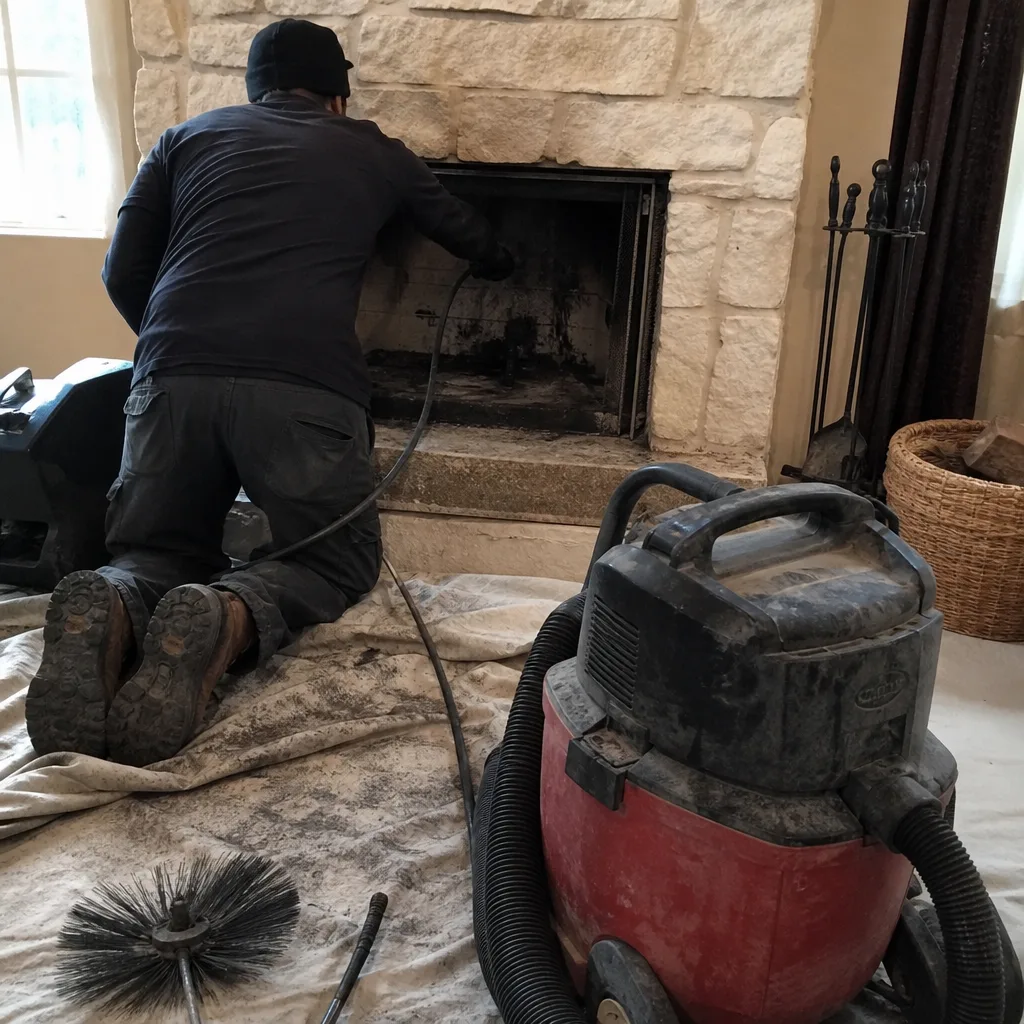 Before
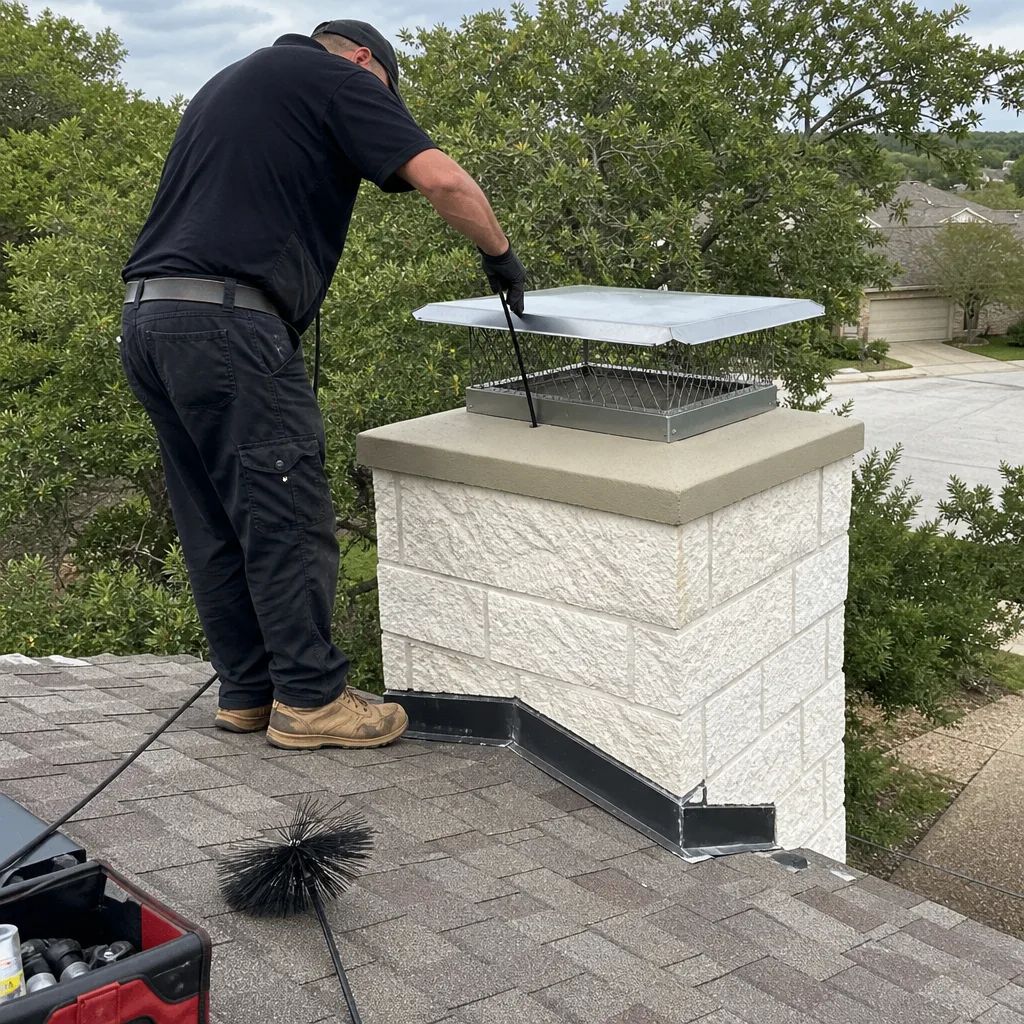 After
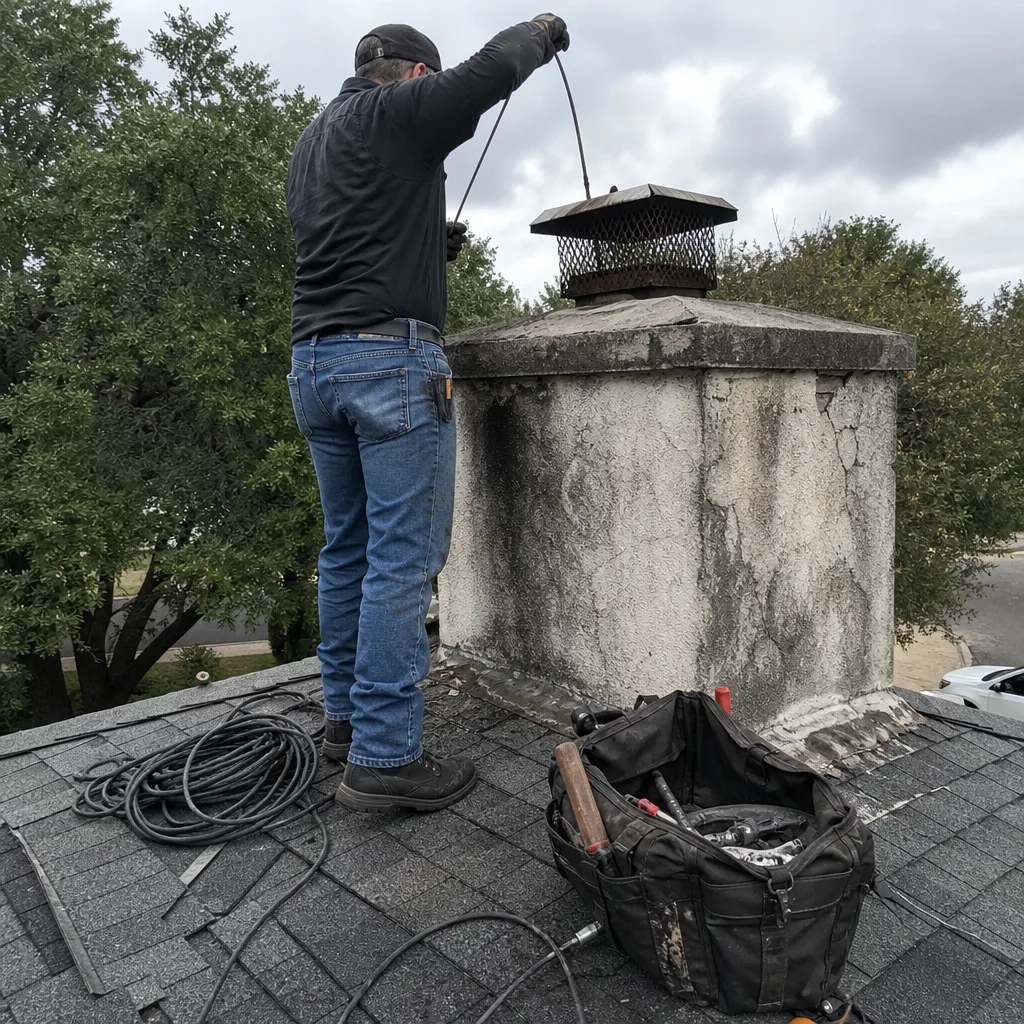 Before
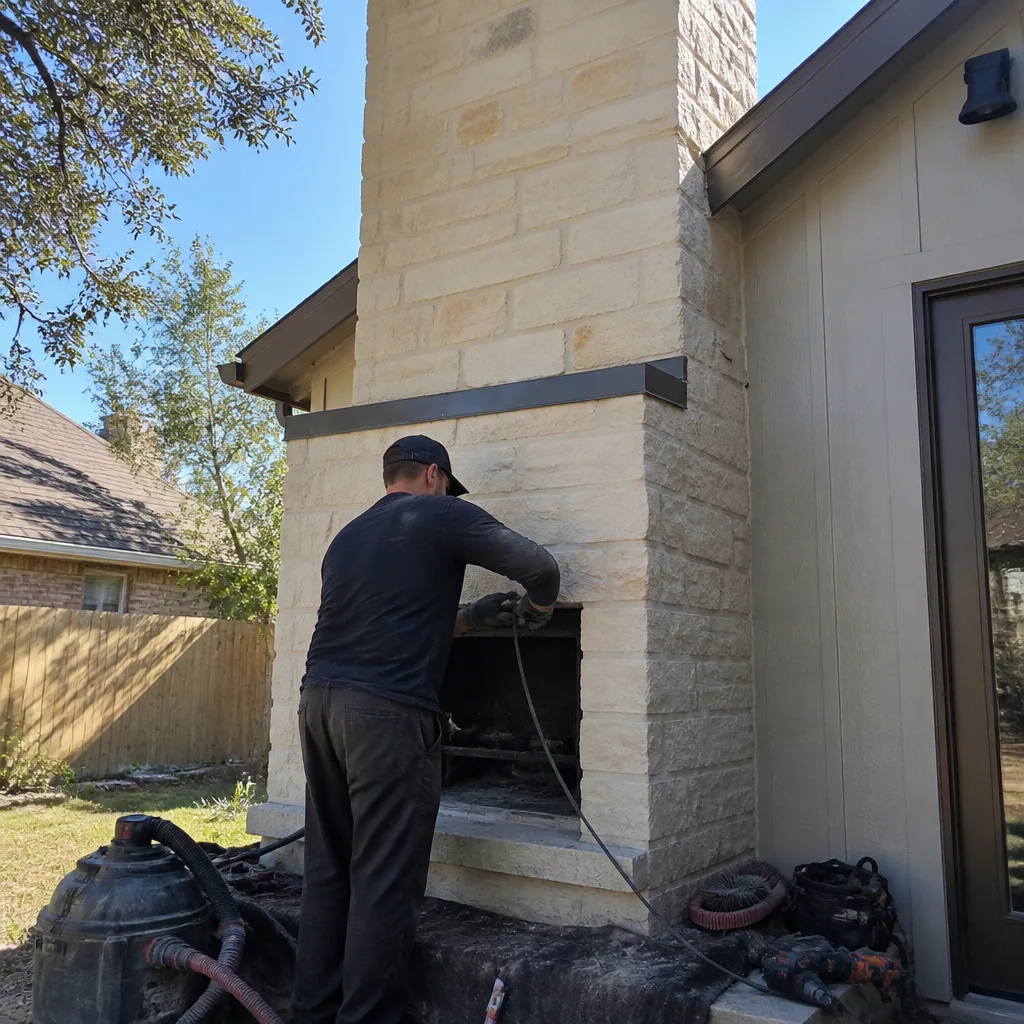 After
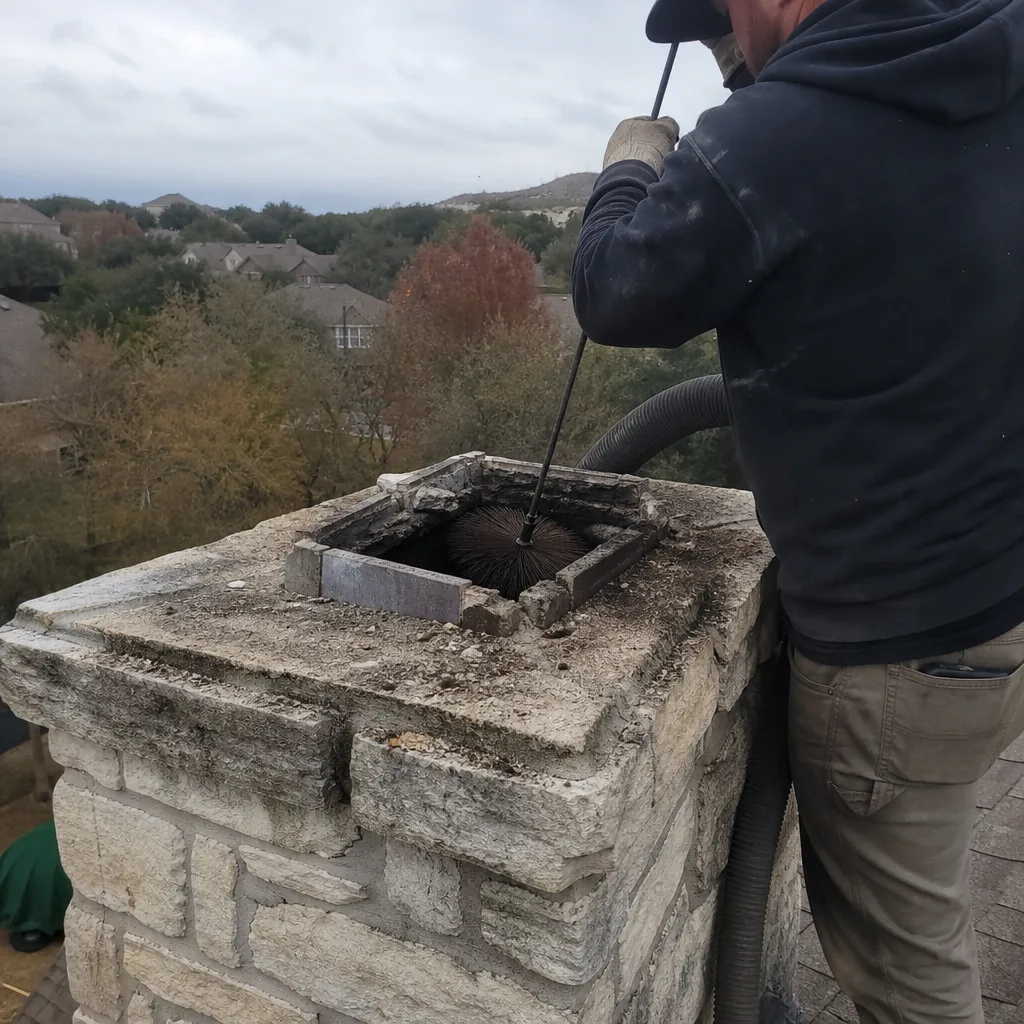 Before
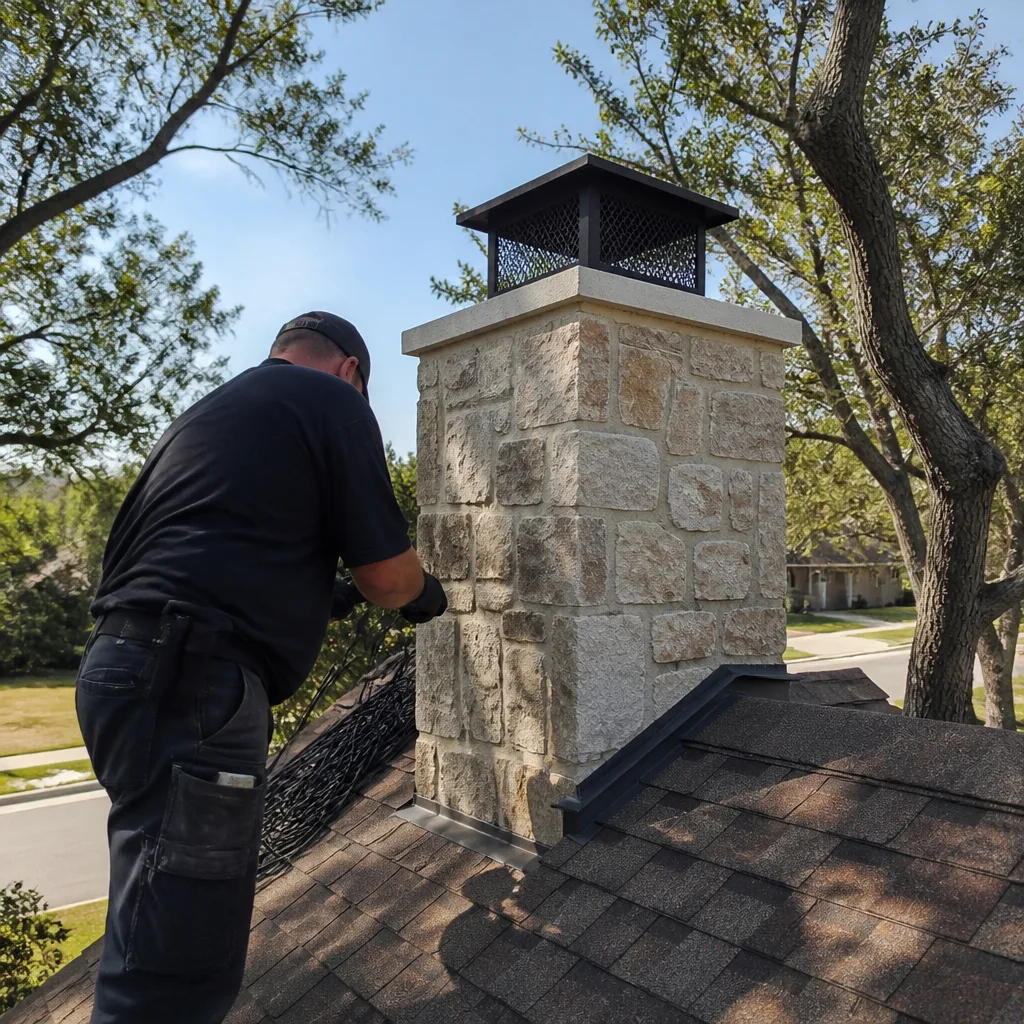 After
When to Call a Professional
If you smell smoke in the house when the damper is open, that’s a drafting or blockage problem, not a normal fireplace smell. If you see water staining around the ceiling near the chimney, that’s a flashing or crown failure. If you hear scratching, chirping, or fluttering from the chimney, that’s an animal that needs removal and a cap that needs replacement. If you had a chimney fire, even a small one that went out on its own, the flue needs a camera inspection before any future use. And if it’s been more than a year since your last sweep, or you don’t know when the chimney was last serviced, that’s enough reason to schedule a Level 1 inspection.
Ashton Chimney offers free estimates in Cedar Park, call (855) 507-9184. We’ll tell you what you’re dealing with, what it costs, and what can safely wait. For a general overview of our services, see the Ashton Chimney home page.
Frequently Asked Questions
A standard chimney sweep with Level 1 inspection in Cedar Park typically costs $180 to $280 in 2026, with additional charges for cap replacement, creosote treatment, or a Level 2 camera inspection. The exact price depends on flue size, creosote stage, roof access, and whether repairs are bundled. Call (855) 507-9184 for a free estimate on your specific chimney.
Annually, per the NFPA 211 standard, even if you only burn firewood fewer than 20 times per year. Texas fireplaces are used less than northern ones, but moisture intrusion, animal nesting, and debris accumulation still occur year-round. The annual cadence is about inspection more than cleaning volume.
Not without camera evidence. A legitimate chimney company will perform a Level 2 camera scan and show you the footage documenting the cracks, gaps, or deterioration before recommending liner replacement. In many cases, a resurfacing solution like HeatShield can restore the existing flue without full replacement, at a lower cost. If the recommendation isn’t backed by footage, get a second opinion.
The realistic risks in Cedar Park are: animal nests blocking the flue and causing smoke to back up into the house, creosote accumulation leading to a chimney fire, undetected moisture damage spreading to ceiling drywall and framing, and a pest problem that requires expensive removal. The most expensive chimney repairs we see are on chimneys that went three to five years without inspection, not on chimneys with minor annual maintenance.
You can buy a brush kit at a hardware store, but the physical cleaning is the easy part. What you can’t do yourself is the inspection: evaluating flue tile condition, identifying smoke chamber deterioration, assessing dampers and caps from the roof, and documenting everything with a written report. Self-cleaning also carries real risk if you’re working on a steep roof, which is common in Cedar Park’s hillier subdivisions. Hire a professional for the inspection, even if you’re handy.
Not typically. Most chimney companies don’t handle dryer vents, and most duct cleaning companies don’t have chimney expertise. Ashton Chimney offers both, along with chimney repair, which means one call covers all three venting systems in your home. For more on the dryer side, see our page on Dryer Vent Cleaning in Cedar Park.
The Bottom Line
A chimney sweep in Cedar Park is an annual inspection disguised as a cleaning. The short burn season means less creosote, but the local firewood profile, the active pest population, and the Texas freeze-thaw cycle create problems that a northern chimney never sees. Schedule your sweep in September or October, before the first cold snap. Get a written report. If your sweep recommends repairs, ask for camera footage. Use a company that handles sweep, inspection, and repair under one roof, not one that refers you to a separate mason. And if you burn local cedar and live oak, tell your sweep what’s in the woodpile. It matters more than most homeowners realize. For more guides & resources on keeping your chimney safe, explore our blog.
For a complete assessment of your fireplace and chimney, call Ashton Chimney at (855) 507-9184. Free estimates, no pressure, and we’ll show you what we find.
Written by the team at Ashton Chimney, serving Cedar Park since 2014.