Last updated October 31, 2026
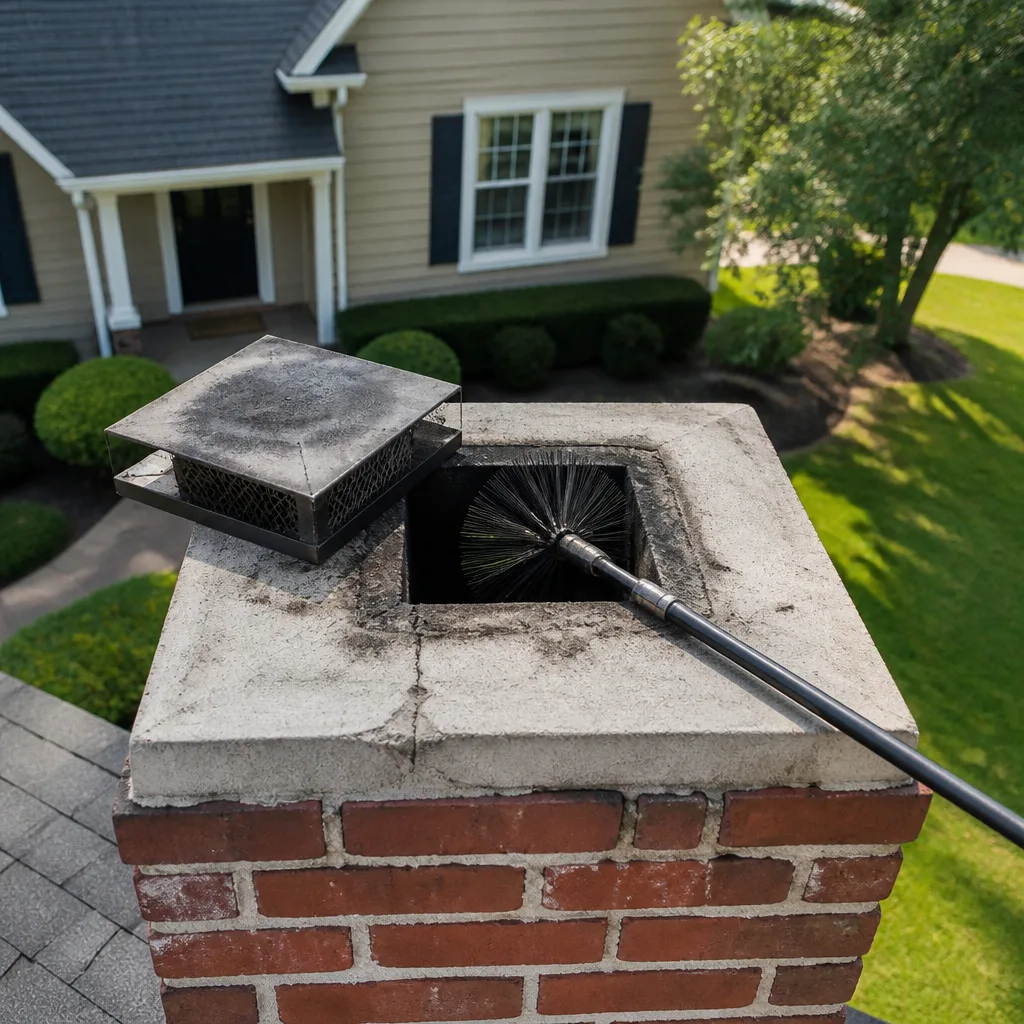 Sweep & inspection
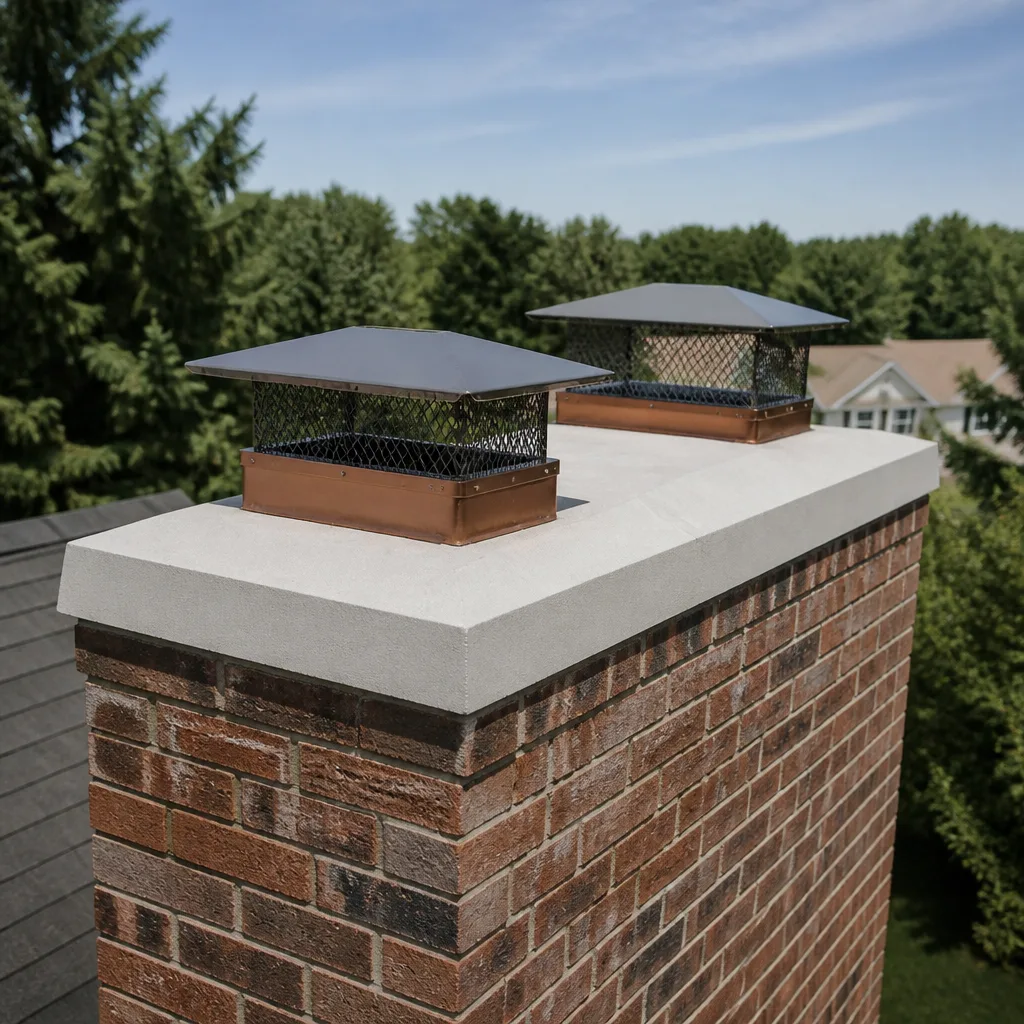 Caps & crowns
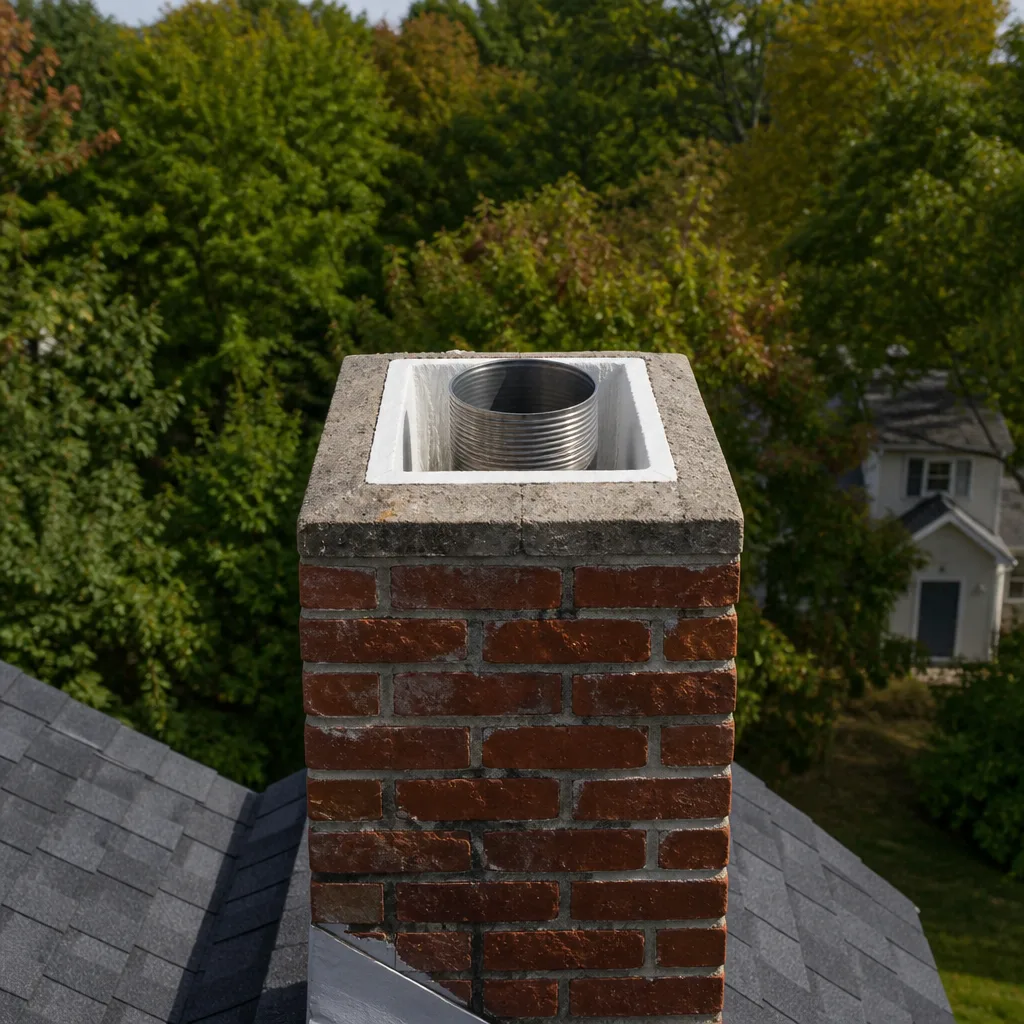 Flue relining
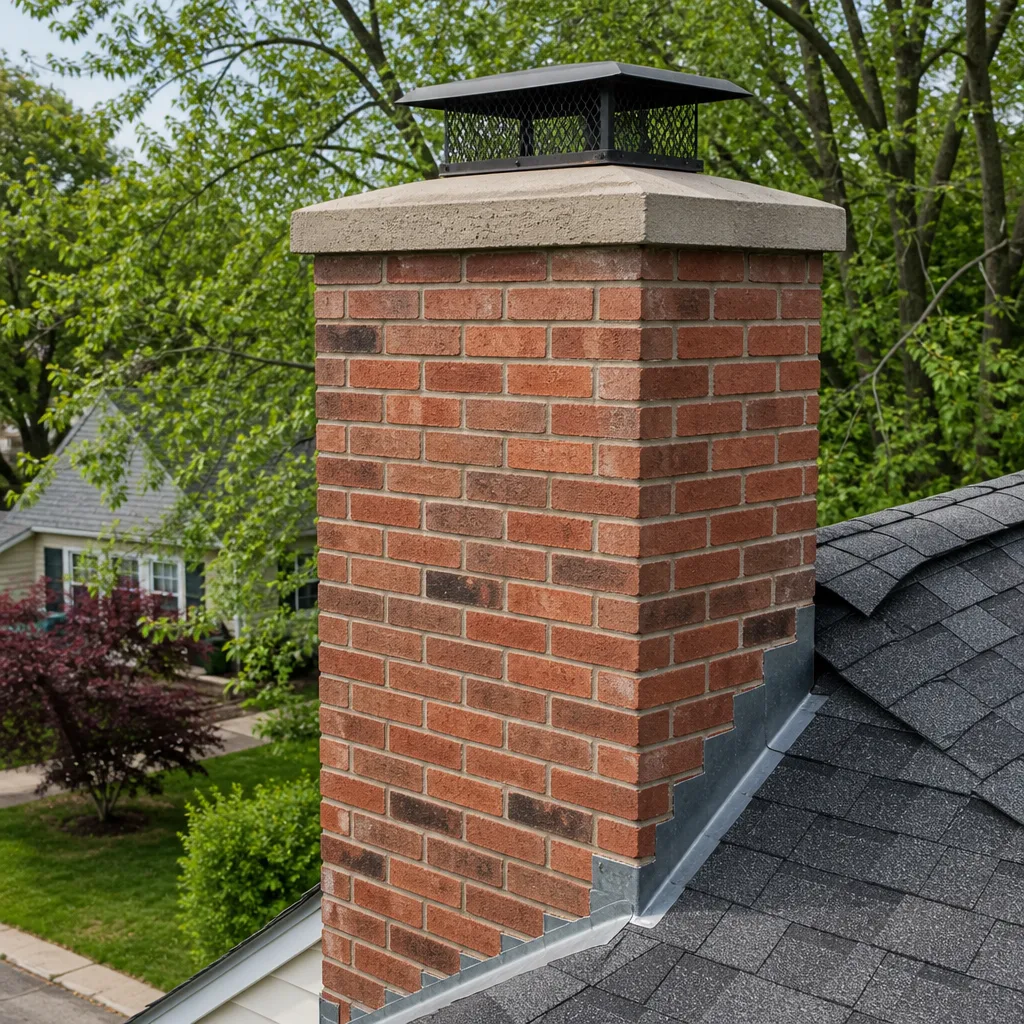 Masonry repair
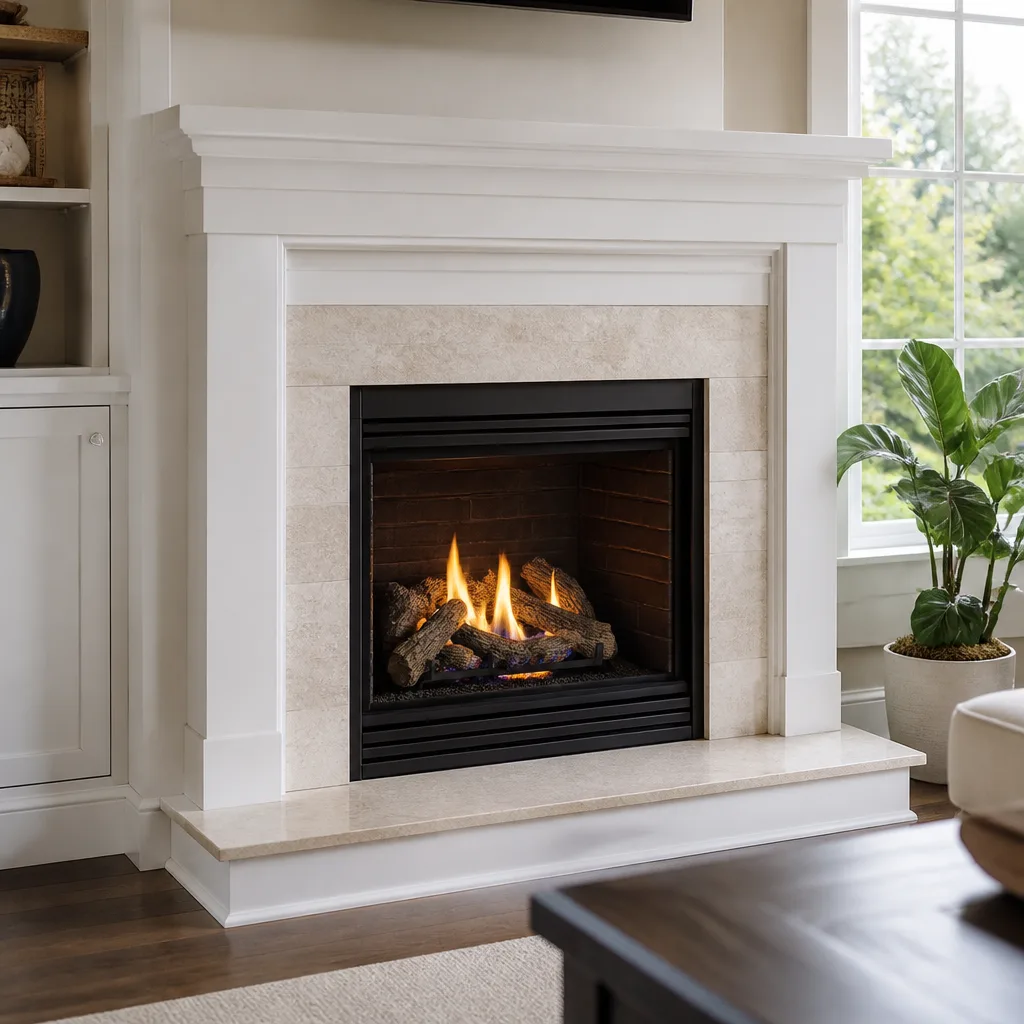 Gas fireplace service
Level 1 sweep and inspection to the NFPA 211 annual standard - flue, crown, cap, and flashing checked and photographed
Chimney sweep logs do not sweep chimneys. They loosen some creosote - which then falls where a brush and vacuum still have to collect it.
Chimney Sweep Troubleshooting: Common Problems and How to Fix Them
If your fireplace smokes into the room every time you light it, the problem is almost never a dirty flue. It’s usually a pressure or geometry issue that no amount of sweeping will fix on its own. Homeowners across Cedar Park call us with the same handful of symptoms: smoke rollback, a smell they cannot identify, poor draft on some days but not others, or debris falling into the firebox. Each has a specific mechanical cause. This guide walks through the diagnostic process we use in the field, so you can identify what is actually wrong before anyone climbs on a roof. For a deeper look at the full process, see The Complete Chimney Sweep Guide for Cedar Park Homeowners.
Styles & brands we work with
Quick Answer
Most fireplace and chimney problems fall into five categories: draft failure (pressure or flue geometry), creosote buildup (fuel or burn-temperature issues), moisture intrusion (cap, crown, or flashing failure), liner damage (spalling, cracking, or gaps), and mechanical failures (dampers, doors, cleanout covers). About half the smoke rollback we diagnose in Cedar Park homes is caused by competing exhaust pressure inside the house, not by anything in the chimney itself. Start with the pressure-stack test below before spending money on a Chimney Sweep.
Table of Contents
- The Pressure-Stack Diagnostic: Finding the Real Cause of Smoke Rollback
- Smell Is a Symptom: Identifying Creosote, Animal, and Moisture Odors
- Why a Damper That “Works Fine” Is Often the Problem
- Creosote Stages 1, 2, and 3: What You Can See From the Firebox
- Liner Damage Red Flags You Can Spot Without a Camera
- Moisture Stains on Walls and Ceilings: Tracing Leaks in a Cedar Park Chimney
- Common Mistakes to Avoid
- When to Call a Professional
- Frequently Asked Questions
- The Bottom Line
The Pressure-Stack Diagnostic: Finding the Real Cause of Smoke Rollback
Smoke goes where pressure tells it to go. A fireplace works because the column of warm air inside the flue is lighter than the air outside, creating upward pull. Anything that disrupts that pressure difference sends smoke backward into the room. In Cedar Park, where newer homes are built tight for energy efficiency, the most common cause of rollback is not a blocked chimney but a house starving for makeup air.
Here is the sequence we run through before touching any tool:
- Open a window near the fireplace about two inches. Light the fire. If the smoke stops rolling back, the house envelope is too tight, and the fire cannot get combustion air. This is a whole-home ventilation issue, not a chimney defect.
- Turn off every exhaust appliance. Bath fans, range hoods, and especially a running clothes dryer all pull air out of the house. A dryer vent in active use can depressurize a room enough to reverse a marginal chimney draft. If the problem disappears with the dryer off, you have found the culprit.
- Check the flue-to-firebox-opening ratio. Flues are sized by cross-sectional area against the fireplace opening. A flue that worked for decades can become undersized once a homeowner adds glass doors or changes the firebox opening even slightly. This is a geometry problem that sweeping cannot fix. The solution is usually a liner resizing or a top-mount damper to alter the flow resistance.
- Inspect the chimney height relative to the roofline. Building codes require the flue to terminate at least 3 feet above the roof penetration point and at least 2 feet above any structure within 10 feet. A chimney that did not get a height extension after a roof addition in the Cedar Park area will backdraft every time the wind hits from one direction.
- Feel for a cold flue. A masonry chimney that runs up an exterior wall stays cold in Cedar Park’s winter mornings. Cold air inside the flue is heavier than room air, so it sinks, pushing smoke backward until the flue warms up. Preheating the flue with a rolled newspaper torch held up near the damper for 60 seconds often corrects this. A top-sealing damper also helps keep cold air from pooling overnight.
We see this last one constantly in older Cedar Park neighborhoods, where exterior masonry chimneys were the standard through the 1990s. The homeowner tries to light a fire on a 45-degree morning, the flue has been sitting at 40 degrees all night, and smoke pours out. They assume the chimney is clogged. It is not. It is thermodynamics.
Smell Is a Symptom: Identifying Creosote, Animal, and Moisture Odors
A chimney smell is a diagnostic signal, not a nuisance. Each odor has a distinct chemical signature that points to the underlying problem. In our experience serving Cedar Park, this is the diagnosis most homeowners get wrong because they assume every smell is creosote.
The three smells and what they mean
- Sharp, asphalt-like, or barbecue-pit smell: This is creosote. It is strongest in summer when humidity rises and the deposits inside the flue absorb moisture and off-gas. Creosote odor means there is enough buildup to warrant cleaning, and possibly enough to warrant a Stage 2 or Stage 3 removal procedure (see below). It is more common in wood-burning fireplaces used with unseasoned oak or cedar, both common in the Texas Hill Country.
- Ammonia, urine, or dead-animal smell: This is animal intrusion. Squirrels, raccoons, and chimney swifts all nest in chimneys across Cedar Park. A dead animal inside the flue smells like urine and rot, not like smoke. Sweeping removes the nesting material, but the fix is a proper chimney cap with a screened top, which is the only long-term deterrent.
- Musty, damp, or metallic smell: This is moisture. Water inside the flue reacts with creosote to create a sharp metallic odor, and it promotes mold growth inside the masonry. The source is almost never inside the firebox; it is a failed chimney cap, cracked crown, or deteriorated flashing at the roofline. Moisture odor means structural repair, not just cleaning.
Some of the worst animal cases we have found in Cedar Park started with a homeowner who went two full seasons blaming the smell on “old smoke.” By the time we opened the cleanout, the nesting material had compacted to the point of blocking half the flue. Birds can build a complete blockage in a single spring nesting season.
Why a Damper That “Works Fine” Is Often the Problem
Most Cedar Park homes built before 2000 have a throat damper: a cast-iron plate that sits just above the firebox and opens or closes with a lever. It is called a throat damper because it sits at the throat of the flue. The phrase “works fine” typically means the lever moves. That is not the same as sealing.
The problem has two parts:
- Throat dampers leak even when closed. A cast-iron plate sitting in a masonry slot has no gasket. Air passes around the edges constantly. In summer, that means conditioned air from your house leaks up the chimney all day. In winter, it means cold air pours down into the room. We have measured a 15-degree temperature difference at the firebox opening with the damper “fully closed” on older Cedar Park homes.
- Throat dampers obstruct the flue even when open. The plate sticks partway into the flue opening and disrupts the laminar flow of exhaust gases. This reduces the effective draft area and contributes to the rollback issues described in the pressure-stack section.
A top-mount damper addresses both problems. It sits at the top of the flue and seals with a silicone gasket, which stops air leakage completely. When open, nothing protrudes into the flue, so the draft geometry is cleaner. The tradeoff is the cable and mounting hardware, which is why we recommend professional installation. We install top-mount dampers routinely as part of our Chimney Repair in Cedar Park work, and the difference in room comfort is immediate for most homeowners.
One more point we get asked about: closing a throat damper tightly does not compensate for a missing chimney cap. Rain still enters from the top. A top-mount damper does double duty when paired with a proper cap, but the cap is the primary water barrier.
Creosote Stages 1, 2, and 3: What You Can See From the Firebox
Creosote forms in three distinct stages, and each requires a different removal method. You can often identify the stage by looking up from the firebox opening with a bright flashlight, no camera needed.
Stage 1: Soot film
Appearance: a fine black or brown dust, like a coating of powdered charcoal. It wipes off easily on a finger. This is normal, and it is what a routine Chimney Sweep in Cedar Park handles with standard brushes. If you burn well-seasoned hardwood and have the chimney swept annually, you will probably stay in Stage 1 indefinitely.
Stage 2: Crusty flakes
Appearance: shiny black flakes or a crunchy, popcorn-like texture. This is creosote that has condensed and partially hardened. It does not brush off with a light pass; it needs mechanical scraping with a rotary loop or specialized flue brushes. Stage 2 forms when fires burn cool, wood is not fully seasoned, or the flue runs long through a cold attic space. In Cedar Park’s post-oak and juniper mix, unseasoned wood is common, and Stage 2 is the most frequent diagnosis we make.
Stage 3: Glazed tar
Appearance: a hard, glossy, tar-like layer that looks like the inside of a used charcoal grill. This is concentrated creosote that has baked onto the flue walls and re-liquefied repeatedly. Stage 3 cannot be removed with standard brushes. It requires chemical treatment, usually with a product like the ones we use from Gelco, followed by mechanical removal. In severe cases, Stage 3 creosote can ignite at about 2,000 degrees Fahrenheit, which is how chimney fires start and how clay liners crack.
The stage matters because it determines the removal method. Calling a sweep and requesting “just a basic cleaning” when you have Stage 3 buildup is like asking a dentist to scale away a cavity. The right tool for the right stage is what the job calls for, and no amount of brushing will dissolve glazed tar. For help selecting equipment, read Choosing the Right Chimney Cleaning Brand: A Buyer’s Guide for Cedar Park.
Liner Damage Red Flags You Can Spot Without a Camera
A video scan is the definitive diagnostic for liner condition, but there are several signs visible from inside the house or at ground level that tell you when to schedule one. We have found liner damage in Cedar Park homes by watching for these exact signals.
- Clay tile fragments in the firebox. If you find small, flat, tan or terracotta shards in the bottom of the firebox, those are pieces of your flue liner. Clay tiles crack under thermal stress or after a chimney fire, and the broken pieces fall into the firebox. One fragment means there is at least one cracked tile above it.
- White or gray flaking on the interior face. Spalling is what happens when moisture penetrates the clay tile and freezes or heats unevenly, causing the surface to peel away. If you shine a light up the flue from the firebox and see flaking, the liner is degrading.
- White efflorescence on the exterior chimney chase or masonry. Efflorescence is a white, powdery residue left when water evaporates out of masonry and leaves dissolved salts behind. It means water has been moving through the chimney structure long enough to carry material to the surface. Not every case of efflorescence means liner failure, but it means water intrusion, and water intrusion is what kills liners.
- Rust streaks inside the flue or at the cleanout. If you have a stainless steel liner and you see rust, the liner has been exposed to water and the wrong grade of steel may have been used. DuraFlex stainless liners are rated for the specific fuel type, and when the correct alloy is installed, rust is not normal.
When a liner is damaged, the repair path is not always full replacement. We use HeatShield, a cerfractory coating system, to resurface flues with moderate cracking or gaps. It is a manufacturer-backed repair that restores the flue to a smooth, insulated, code-compliant surface without tearing out the old liner. When the damage is too extensive, we install DuraFlex stainless steel liners sized for the appliance. The point is you have options between “leave it alone” and “replace everything,” and the difference is visible in the camera footage we show every homeowner before recommending anything.
Moisture Stains on Walls and Ceilings: Tracing Leaks in a Cedar Park Chimney
Cedar Park gets about 36 inches of rain a year, plus the occasional freeze-thaw cycle in winter. Both are rough on chimneys. When water shows up as a brown stain on the ceiling near the fireplace, or on the wall where the chase is framed, the leak is almost always at one of four connection points, in order of frequency:
- Chimney cap missing or dented. The cap is the umbrella. Without one, rain falls straight down the flue and pools in the smoke shelf. A cheap cap with a solid top but no side screening also does not keep wind-driven rain out.
- Crown cracks. The crown is the concrete slab that seals the top of the masonry around the flue. Hairline cracks let water seep into the brick below. Once water gets into the masonry, it rusts the damper, cracks the liner, and eventually shows up on your ceiling.
- Flashing separated at the roof line. The metal that transitions between shingles and chimney is the most common leak point on any roof. Over time, the sealant fails and wind works the flashing loose. A roof inspector may call it a roof leak; a chimney specialist sees it for what it is.
- Chase top rusted through (prefab chimneys). If your chimney is a framed box with siding, the metal top on that box is the chase top. Once it rusts, water enters the chase cavity and runs down into the ceiling.
The fix is repair-specific. Brushing off the stain and painting over it does nothing, because the water is still entering. We see this in Cedar Park subdivisions where homes were built in the mid-2000s and the original chase tops are now 20 years old and rusting at the seams.
Common Mistakes to Avoid
- Calling for a sweep when the problem is pressure. If smoke rollback stops when you open a window, scheduling a chimney sweep will not fix anything. You will pay for a cleaning, light the next fire, and see the same smoke. Run the pressure-stack test first.
- Using a garbage bag to “cover” the chimney. We have arrived at homes where a plastic bag was taped over the damper. That seals moisture inside the flue, which accelerates creosote odor and masonry damage. There is no DIY substitute for a proper cap or top-mount damper.
- Burning unseasoned wood to save money. Green oak or juniper smolders at a low temperature and produces disproportionate Stage 2 creosote. Wood should season for at least 6 to 12 months after splitting. The savings on “fresh” wood vanish the first time you need a Stage 3 removal.
- Ignoring a mild smell and assuming it is normal. A faint smell in summer is a data point. If it is sharp and asphalt-like, you have creosote. If it is musty, you have moisture. Neither resolves on its own, and both are cheaper to address early than after a fireplace insert has absorbed the odor.
- Running the dryer during a fire. This is common in Cedar Park homes where the laundry room is near the living space. The dryer exhaust fan depressurizes the house enough to reverse a marginal draft. The result is smoke rollback every time. Solve this by not running both simultaneously, or by addressing the house envelope ventilation.
- Painting over water stains. A brown ceiling stain near the chimney is a leak indicator. Paint covers the evidence but not the entry point. By the time the stain reappears, the liner and damper have had another season of water exposure.
- Using hardware-store creosote logs instead of a sweep. Creosote-sweeping logs break down Stage 1 deposits, and they do it unevenly. They do not remove Stage 2 or Stage 3, and they do not inspect anything. A log is not a substitute for a mechanical sweep and a visual inspection.
When to Call a Professional
Call a chimney professional if you see Stage 2 or Stage 3 creosote deposits, if you find clay tile fragments in the firebox, if you smell animal or ammonia odor from the flue, or if water stains appear on the ceiling near the chimney. You should also call if the pressure-stack test does not resolve smoke rollback, because the cause is then inside the flue, and that means either blockage, liner damage, or a geometry problem that requires measurement and correction. Ashton Chimney offers free estimates in Cedar Park. Call (855) 507-9184, and we will diagnose the problem and show you the evidence before recommending any work.
Frequently Asked Questions
Smoke rollback usually means a draft failure, not a dirty flue. The most common cause in tight houses is negative pressure from exhaust fans or a starving firebox that needs a window cracked open. If opening a window fixes it, the problem is house pressure. If it does not, the flue may be undersized, cold, or blocked, and you need a professional draft assessment. Call (855) 507-9184 for a diagnosis in Cedar Park.
Summer chimney odor is usually creosote off-gassing when humidity rises, or moisture inside the flue reacting with old soot. If the smell is sharp and asphalt-like, you likely have creosote buildup. If it is musty or metallic, water is entering the chimney. Both point to a specific repair path, and a Chimney Sweep in Cedar Park can identify which one you have.
The National Fire Protection Association recommends a sweep and inspection whenever creosote buildup reaches 1/8 inch, and at minimum once per year for regularly used fireplaces. Homes that burn unseasoned wood or use the fireplace daily through winter may need more frequent cleaning. A sweep also serves as the annual inspection that catches cap, crown, and flashing failures early.
Not every damaged liner requires full replacement. Moderate cracking, gaps, and surface spalling can often be repaired with HeatShield, a cerfractory resurfacing material we apply to restore the flue without demolition. When the liner is structurally compromised, a DuraFlex stainless steel liner rated for your fuel type is the appropriate fix. The right answer depends on what the camera footage shows, which is why we always show you the video before recommending anything.
Stage 1 creosote looks like black or brown dust. Stage 2 looks like shiny, crunchy flakes or a popcorn texture. Stage 3 looks like hard, glossy tar that resembles barbecue residue baked onto the flue walls. You can often see these stages by shining a flashlight up from the firebox. Stage 2 and Stage 3 require mechanical removal, and Stage 3 typically needs chemical treatment first using professional products like the Gelco line we work with.
Yes. A clothes dryer exhausts a large volume of air out of the house, which can create enough negative pressure to reverse a marginal chimney draft. If your fireplace smokes while the dryer runs, that is a pressure problem, not a chimney blockage. It is one reason we offer Dryer Vent Cleaning in Cedar Park as a separate service. Your dryer vent is a venting system too, and it deserves the same attention as your chimney.
The Bottom Line
Every chimney symptom means something specific. A smell is not just a smell, it is a chemical signature. Smoke rollback is not random, it is pressure. Debris in the firebox is a liner fragment, not just soot. If you learn to read these signals, you will know whether you are dealing with a routine sweep, a pressure correction, or a structural repair, and you will not spend money on the wrong fix. Cedar Park homeowners who want the diagnosis, the evidence, and the repair handled without passing the job between contractors can call Ashton Chimney at (855) 507-9184. We will tell you what we found, what it means, and what your options are in plain language. And if you are just getting started with fireplace maintenance, this guide pairs well with our Ashton Chimney home overview of full-service chimney and venting care.
Written by the team at Ashton Chimney, serving Cedar Park since 2014. Explore more guides & resources on our blog.
See the difference
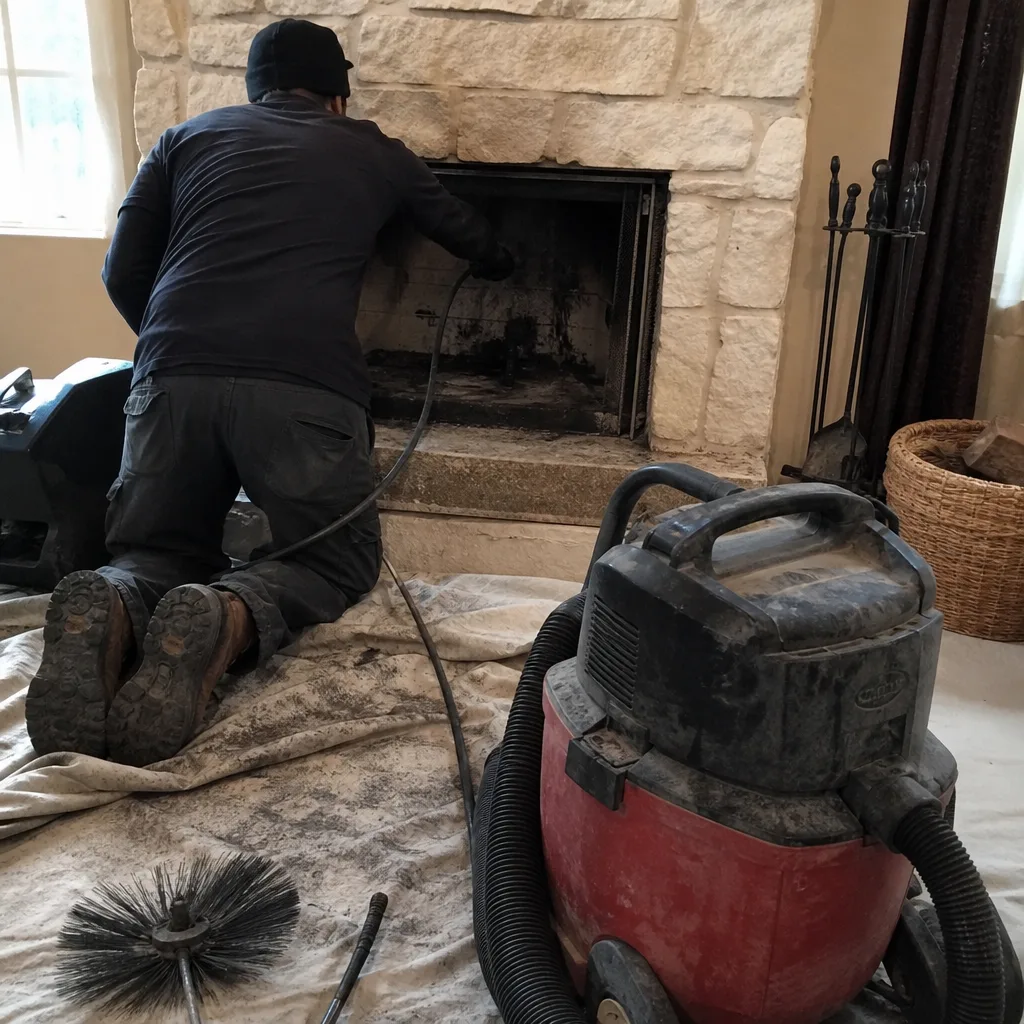 Before
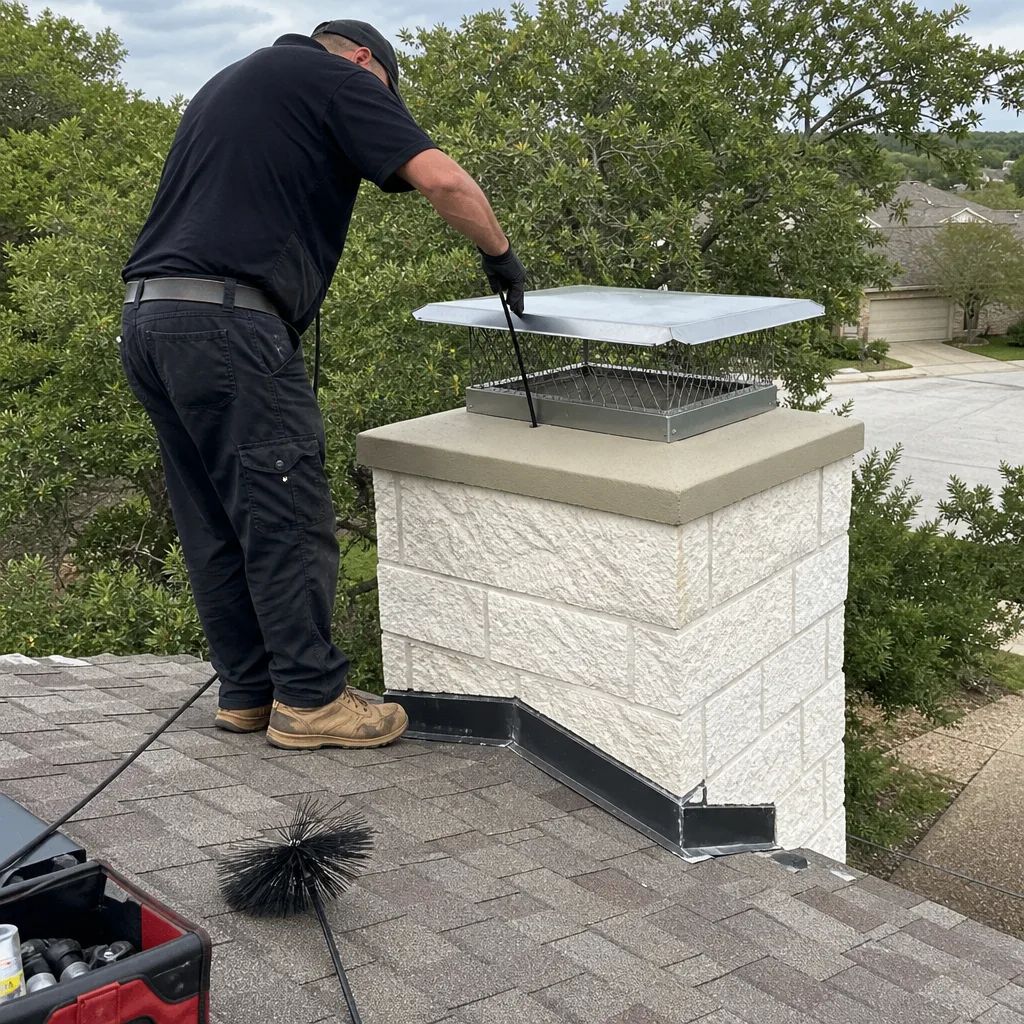 After
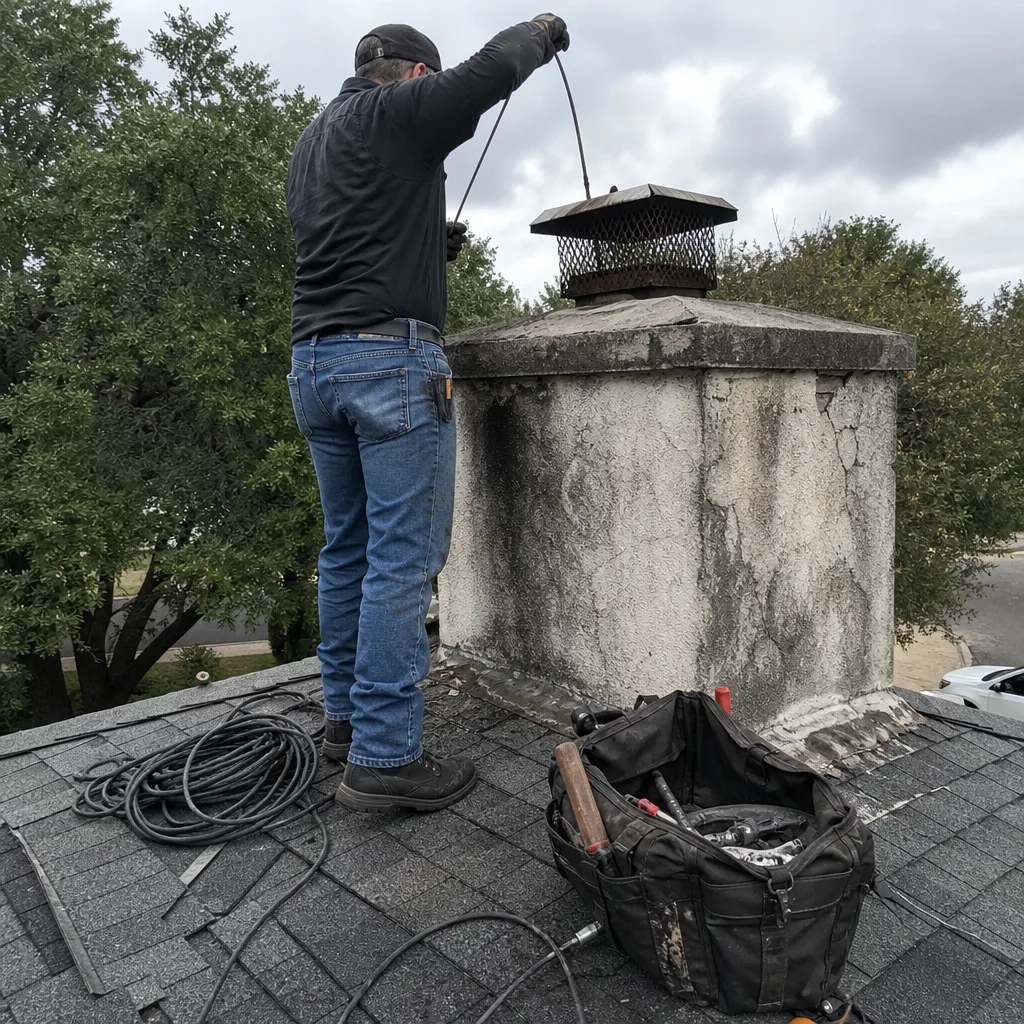 Before
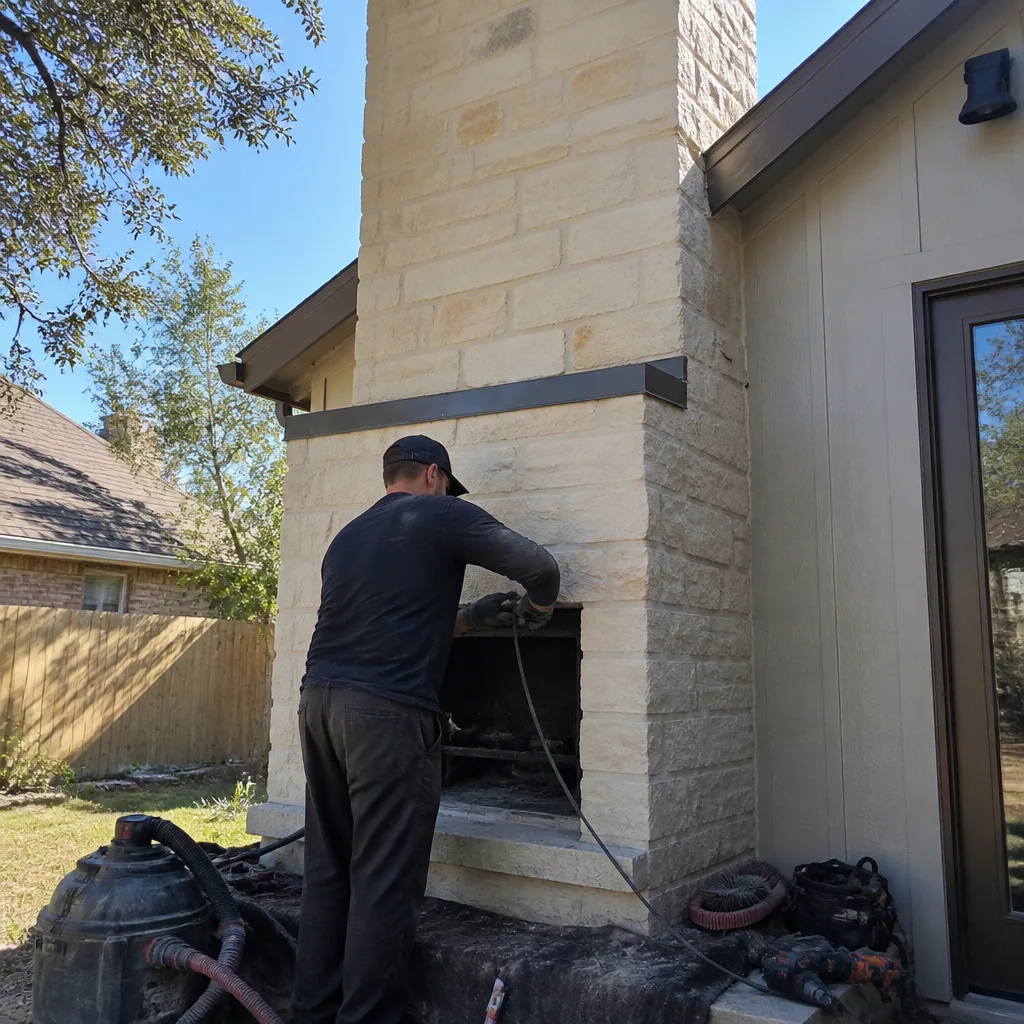 After
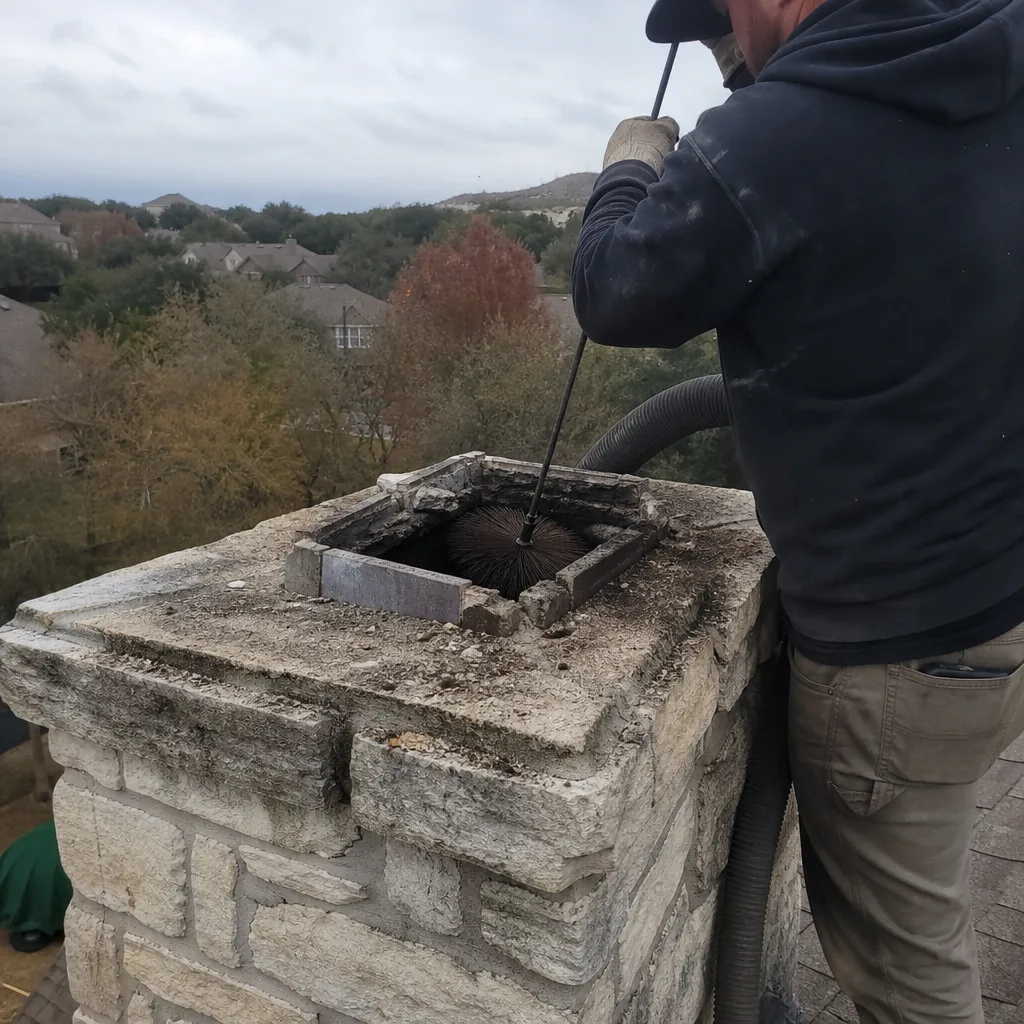 Before
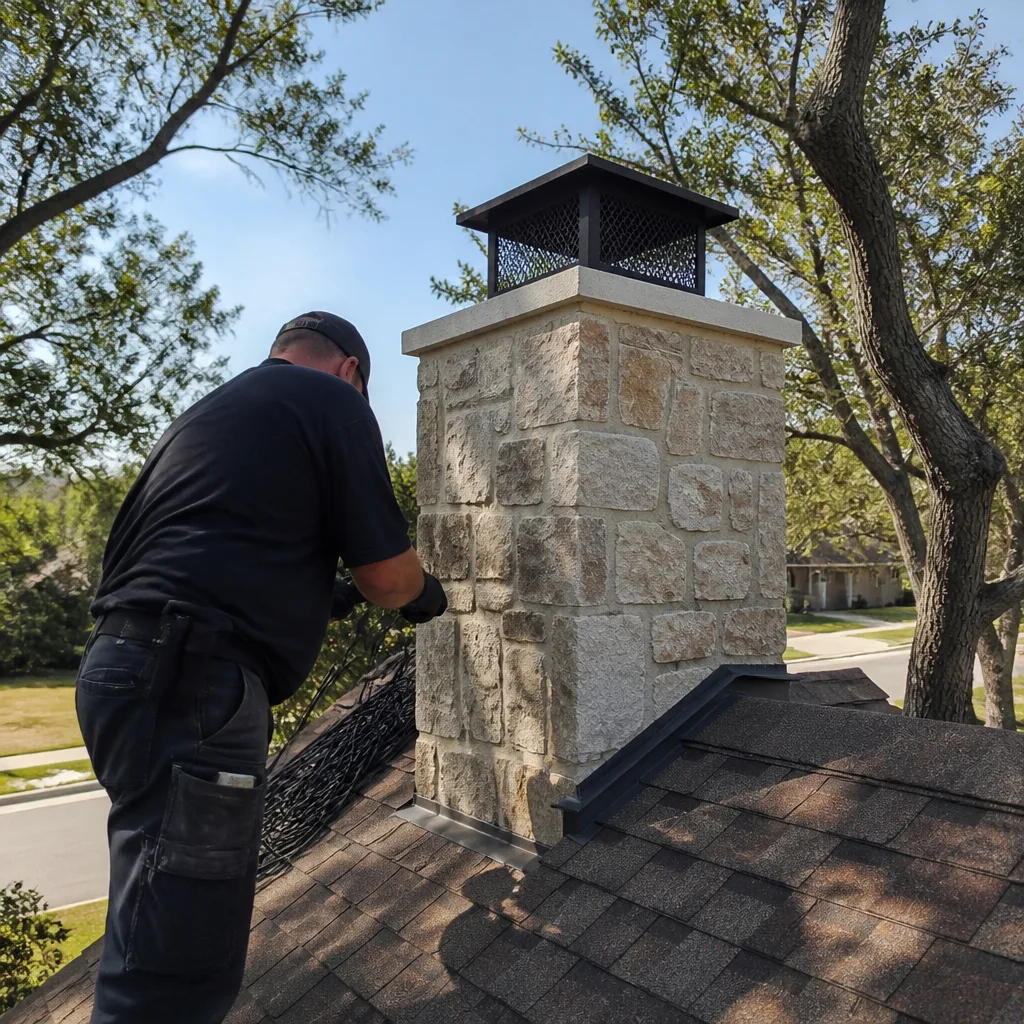 After