Last updated October 31, 2026
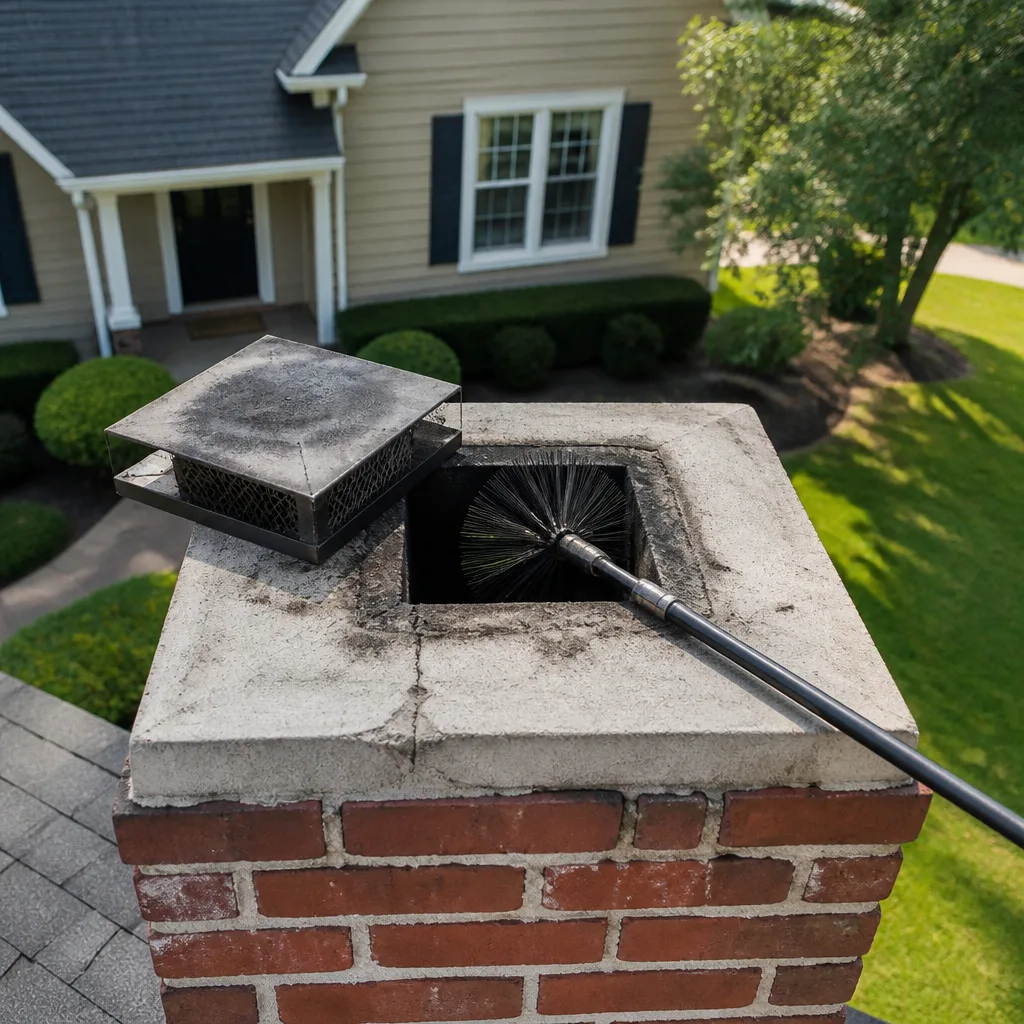 Sweep & inspection
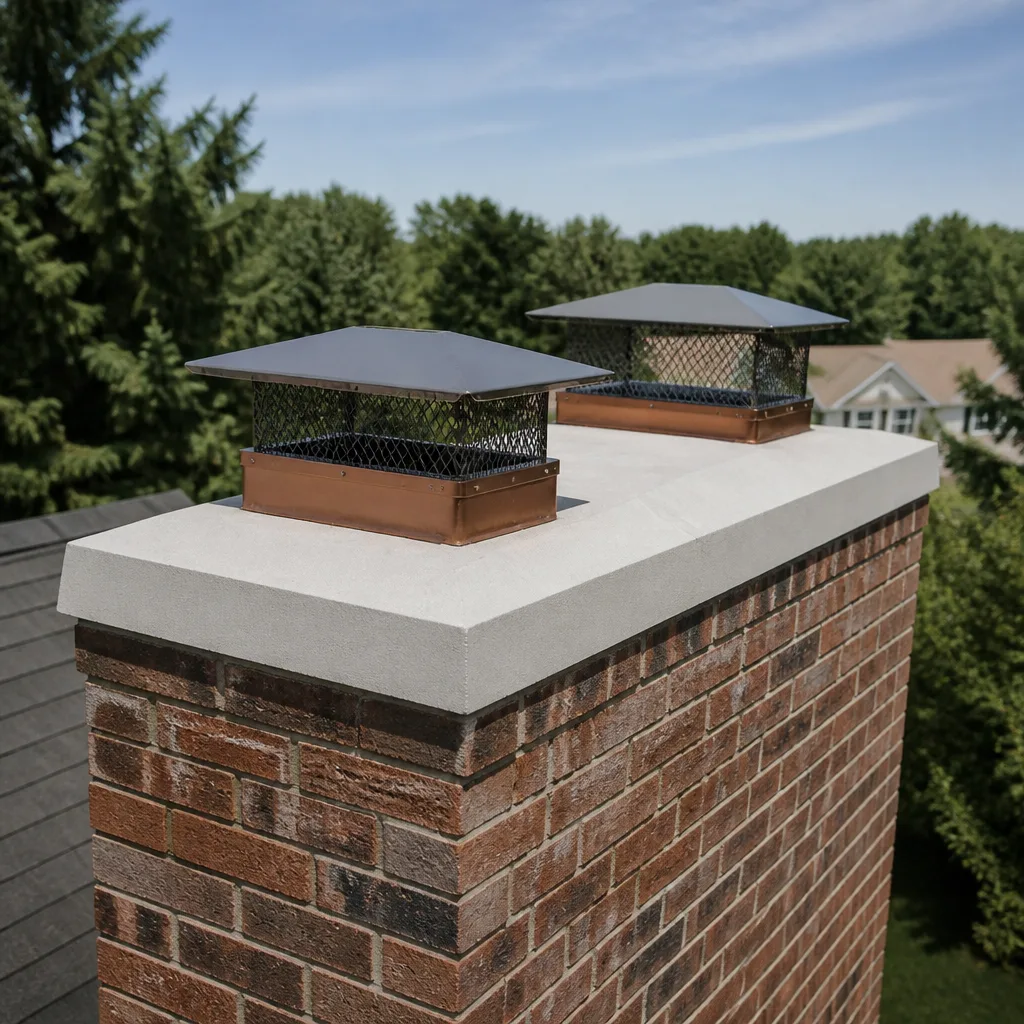 Caps & crowns
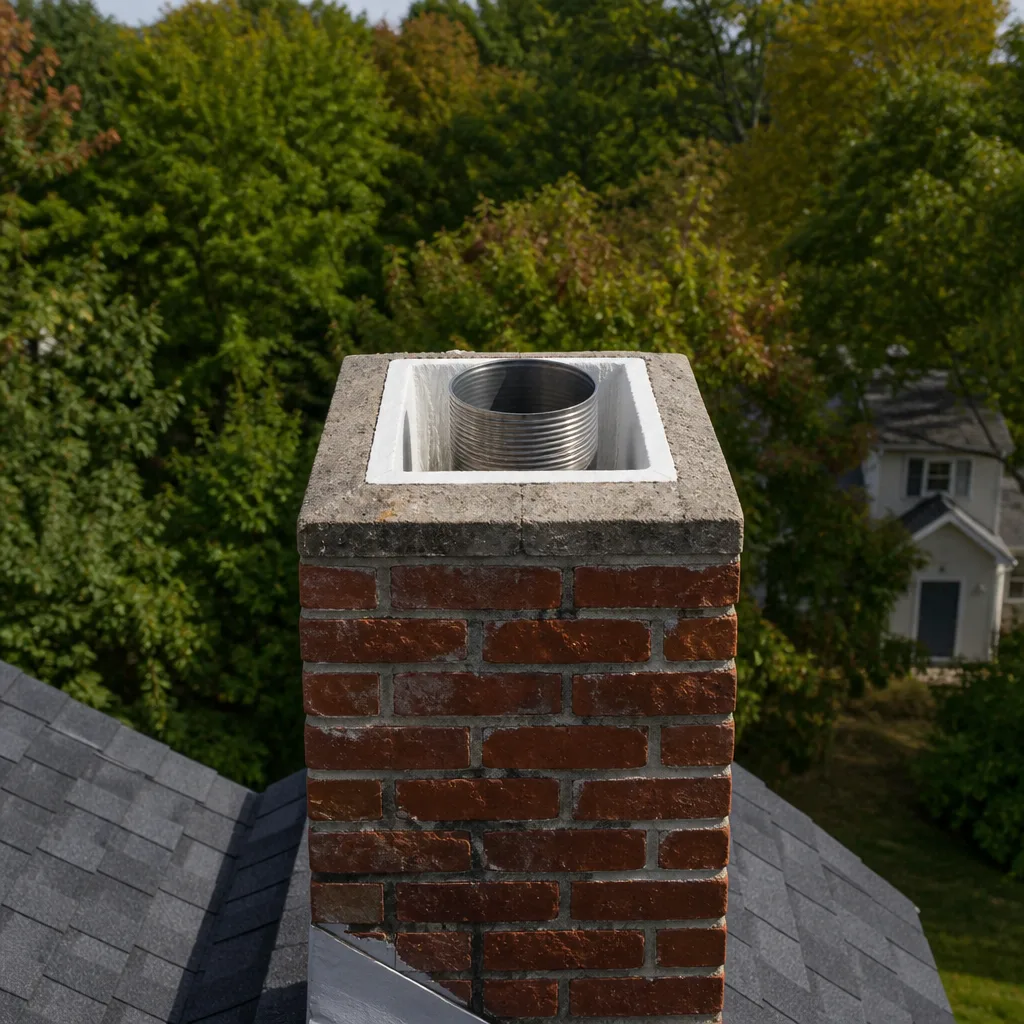 Flue relining
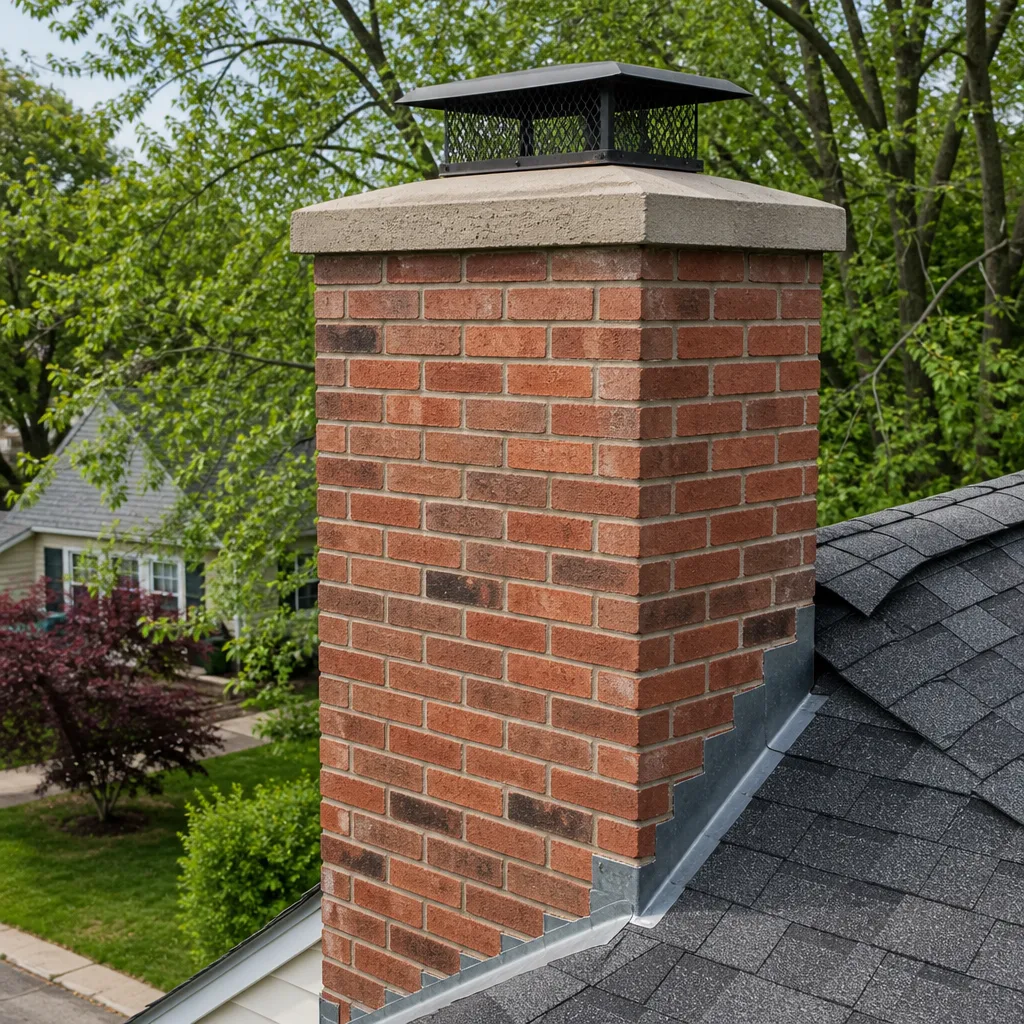 Masonry repair
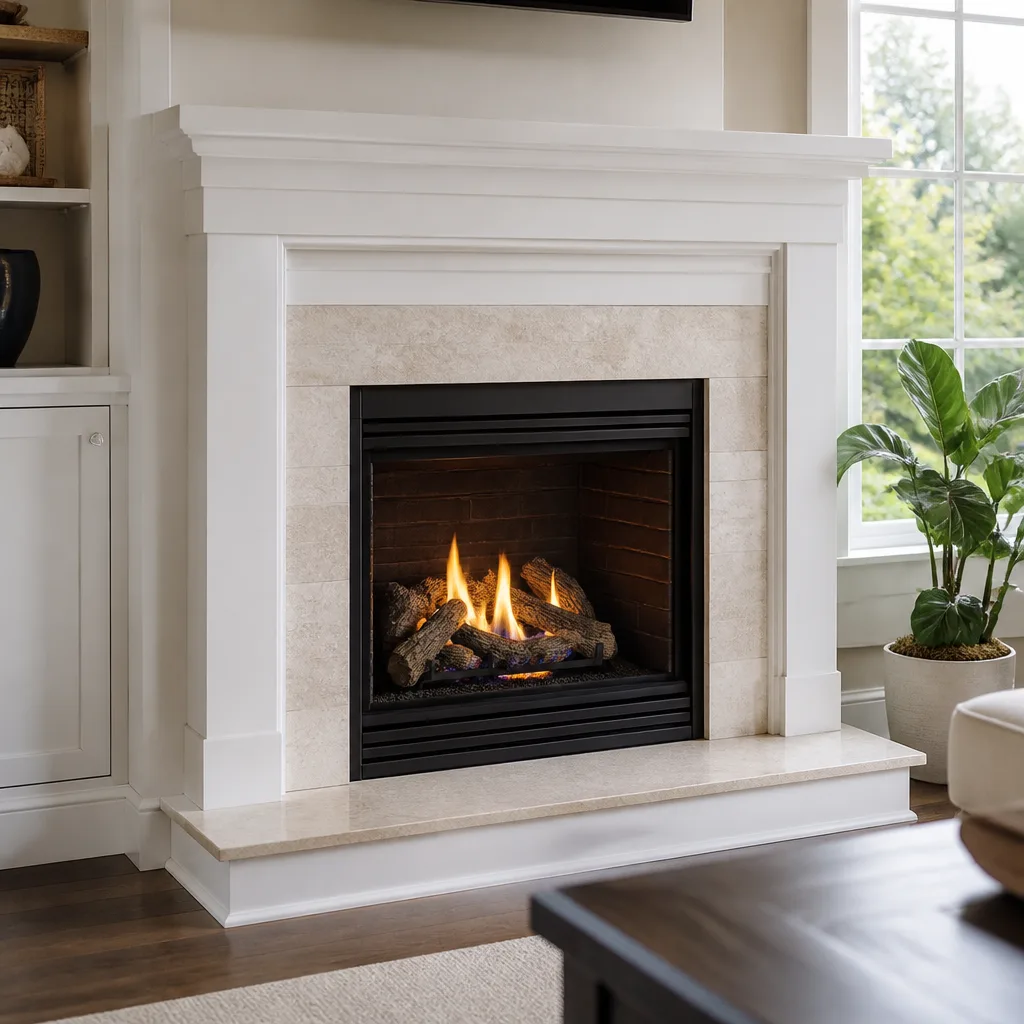 Gas fireplace service
Level 1 sweep and inspection to the NFPA 211 annual standard - flue, crown, cap, and flashing checked and photographed
Chimney sweep logs do not sweep chimneys. They loosen some creosote - which then falls where a brush and vacuum still have to collect it.
Seasonal Chimney Cleaning Care for Cedar Park: Year-Round Homeowner’s Guide
Ask a homeowner in Chicago when they think about their chimney and they’ll say November. Ask someone in Cedar Park and the honest answer is usually “when the first cold front hits.” That’s a problem, because the biggest chimney threat in Cedar Park during July isn’t fire – it’s nesting. White-throated swifts and chimney swifts are federally protected under the Migratory Bird Treaty Act, and an uncapped flue in summer can result in a nest you’re legally prohibited from removing until fall. This guide walks through what Cedar Park homeowners actually face month by month, why the Texas heat does more damage than most people realize, and how to time chimney and dryer vent care so you’re never scrambling in October.
Styles & brands we work with
Quick Answer
Seasonal chimney care in Cedar Park means a late-spring cap and animal guard inspection, a summer dryer vent cleaning timed for peak humidity, a pre-burn inspection and sweep between late August and early October, and a post-winter masonry walkthrough in March. The inverted season here – mild winters, brutal summers – shifts the calendar compared to northern climates, but the annual sweep and inspection still needs to happen before you light the first fire of the season.
Table of Contents
- Why Cedar Park’s Climate Flips the Chimney Calendar
- Summer Nesting Season: The July Problem Nobody Talks About
- A Month-by-Month Cedar Park Chimney Calendar
- Thermal Expansion and Masonry: Why Post-Winter Inspection Beats Freeze-Thaw Worry
- What Happens to a Clay Flue Liner After a 100°F Summer
- Dryer Vent Cleaning Timing in Cedar Park’s Humid Months
- Coordinating Chimney Care with HVAC Tuneups
- Common Mistakes to Avoid
- When to Call a Professional
- Frequently Asked Questions
- The Bottom Line
Why Cedar Park’s Climate Flips the Chimney Calendar
Traditional chimney advice comes from places where snow loads, ice dams, and sub-zero freeze-thaw cycles are the dominant concerns. Cedar Park doesn’t have those problems. What we have instead is a fireplace season that runs roughly October through March, followed by five months where the chimney sits idle in heat that regularly crosses 100°F. That heat is not passive. It expands masonry, dries out mortar joints unevenly, and accelerates the oxidation of metal components like caps, chase covers, and damper assemblies.
The practical takeaway: your chimney does not enter a “resting” phase after winter. It enters a weathering phase. The work you do between April and September determines whether the chimney is ready to operate safely in October. A homeowner who skips summer inspection often discovers the problem on the first cold evening, when everyone in Cedar Park is calling for service at the same time.
This is why the Chimney Sweep in Cedar Park service we offer is structured around an annual rhythm, not a one-time visit. The sweep itself is only half the value. The inspection that comes with it is what catches the problems summer created while the flue sat unused.
The Inverted Season at a Glance
- October – March: Active burn season. Creosote accumulates, dampers wear, glass doors get coated with soot, and ash management becomes weekly.
- March – April: Post-season inspection window. Best time to catch moisture infiltration from winter rains before summer heat locks problems in.
- May – July: Peak nesting and animal activity. Un-capped flues become swift habitat. Chimney caps get inspected for gaps and loose fasteners.
- August – September: Pre-burn preparation. Sweep, inspection, minor repairs, and dryer vent service before the seasonal rush.
Summer Nesting Season: The July Problem Nobody Talks About
Chimney swifts are remarkable birds. They roost vertically, clinging to textured surfaces with specialized claws, and they migrate from South America each spring to nest in North American chimneys. White-throated swifts do the same in Central Texas. Both are protected under the Migratory Bird Treaty Act, which means once a nest is established with eggs or young, you cannot legally remove it, disturb it, or even have a chimney professional extract it until the birds leave on their own in the fall.
This creates a real problem for Cedar Park homeowners with uncapped or poorly capped flues. You might not notice anything in April when the swifts scout for nesting sites. By July, there’s an active nest. By August, the young have fledged and the adults have left behind a mass of twigs, feathers, and dried droppings that is both a fire hazard and a respiratory irritant once you finally light a fire in November.
The fix is straightforward: a properly fitted chimney cap with an animal guard installed before nesting season begins. We inspect caps every spring as part of our standard service because a loose cap is nearly as bad as no cap at all. A half-inch gap is enough for a swift to enter. The cap itself should be stainless steel or heavy-gauge galvanized metal sized to your specific flue, not a universal hardware-store fitment. We use caps from Olympia Chimney and Copperfield because their tolerances are consistent and their stainless alloys hold up through repeated Texas summers without warping.
What a Nest Actually Means for Your Chimney
- A swift nest burns hot and fast if ignited – the twigs and dried guano are highly combustible.
- Nests block flue draft, pushing smoke and carbon monoxide back into the home even after the birds are gone if debris remains.
- Guano is acidic and accelerates deterioration of clay tile liners and mortar joints.
- Removal after nesting season must be done carefully to avoid pulverizing dried material into the firebox and living spaces.
A Month-by-Month Cedar Park Chimney Calendar
Here’s how we time chimney care in Cedar Park across a full year. This is the schedule we recommend to homeowners who want to avoid the October rush and the summer nesting surprise.
January – February
Peak burn season. This is when you’re using the fireplace most heavily. The key discipline here is simple: burn seasoned hardwood, keep the damper fully open while a fire is active, and watch for any smoke backing into the room. If you notice a smoky smell lingering hours after the fire is out, that’s a draft issue worth investigating before the season ends. Don’t assume it’s “just the wind.”
March
Post-winter inspection month. The burn season is winding down, and any moisture intrusion from winter rains has had time to show itself. This is the best month in Cedar Park to schedule a full Chimney Repair in Cedar Park evaluation, because problems identified now can be fixed at a deliberate pace rather than rushed in September. Look for: water stains on the firebox or hearth, spalling brick on the exterior chimney chase, rusty streaks below the cap, and deteriorating mortar joints visible from the ground.
April – May
Cap and animal guard inspection. If you haven’t had the cap checked in more than two years, now is the time. We regularly see caps from big-box stores that have rusted through in under three seasons. The Texas sun just eats cheap galvanized steel. A stainless cap with a proper animal guard should last a decade or more. If you notice birds circling the chimney or hear chirping from the firebox, you’re already dealing with an active nest and legally cannot intervene until fall.
June – July
Dryer vent season. Cedar Park’s summer humidity forces dryers to work harder, and lint accumulation in the vent line becomes a real fire risk when the dryer is running multiple loads per week. This is the right time to schedule a Dryer Vent Cleaning in Cedar Park service, especially if your laundry room is on an interior wall with a long vent run. Also: check that the dryer vent cap on the exterior wall is functioning properly and not blocked by birds or insects attempting to nest near the warm air discharge.
August
Pre-season sweep and inspection. This is the sweet spot for our Chimney Sweep in Cedar Park visit. The weather is still warm, but fall is six weeks away. You can get a complete cleaning, a level 1 or level 2 inspection depending on what we find, and any necessary repairs completed before the busy season starts. HeatShield resurfacing work especially benefits from warm, dry weather because the product cures optimally when temperatures are consistently above 50°F with low humidity.
September
Repair completion and final checks. If inspection revealed issues that needed repair, this is the window to finish them. Relining a flue with a DuraFlex stainless system takes a day for a standard single-story home and is fully code-compliant for wood, gas, or oil appliances. Damper replacements, chimney cap replacements, and firebox repairs are all quick jobs when scheduled in September.
October
First burn. Do a test burn before you actually need heat. Light a small fire with dry kindling, open the damper fully, and watch the smoke. If it draws cleanly up the flue within a minute, you’re ready for the season. If smoke rolls into the room, something’s wrong and you should call before the serious cold weather arrives.
November – December
Active use with monthly visual checks. Peak holiday season is peak burn season. Every month, shine a flashlight up from the firebox and look for any unusual soot patterns, animal activity, or visible flue damage. If your glass doors are getting coated with thick black creosote faster than usual, that’s a sign the wood is too wet or the flue isn’t drafting at peak efficiency.
Thermal Expansion and Masonry: Why Post-Winter Inspection Beats Freeze-Thaw Worry
Northern chimney literature obsesses over freeze-thaw cycling – the way water seeps into brick pores, freezes, expands, and fractures the masonry. Cedar Park gets a handful of freezing nights per year, so that’s a minor factor. What matters here is thermal expansion from heat, and it’s the most underappreciated chimney problem in Central Texas.
Here’s what happens. A brick chimney on the south side of a Cedar Park home can see surface temperatures climb from 40°F at dawn to 140°F by early afternoon in July. That’s a 100-degree swing in six hours. Brick, mortar, and the concrete crown on top all expand and contract at different rates. Over a decade, those differential stress cycles loosen mortar joints, create hairline cracks in the crown, and can even shift the physical connection between the chimney stack and the roofline.
The signs are subtle at first. You’ll see a crack webbing across the concrete crown that looks cosmetic but is actually the primary water entry point for the entire chimney system. Weep holes at the base of the flue may show moisture staining. The masonry may develop a slight lean that’s visible only with a level.
This is why our Chimney Repair in Cedar Park work often starts with crown sealing and joint pointing before we ever recommend a liner repair. The masonry envelope protects everything inside it, and in Cedar Park, the masonry envelope lives a harder life than most homeowners realize.
The Freeze-Thaw Factor We Do See
Spring hailstorms and sudden Blue Norther fronts do produce brief freeze cycles. When a crown crack lets rainwater into the masonry, and a hard February freeze follows, that trapped water can expand and pop a brick face off. We see this pattern most often in older Cedar Park neighborhoods like Buttercup Creek and Carriage Hills, where original chimneys are now 20 to 30 years old. The damage was started by summer heat, finished by a single freeze, and usually not noticed until spring.
What Happens to a Clay Flue Liner After a 100°F Summer
Clay tile liners have been the standard chimney lining material for decades. They’re good at what they do – until they’re not. And the way they fail in Cedar Park is often different from how they fail in colder climates.
Leaving a clay liner unresolved with winter moisture infiltration heading into a Texas summer is a recipe for accelerated degradation. Here’s the sequence:
- Winter: Rain enters through a cracked crown or missing cap. Water saturates the mortar joints between clay tiles and pools at the bottom of the flue, near the smoke shelf.
- Spring: Moisture lingers in the joints. The chimney is unused, so nothing dries it out. Humidity keeps the liner damp.
- Summer: The exterior masonry hits 130 – 140°F. The trapped moisture turns to vapor inside the flue enclosure. Steam pressure builds in the space between the clay tiles and the masonry wall. The liner expands against the surrounding brick.
- The result: Hairline cracks in the clay tiles, or worse, full vertical splits. The liner loses its gas-tight integrity. Combustion byproducts can now migrate through cracks into the wall cavity or living space.
Once a clay liner cracks, the options are either remove and replace the entire liner (invasive, expensive, often requires opening the wall) or resurface the flue interior. That’s where HeatShield becomes relevant. The HeatShield Cerfractory system is a fiber-reinforced refractory coating that’s applied to the existing flue interior, sealing cracks and restoring gas-tight integrity. It’s a manufacturer-backed repair that’s been tested to UL standards for chimney relining, and it does not require demolition.
We’re certified to install HeatShield and recommend it frequently for Cedar Park homes where the clay liner shows stress cracks but the masonry itself is sound. It’s a repair measured in hours, not days, and costs a fraction of full relining. The brand matters here – this is a professional-grade material applied by a trained technician, not a brush-on sealant from a hardware store.
Dryer Vent Cleaning Timing in Cedar Park’s Humid Months
Your dryer vent is a venting system too, and in Cedar Park it deserves the same seasonal attention as your chimney. The connection isn’t obvious until you think about what summer humidity does to a dryer’s workload.
During humid months, towels and heavy cotton clothes come out of the wash holding more moisture than they do in winter. The dryer runs longer to dry the same load. Longer cycles mean more lint generation, more air moving through the vent line, and a hotter exhaust system. If the vent line already has two or three years of accumulated lint, the increased summer workload turns a maintenance issue into a fire hazard.
The Chimney Safety Institute of America (CSIA) and the National Fire Protection Association (NFPA) both identify dryer vent fires as one of the leading causes of residential structure fires, and the leading cause is simple lint accumulation. In Cedar Park’s climate, that risk peaks between June and September because:
- Humidity forces dryers to work harder and longer
- Warm exterior temperatures mean the vent exhaust is already hot before the dryer adds more heat
- Summer thunderstorms push nesting birds and rodents toward warm, dry vent openings
- Families do more laundry in the summer – kids home from school, pool towels, sports uniforms
Dryer Vent Cleaning in Cedar Park is a service we perform alongside chimney work, not as an afterthought. The equipment is different – rotary brush systems sized to the vent diameter, with HEPA-filtered collection – but the discipline is the same: identify the blockage, remove it, verify airflow, and document the before-and-after. We always recommend a visual inspection of the exterior vent cap too, because that’s where most Cedar Park dryer fires actually start. The cap is the narrowest point in the system and the first place lint gets caught when the exhaust air is heavy with moisture.
How Often Should You Clean a Dryer Vent in Cedar Park?
For most Cedar Park households: once a year. If you have a long vent run (over 10 feet), multiple elbows in the line, or a laundry room on an interior wall, twice a year is safer. The screen on the lint trap catches only about a third of the lint a dryer produces. The rest goes through the vent line. You can check the buildup by feeling the exhaust at the exterior cap during a dry cycle – if the air is weak or warm but not clearly flowing, you have accumulation.
Coordinating Chimney Care with HVAC Tuneups
Most Cedar Park homeowners schedule HVAC maintenance twice a year – once before summer, once before winter. We recommend timing chimney and venting care to the same rhythm, because the systems share two things: makeup air and attic venting. A chimney is a hole in your house that pulls indoor air out. An HVAC system is a machine that conditions indoor air and sends it through ducts. When both are running, they affect each other.
If you schedule your spring HVAC check in April, book the chimney cap and masonry inspection for the same window. The HVAC technician checks the attic, the technician checks the chimney exterior, and any shared venting issues – like a furnace vent that shares a flue with the fireplace in an older home – can be identified in one service call.
In fall, same logic. The post-summer HVAC tuneup happens in September. The pre-burn chimney sweep should happen right alongside it. By coordinating, you’re not saving money directly. You’re saving diagnostic time. A draft problem that shows up only when the furnace kicks on is almost always a shared venting issue, not a fireplace problem, and identifying that starts with having both systems on the same maintenance schedule.
Common Mistakes to Avoid
- Skipping the cap inspection because the fireplace “was fine last year.” Caps corrode, fasteners back out, and animals exploit every gap. A cap that worked in October may be useless by May.
- Burning wet or unseasoned wood. Cedar Park’s climate dries wood relatively quickly, but a pile of rain-soaked live oak doesn’t season in a month. Wet wood creates dense, sticky creosote that builds up in a single season.
- Assuming a crack in the firebox is cosmetic. Firebox refractory panels expand and contract just like masonry. A crack wider than 1/8 inch is a path for heat to reach combustible framing. It’s a repair, not an observation.
- Waiting until October to schedule. Every chimney company in Cedar Park is slammed from late September through Thanksgiving. Scheduling in August means you’ll get a date that works for you, not one that works for us.
- Ignoring the dryer vent because it’s “not a chimney.” Lint fires don’t care about the distinction. The dryer vent is the most fire-prone venting system in your home, and it needs annual cleaning.
- Using a flexible hose from the dryer to the wall as the permanent vent. Those foil accordion hoses accumulate lint in every fold and are against code for permanent installation. They’re meant to connect the dryer to a rigid vent, nothing more.
- Thinking a gas log set means no creosote. Gas logs produce acidic byproducts that corrode dampers, cast iron, and mortar joints. They may not produce soot, but they still need an annual inspection and cleaning to prevent corrosion.
When to Call a Professional
Most chimney problems announce themselves quietly: a loose cap rattling in the wind, a faint smoky smell after the fire is out, moisture stains on the ceiling near the chimney chase, or a dryer that’s taking longer than it used to. These are the signs that something has changed inside or around the venting system, and they’re in our job description to diagnose. If you see active bird activity in the chimney, don’t attempt to remove anything yourself – call and we’ll confirm whether it’s a protected species and what the legal timeline looks like. If you smell gas or see visible smoke entering the room while the damper is open, that’s an immediate service call, not a wait-and-see. Ashton Chimney offers free estimates in Cedar Park – call (855) 507-9184.
Frequently Asked Questions
A standard chimney sweep and level 1 inspection in Cedar Park typically ranges from $180 to $350 depending on the flue size, accessibility, and whether additional services like cap inspection or dryer vent cleaning are added. We don’t quote over the phone without seeing the chimney, but the estimate is free and binding before we start. Call (855) 507-9184 for a specific quote.
It depends on what the camera inspection shows. Hairline cracks in an otherwise sound clay tile liner can frequently be sealed with a HeatShield resurfacing treatment, which is a code-compliant, manufacturer-backed repair that costs significantly less than full relining. If the liner has major vertical splits, gaps between tiles, or the flue is being converted from wood to gas, a DuraFlex stainless steel reline is the right answer. We’ll show you the video and explain the condition before we recommend anything.
For a wood-burning fireplace used regularly during the October-to-March season, once a year is the standard. Gas log sets and gas fireplaces can go two to three years between cleanings. The rule of thumb from the Chimney Safety Institute of America: when creosote buildup reaches 1/8 inch, it’s time to sweep. We verify this during every inspection and will tell you plainly if you can safely wait.
Creosote accumulates silently. A chimney fire doesn’t announce itself before it starts – it ignites when enough creosote reaches combustion temperature. Even without a fire, an unchecked flue can develop a blockage from nesting debris, fallen masonry, or a collapsed liner, pushing carbon monoxide into the house. The inspection is the safety function; the sweep is the performance function. Skipping both is a calculated risk most people don’t realize they’re taking.
They can, if the cap is damaged or improperly sized. A cap with loose fasteners, a torn mesh, or a gap between the cap and the flue opening is an invitation. Swifts only need a 2-inch opening to enter. Raccoons will pry at loose caps. We inspect the cap and animal guard as part of every service visit, and we carry stainless steel replacements from Olympia Chimney and Copperfield that are sized to the specific flue.
It’s not exaggeration, and the damage shows up in predictable ways. Thermal expansion cycles weaken mortar, oxidize metal components, and accelerate the failure of any crack already present. By the time a homeowner notices a cracked crown or a spalling brick, the heat has been working on it for months. You won’t see the damage until it’s visible, which is why our Ashton Chimney home service philosophy is built around scheduled inspection, not emergency repair.
The Bottom Line
Seasonal chimney care in Cedar Park is a 12-month responsibility, not a fall chore. Summer brings nesting swifts and thermal expansion. Spring brings the best window for post-winter inspection. Fall brings pre-burn preparation. And the dryer vent runs on its own calendar, peaking in humid months when lint accumulates fastest. One company handles the sweep, the repair, and the sign-off – so when we tell you the liner needs attention or the cap needs replacement, it’s the same team doing the work, using professional-grade materials from DuraFlex, HeatShield, Copperfield, and the other names we’re glad to show you before anything goes in your home.
Written by the team at Ashton Chimney, serving Cedar Park since 2014.
See the difference
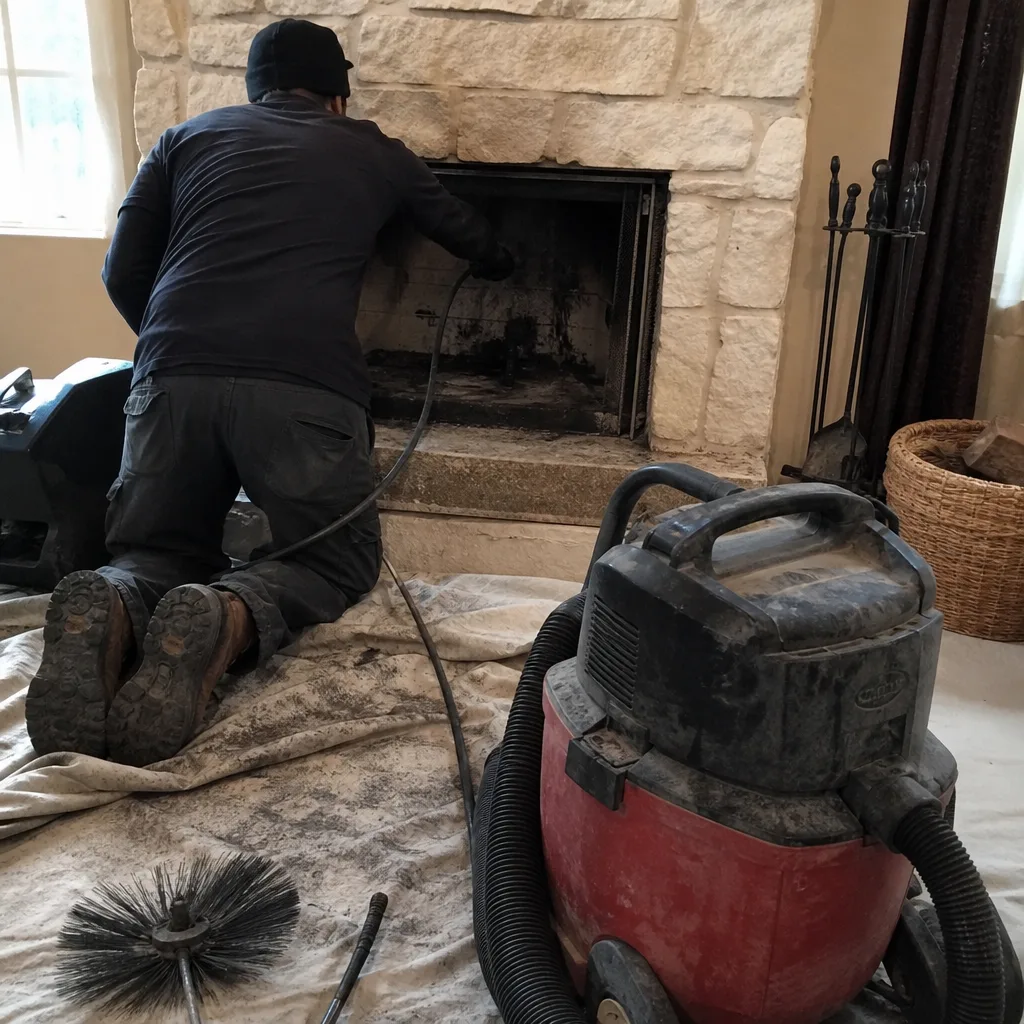 Before
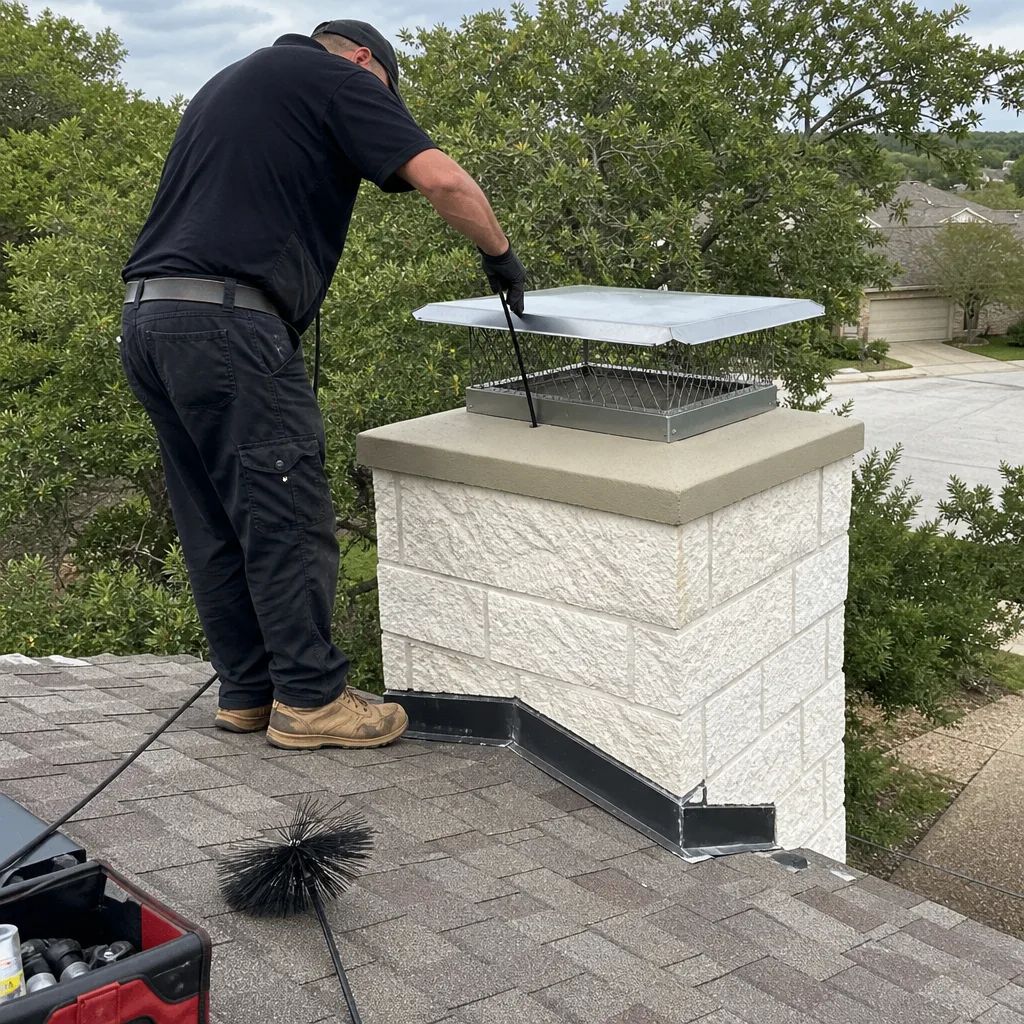 After
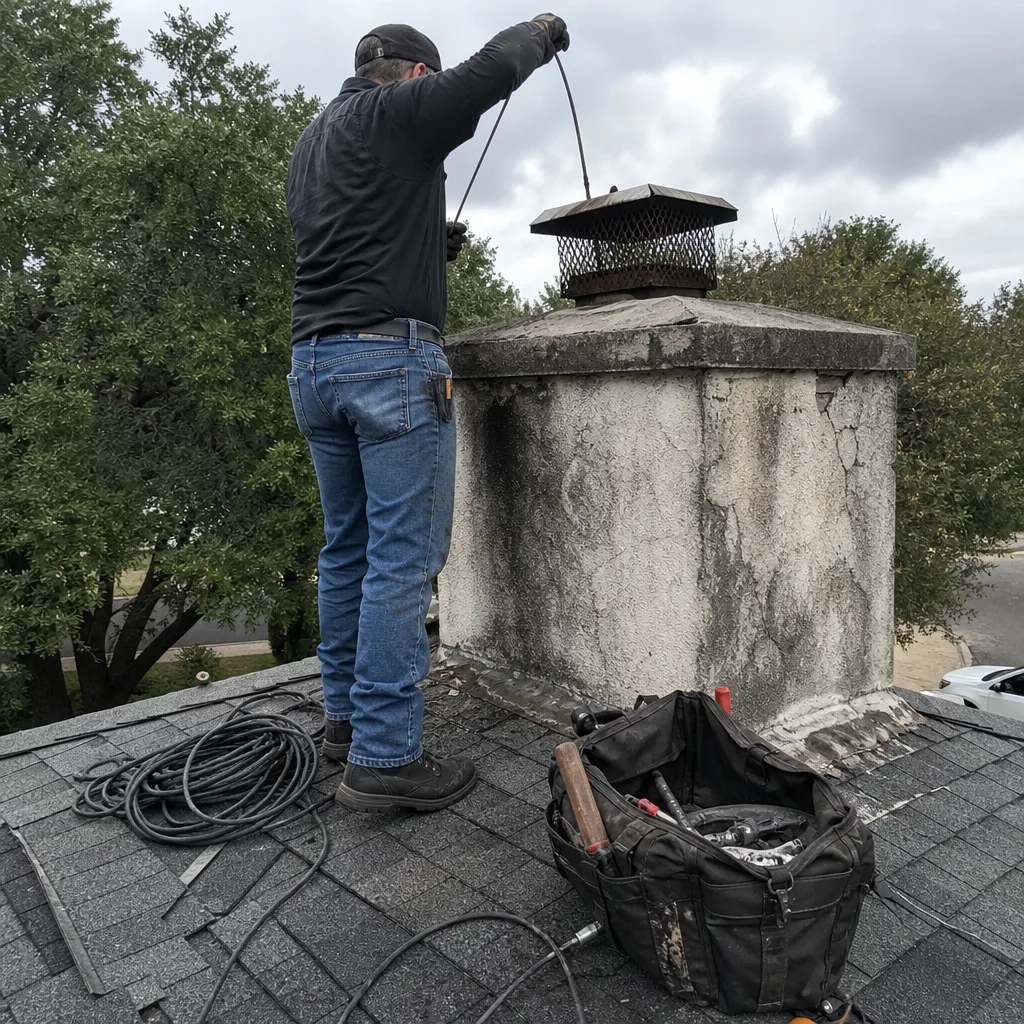 Before
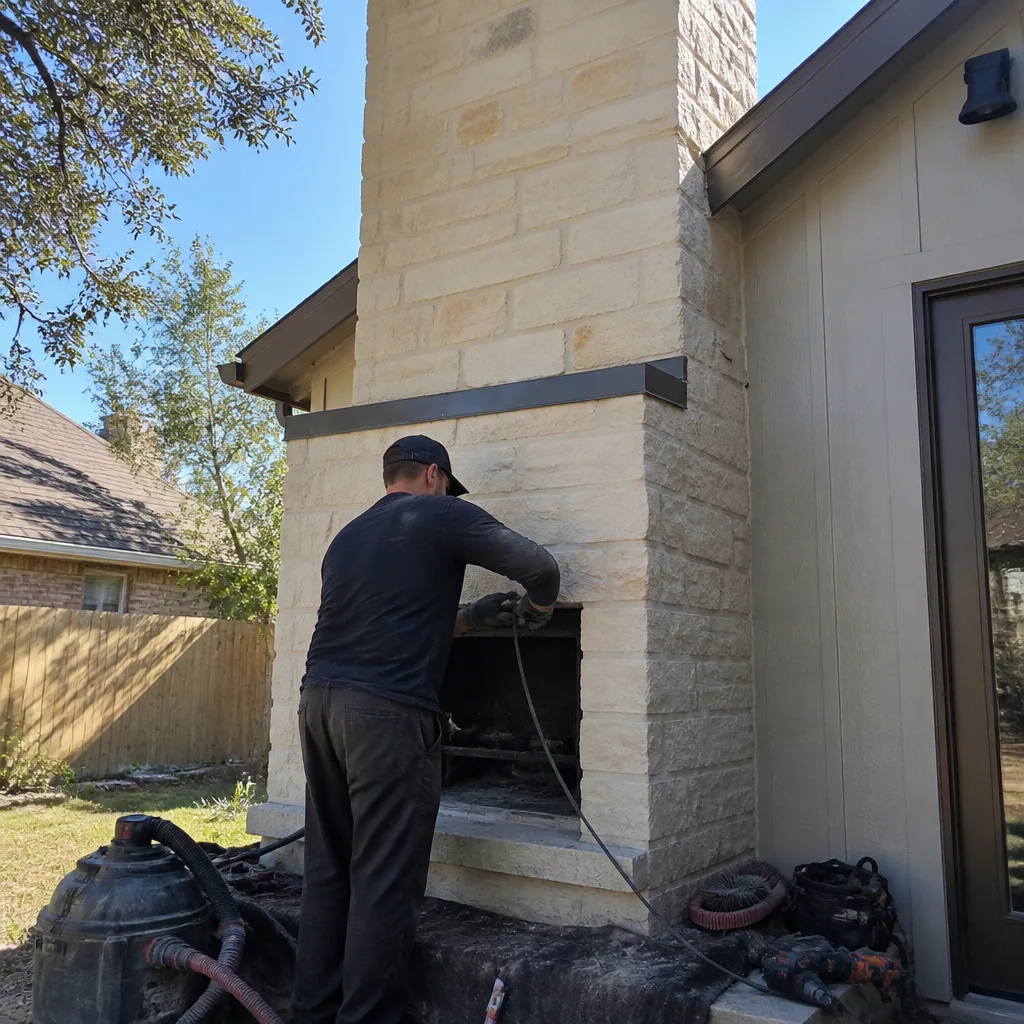 After
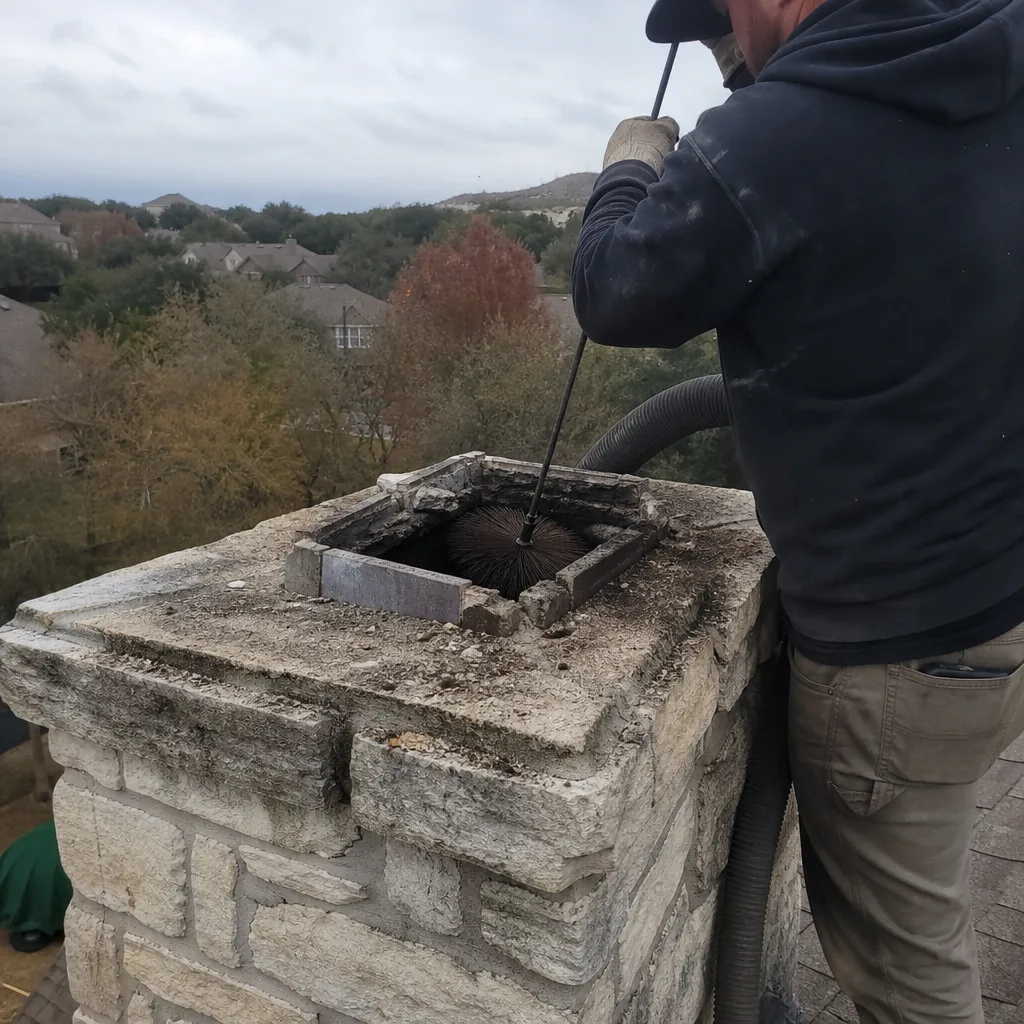 Before
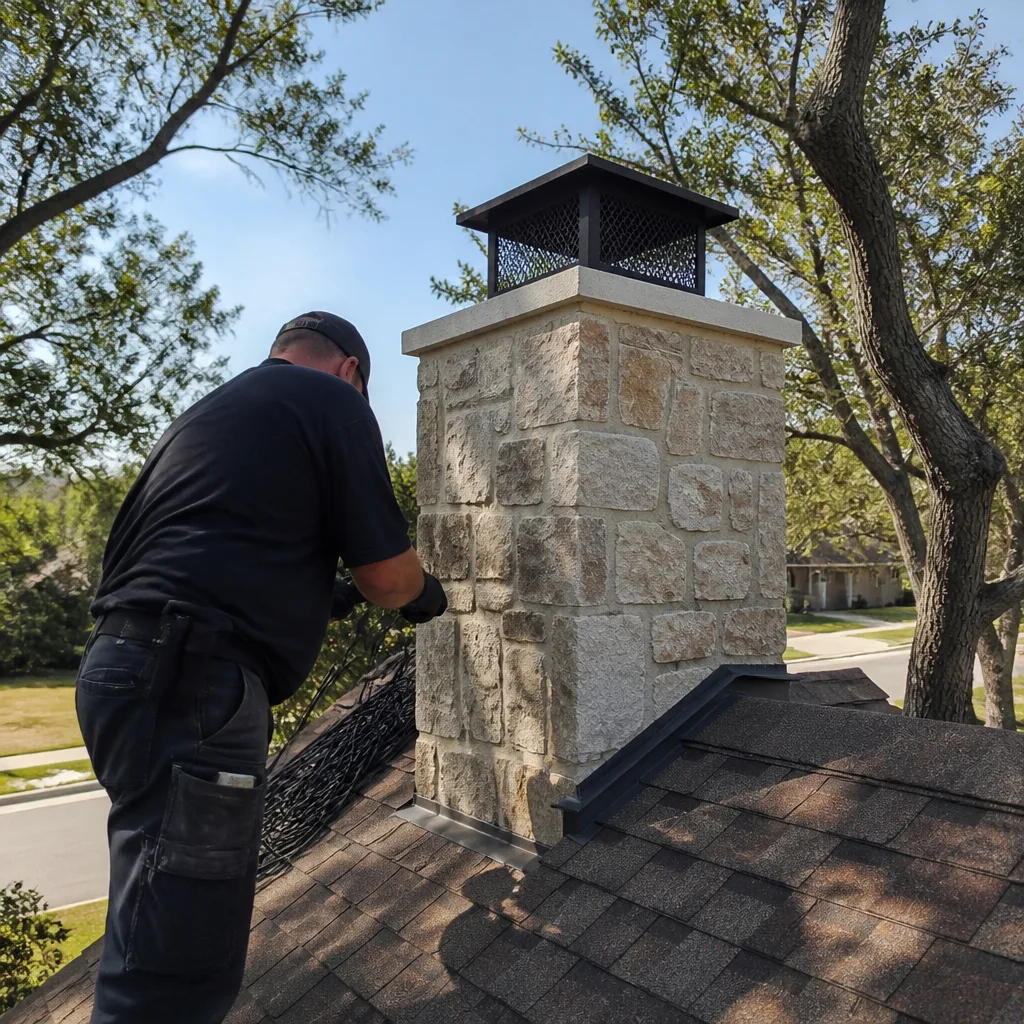 After