Last updated October 31, 2026
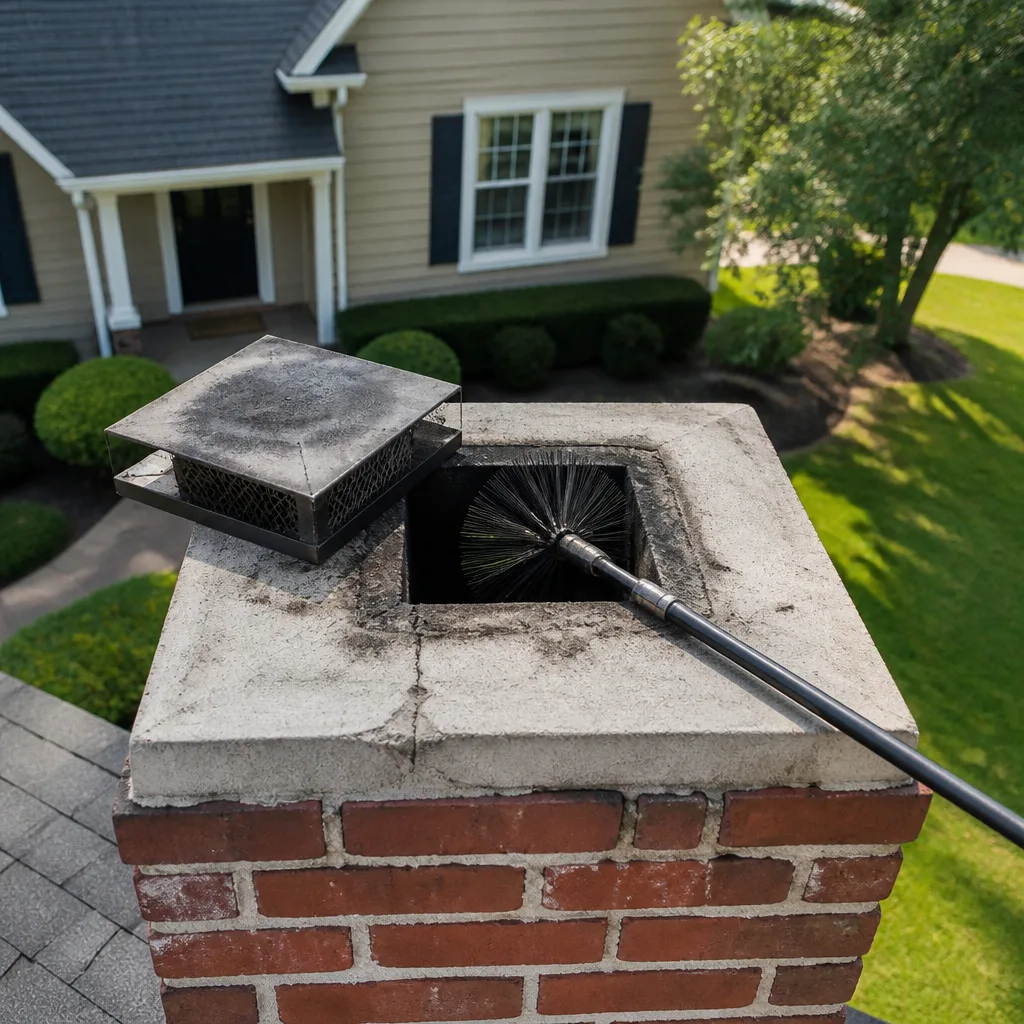 Sweep & inspection
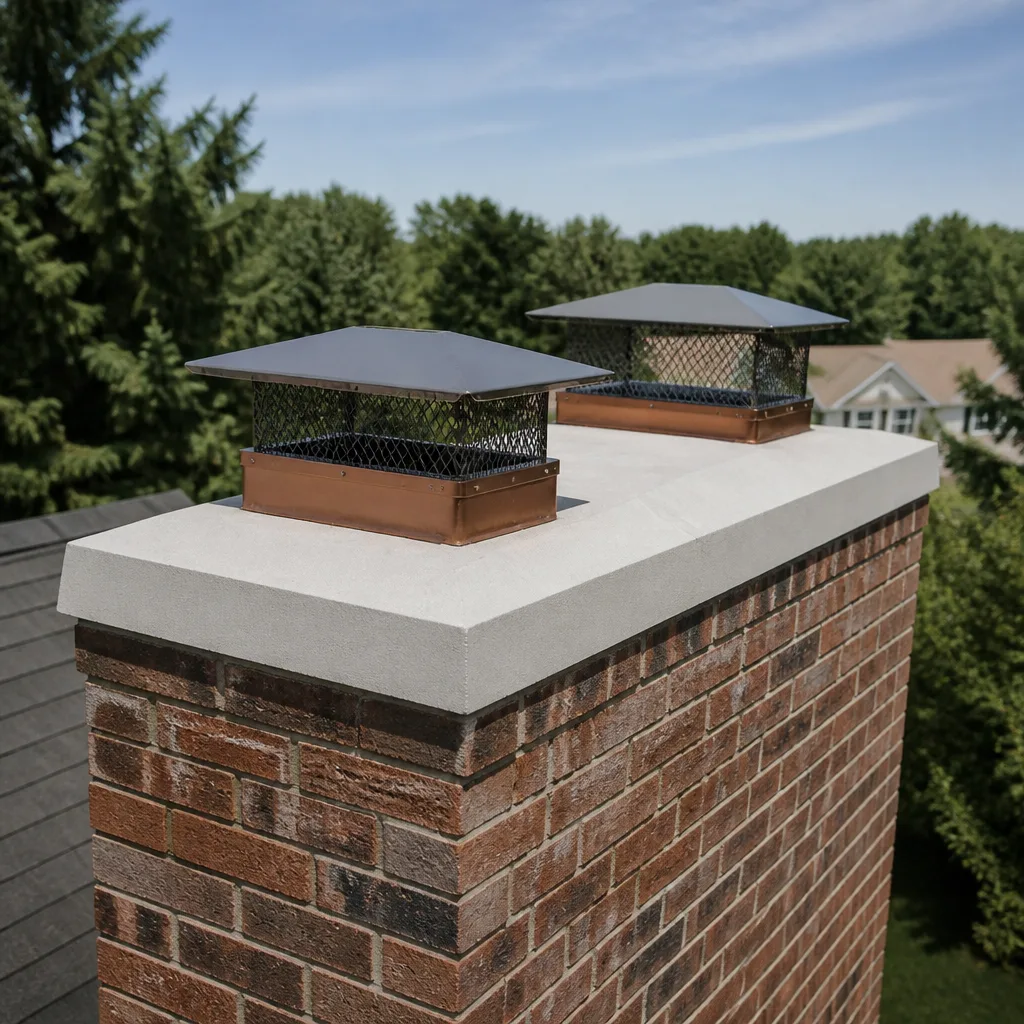 Caps & crowns
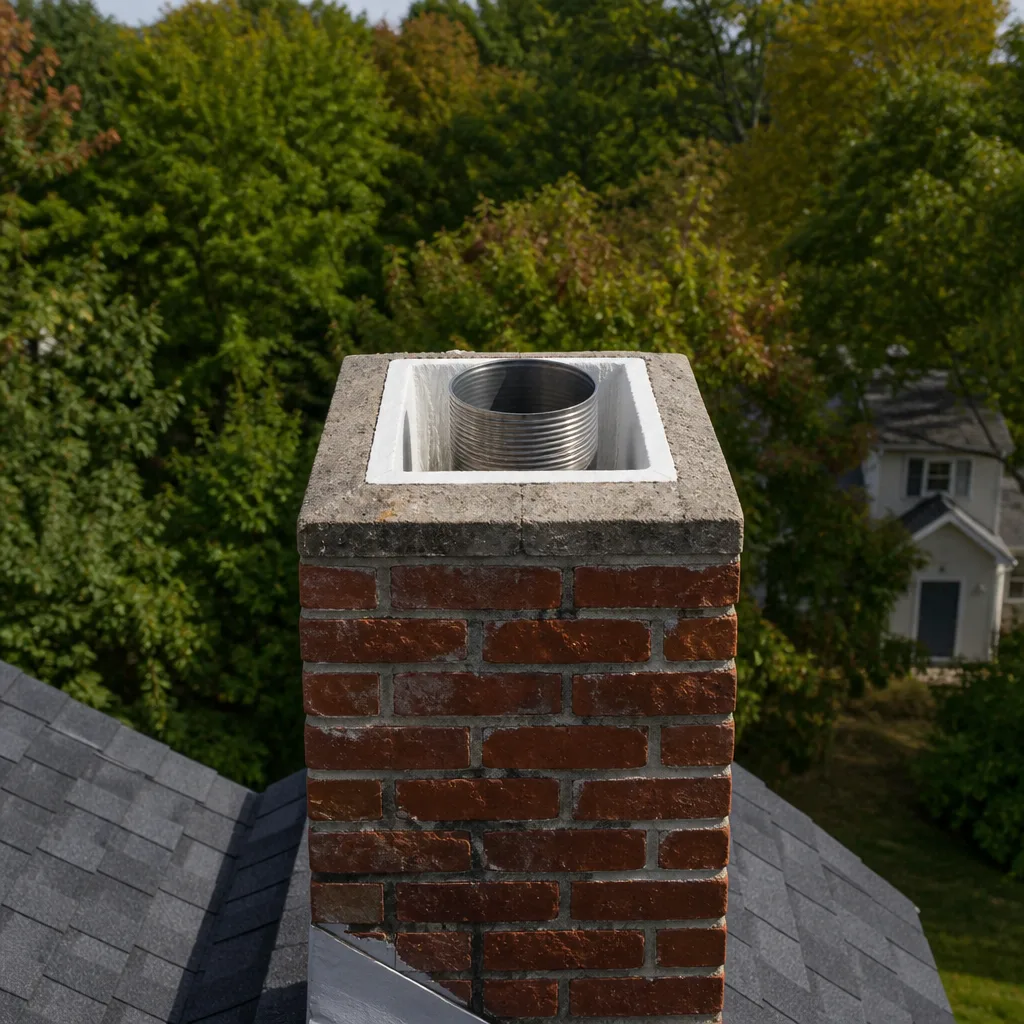 Flue relining
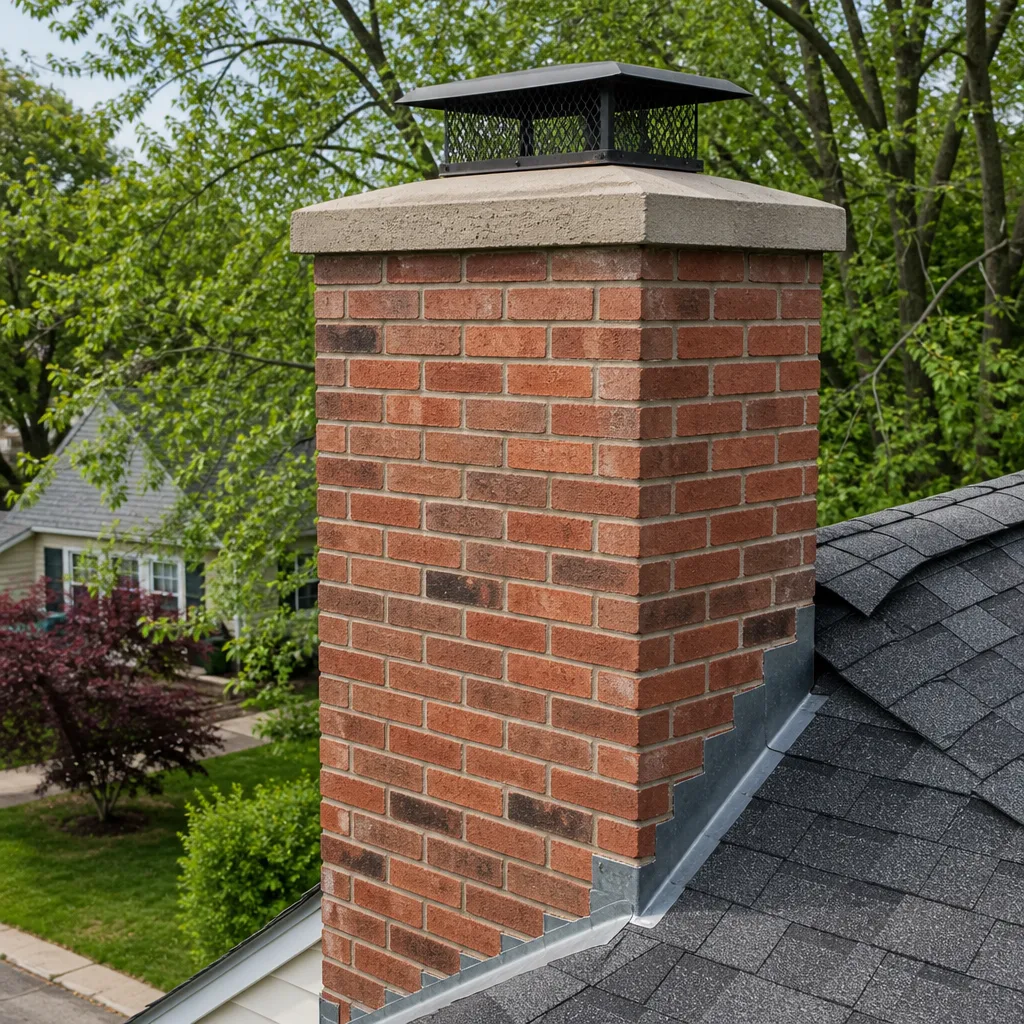 Masonry repair
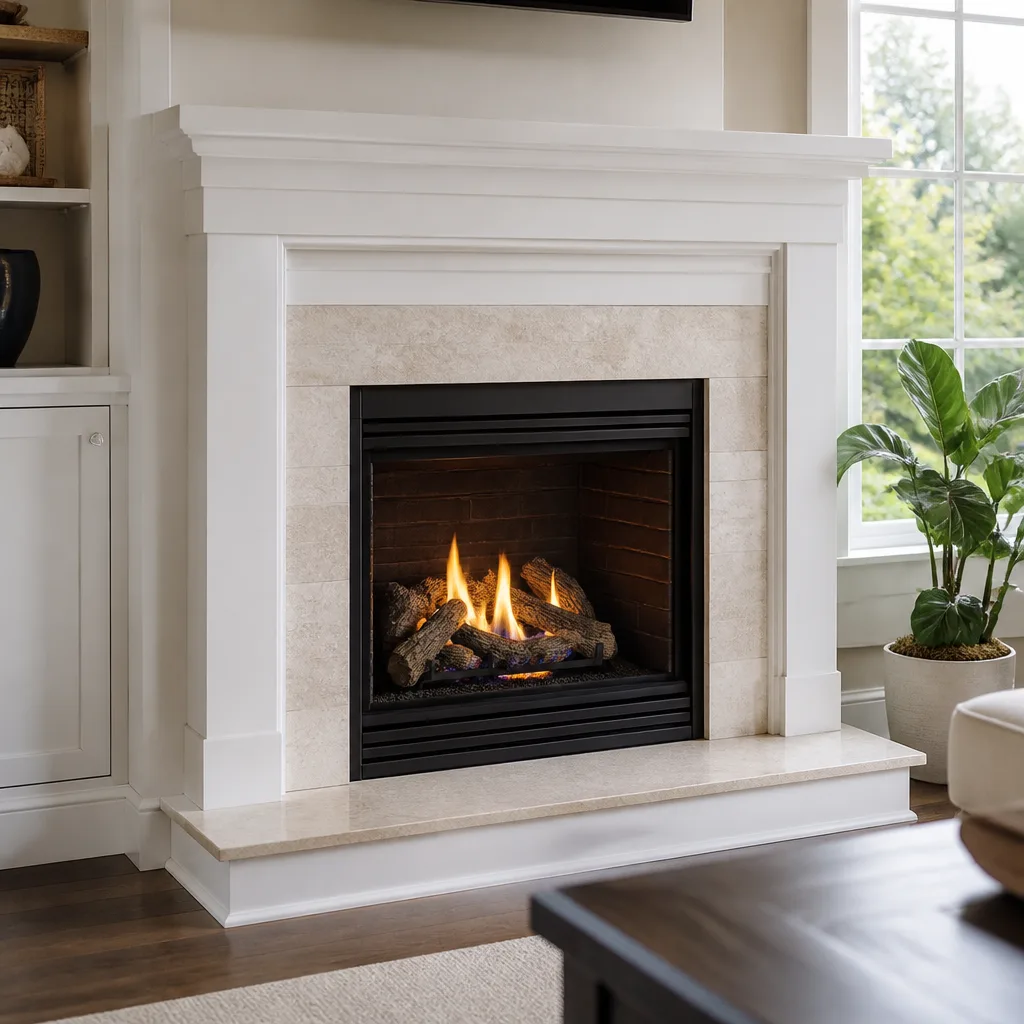 Gas fireplace service
Level 1 sweep and inspection to the NFPA 211 annual standard - flue, crown, cap, and flashing checked and photographed
Chimney sweep logs do not sweep chimneys. They loosen some creosote - which then falls where a brush and vacuum still have to collect it.
Chimney Cleaning Emergency Preparedness Guide for Cedar Park Homes
A chimney fire sounds like a freight train running through your roof. It’s loud, fast, and most Cedar Park homeowners who’ve had one say they had no idea what to do in the first 90 seconds. That hesitation is the danger, not just the fire itself. This guide will walk you through the three real chimney emergencies that happen in central Texas homes: chimney fires, carbon monoxide events, and animal intrusions. You’ll learn what to do immediately for each one, what to document for insurance, and what can safely wait until morning.
Styles & brands we work with
Quick Answer
A chimney emergency in Cedar Park means one of three things: a chimney fire, carbon monoxide buildup from a fireplace or gas log insert, or an animal trapped in the flue. For a chimney fire, close the damper if you can do so safely, call 911, and evacuate immediately. For carbon monoxide alarms, get everyone outside and call 911. For trapped animals, close off the fireplace and call a Chimney Sweep in Cedar Park who can assess the flue and advise on removal.
Table of Contents
- Recognizing a Chimney Fire Before It Escapes
- The Three-Step Immediate Response to a Chimney Fire
- Sound and Smell: Reading the Difference Between a Raging Fire and a Drafting Fire
- Carbon Monoxide Protocol for Fireplace and Gas Log Insert Scenarios
- Animal Intrusion Emergencies: Birds, Squirrels, and the Migratory Bird Treaty Act
- What to Document After Any Chimney Emergency
- Prevention: What Cedar Park Homeowners Can Do Before an Emergency Happens
- Common Mistakes to Avoid
- When to Call a Professional
- Frequently Asked Questions
- The Bottom Line
Recognizing a Chimney Fire Before It Escapes
A chimney fire doesn’t always announce itself with the freight train roar. Sometimes it starts with something quieter, and that’s when Cedar Park homeowners can catch it before it spreads into the attic or walls. Creosote, the tarry residue left behind when wood smoke condenses on the flue walls, ignites at around 1,000 degrees Fahrenheit and burns aggressively once it gets going. The fire doesn’t need much creosote to sustain itself, which is why even a chimney that was swept last season can still have local hot spots around the smoke shelf or damper. That’s one reason we published our Chimney Cleaning Warning Signs: A Cedar Park Homeowner’s Reference Guide—to help you spot trouble between sweeps.
The earliest sign is often a clicking or cracking sound coming from inside the chimney. That’s the sound of creosote expanding and popping as it heats up. You might also notice a dense, brownish-black smoke coming from the chimney top that doesn’t look like normal wood smoke. It’s thicker, more turbulent, and sometimes has a slight oily sheen. Another warning is sudden, intense heat radiating from the fireplace walls into the room, hotter than what a typical fire puts off for the same amount of wood.
Here’s what we’ve seen in Cedar Park and across Williamson County: chimney fires that started as small creosote ignitions and were dismissed as “just a hot fire.” The homeowner went to bed, and by midnight the fire had burned through the flue liner into the attic framing. In a drought year like 2023, when central Texas saw weeks of 100-degree heat and extremely dry conditions, a chimney fire that escapes the flue has plenty of ready fuel in the roof structure. The time to act is at the first sign of unusual noise or smoke behavior, not when flames become visible.
Understanding what’s happening inside the flue helps you make faster decisions. Creosote builds up in three stages: a light, flaky powder; a crunchy, granular crust; and a hard, glazed tar that looks like black glass. That third stage is the one that ignites and sustains a chimney fire. A Chimney Repair in Cedar Park service can inspect for glazed creosote and address it before it becomes a problem.
The Three-Step Immediate Response to a Chimney Fire
The first 90 seconds of a chimney fire decide whether you’re dealing with a contained event or a house fire. Here’s the protocol, in order, based on what we know from fire department reports across Cedar Park and the surrounding area:
- Close the damper. This is the one action you can take from inside the house that actually helps. Closing the damper cuts off the air supply to the fire, which slows combustion inside the flue. Do this only if you can reach the damper without standing near the fireplace opening. If the heat is already intense, skip this step and move to step two. Don’t open the fireplace doors, don’t throw water on the fire, and don’t spray anything into the chimney. Water can crack a hot flue liner and make the situation worse.
- Call 911. Even if the fire looks small or contained, call the fire department. Cedar Park fire crews respond to chimney fire calls regularly, and they’d rather arrive to find a fire that’s already dying than arrive 20 minutes later to find the attic burning. Tell the dispatcher you have a chimney fire and whether you see flames coming from the chimney top or just thick smoke. That detail changes the response they send.
- Get everyone out. Close the doors behind you if you can, and take everyone outside. Wait for the fire department across the street or at a neighbor’s house. Don’t go back inside for pets, documents, or fire extinguishers. Chimney fires can breach the flue liner and enter the attic space through cracks you can’t see from the living room, and attic smoke can be invisible from the front door.
One thing we hear from Cedar Park homeowners who’ve been through this: the instinct to “wait and see if it goes out on its own” is extremely common and extremely risky. A chimney fire can smolder inside the flue for hours after the visible flames die down, then reignite when a gust of wind hits the chimney top and introduces fresh oxygen. Waiting costs you time the fire department needs to assess the structure. “Wait and see” has directly contributed to house fires in this area, and it’s the single most avoidable mistake in a chimney fire scenario.
After the fire department clears the scene, don’t use the fireplace again until a professional has inspected the chimney. A chimney fire can crack the flue liner, damage the damper, and compromise the mortar joints between flue tiles. Using it again without an inspection risks a second fire or carbon monoxide leaking into the house through the cracks. Ashton Chimney provides Ashton Chimney home inspection and repair services that address fire damage before the fireplace goes back into service.
Sound and Smell: Reading the Difference Between a Raging Fire and a Drafting Fire
If you can differentiate an early chimney fire from a normally drafting fire, you gain valuable minutes. The two main indicators are sound and smell, and they’re teachable with a little practice.
A normally drafting fire has a soft, rhythmic whoosh. It’s steady and predictable, and it sounds like air moving, because that’s what it is. A chimney fire makes a sound that people describe as a low rumble, a freight train, or what we’ve heard most often in Cedar Park: “like a jet engine idling in my living room.” That’s the sound of creosote igniting and burning with a fury that a normal wood fire doesn’t have. If the noise gets steadily louder over the course of a minute, that’s not a drafting fire. Close the damper and call 911.
The smell is the second clue. A normal fire smells like, well, smoke and wood. A chimney fire has a sharper, acrid smell, like burning tar or burnt plastic. That’s the creosote itself burning off the flue walls. Some homeowners report a metallic smell, which is the flue liner heating to extreme temperatures. If you smell burned tar inside the room, not just outside on the patio, that’s a sign the fire is heating the flue to the point where the walls are radiating heat into the house. That’s your cue to move fast.
One more distinction: a normally drafting fire produces smoke that’s thin and bluish-gray. A chimney fire produces smoke that’s thick, dark, and sometimes black with an oily texture. If you step outside and look up at the chimney while the fire is going, normal smoke rises and dissipates quickly. Chimney fire smoke rolls out in heavy waves and hangs around the chimney top, because creosote burns hotter and dirtier than seasoned firewood. In Cedar Park’s frequent wind, normal smoke gets carried off quickly, so any smoke that lingers against the wind should get your full attention.
Carbon Monoxide Protocol for Fireplace and Gas Log Insert Scenarios
Carbon monoxide is the chimney emergency you can’t see, hear, or smell, and it’s the one that catches people sleeping. In a wood-burning fireplace, CO is a risk when the chimney is partially blocked, when the flue is cracked, or when the damper is closed too early while embers are still smoldering. In a gas log insert, CO risk comes from incomplete combustion, which happens when the unit isn’t drafting properly, when burners are dirty, or when the venting system is obstructed.
The signs of carbon monoxide exposure are flu-like: headache, dizziness, nausea, confusion, and fatigue. Multiple people in the house feeling sick at the same time, especially when the fireplace or gas logs are running, is a red flag. If you’re alone in the house, pay attention to unexplained drowsiness or a headache that appeared after you lit the fire.
Here’s the protocol, and it’s important to get the order right:
- If your CO detector goes off, evacuate immediately. Don’t open windows and “wait to see if it clears.” Don’t investigate the fireplace to try to find the source. Carbon monoxide disperses when fresh air dilutes it, but the source is still producing CO, and you don’t know how much has already accumulated. Crack a window open on your way out if it’s directly on your path, but don’t spend time ventilating the house while you’re still inside it.
- Call 911 from outside. Tell the dispatcher your carbon monoxide detector went off and anyone who’s experiencing symptoms. Fire crews carry CO meters and will enter with protective equipment to identify the source and ventilate the house properly.
- Don’t go back inside until the fire department says it’s safe. They’ll measure CO levels in different rooms and tell you when the house is clear. If the levels are high, they’ll likely shut off gas appliances and vent the house with positive pressure fans.
- Once you’re cleared to return, call a chimney professional before using the fireplace or gas insert again. The fire department can identify that CO was present, but they’re not necessarily going to diagnose the chimney problem that caused it. That’s a job for someone who knows the flue system inside and out, and in Cedar Park, that means a chimney sweep with experience in both wood and gas venting.
When is cracking a window enough? Sometimes it is, but knowing when matters. If your CO detector gives a low-level warning and you have the fireplace open with a faint backdraft, opening a window near the fireplace can break the negative pressure that’s pulling CO into the room. But that’s an answer for a mild draft issue, not an active CO event. If the detector is alarming at full volume, or if anyone in the house has any symptom, evacuate. A window won’t save you from a flue that’s actively dumping carbon monoxide into your living space.
For gas log inserts specifically, one pattern we see in Cedar Park is CO buildup during power outages. When the electricity goes out, some gas inserts that rely on a powered exhaust fan or a home’s natural draft may not vent properly. If you’re running gas logs during a winter power outage, keep a CO detector on the same floor, and be alert to any symptoms. It’s another reason we recommend regular Dryer Vent Cleaning in Cedar Park and chimney inspection: both systems rely on clear venting to move combustion byproducts out of the house safely.
Animal Intrusion Emergencies: Birds, Squirrels, and the Migratory Bird Treaty Act
A different kind of chimney emergency is the one that happens when an animal gets into the flue. It’s not dangerous in the same way a fire is, but it creates a mess, a smell, and sometimes a legal complication. In Cedar Park, the most common intruders are chimney swifts, squirrels, raccoons, and the occasional grackle. Each requires a different response, and the timing matters more than you might think.
The Migratory Bird Treaty Act (MBTA) protects chimney swifts and most other bird species from being removed, relocated, or disturbed while nesting. Chimney swifts are small, cigar-shaped birds that nest in chimneys during spring and summer, attaching their nests to the flue walls with saliva. If you have chimney swifts in your flue, you cannot legally remove them or seal the chimney until the nesting season ends in late summer. The birds will fledge on their own, and then a professional can clean the chimney and install a proper cap to prevent a repeat.
When you hear chirping, fluttering, or scratching in the chimney, here’s what to do:
- Close the damper and keep the fireplace doors closed. This prevents the animal from entering the living space. Don’t shine a flashlight up the flue and don’t try to smoke the animal out with a fire. Both are unsafe and, in the case of birds, potentially illegal.
- Identify the animal by sound and timing. Chimney swifts make a high-pitched, rapid chirping that’s distinctive during the day. Squirrels are more active in the early morning and make scratching and scampering sounds. Raccoons are loud, grunting, and often move at night. Knowing what’s in there tells you how urgent the situation is and whether legal constraints apply.
- For birds, wait for the nesting season to end if it’s spring or summer. This is the pragmatically responsible thing to do even if the law didn’t require it. Sealing a mother bird out of her nest kills fledglings and leaves a dead animal in your chimney, which creates its own problem.
- For squirrels or raccoons, call a wildlife removal service or a chimney professional with experience in animal extraction. Don’t attempt live trapping from the roof, and don’t use poison. A dead squirrel in a smoke shelf is far worse than a live one, and the smell will permeate the house.
After the animal is out, a chimney cap is the single best prevention. A proper chimney cap with a wire mesh screen keeps out birds, squirrels, raccoons, rain, and leaves. We recommend caps with stainless steel hardware and a spark arrestor, and we’ve installed enough of them in Cedar Park to know that the difference between a cheap cap and a professional-grade one is about five years of Texas weather exposure. The materials we use, including Olympia Chimney and Copperfield caps, are built to handle the heat, rain, and wildlife pressure that central Texas chimneys face.
What to Document After Any Chimney Emergency
The period after a chimney emergency is when homeowners make the most downstream mistakes. They clean up the immediate mess and forget to document what happened, what the fire department found, and what the chimney looked like before and after. Without that documentation, insurance claims stall and repair estimates become guesses.
Here’s a documentation checklist that covers all three emergency types:
- Photos of the damage. Take wide shots of the room, close-ups of the fireplace and chimney, and exterior shots of the chimney top. Photograph any cracks, soot staining, water damage, or melted components. If the fire department used water or foam, photograph that too. In a Cedar Park home built on a slab foundation with typical central Texas attic access, photos of the attic underside around the chimney chase can be especially important.
- The fire department report number. Cedar Park fire crews generate a report for every call they answer. Get the report number before they leave, or call the department’s non-emergency line the next day to request it. Insurance companies use this to confirm the emergency was real and the response was documented.
- Dates and sequence of events. Write down when you first noticed the problem, what happened in sequence, and who you called. Memory fades fast, and insurance adjusters ask questions like “What time did you notice the smoke?” and “Had you used the fireplace earlier that day?” A written timeline helps.
- Contractor assessments and estimates. Any chimney professional who inspects the chimney should give you a written assessment with photos and specific repair recommendations. Don’t accept a verbal quote for chimney work after a fire, and don’t accept an estimate that doesn’t reference the fire department report or the condition of the flue liner.
- Communication logs. Keep a record of every call, email, and text with insurance, contractors, and the fire department. Include dates, names, and what was said. If a claim goes sideways, this documentation is leverage.
In our experience, Cedar Park homeowners who document well get their insurance claims processed faster and have stronger positions when it comes time to pay for repairs. The ones who skip documentation end up arguing about whether a cracked flue tile was pre-existing or fire-caused, and that argument costs them either time or money.
Prevention: What Cedar Park Homeowners Can Do Before an Emergency Happens
The most effective emergency plan is the one that prevents the emergency from happening. Our Chimney Sweep Maintenance Checklist for Cedar Park Homeowners breaks down what to do each season, because preparing ahead of time means you’re not making decisions in the middle of a crisis.
For chimney fires, the prevention is regular sweeping. The National Fire Protection Association recommends a chimney inspection at least once a year, and more often if the fireplace is used heavily. In Cedar Park, most residential fireplaces see their heaviest use from November through February, when the Hill Country nights get cold enough for a real fire. We recommend a sweep in the early fall, before the burning season starts, and again mid-season if you’re burning unseasoned wood or if you notice any change in how the fire drafts. The creosote that causes chimney fires doesn’t announce itself until it’s already built up.
For carbon monoxide, the prevention is a combination of clean venting and functioning detection. Install CO detectors on every level of the house, especially near bedrooms and in the same room as the fireplace. Test them monthly, change batteries twice a year, and replace the units every five to seven years. In homes with gas log inserts, an annual service check should include verifying proper combustion and checking the venting path for obstructions. A clean, properly vented gas insert produces very little CO, but a dirty or misadjusted one can produce dangerous levels without any visible smoke to warn you.
For animal intrusion, the prevention is a chimney cap with proper screening. Every chimney in Cedar Park should have one, and if yours is missing, cracked, or has a mesh screen with holes big enough for a squirrel, now’s the time to replace it. A professional-grade cap from Gelco or Famco, installed with stainless steel screws, will stop birds, squirrels, raccoons, rain, and the big Texas leaves that clog flues in the fall. It’s a one-time fix that eliminates the entire animal intrusion category from your emergency list.
At Ashton Chimney, we approach prevention as part of the same service. When we do a Chimney Sweep in Cedar Park visit, we’re not just cleaning creosote. We’re checking the flue condition, the cap, the damper, the smoke shelf, and the firebox for anything that could become an emergency later. It’s the same standard we apply to dryer vent cleaning: the goal is to find the problem before the problem finds you.
Common Mistakes to Avoid
- Waiting to see if a chimney fire goes out on its own. We’ve covered this, but it’s the mistake we hear about most from Cedar Park homeowners who’ve had fires. There is no safe version of wait-and-see during a chimney fire. Every minute you wait is a minute the fire has to find a crack in the flue and spread into the house.
- Throwing water on a chimney fire. This feels like the right instinct, but it’s actually dangerous. Water striking a superheated flue liner can cause thermal shock, cracking the liner and giving the fire a direct path into the house. It also creates a burst of steam that can scald anyone standing nearby.
- Opening windows during a CO event and staying in the house. Ventilation only helps if the source of the CO has stopped. If the fireplace is still producing carbon monoxide, opening windows just means the CO has more air to mix with while it continues to build. Evacuate first, ventilate after the fire department says it’s safe.
- Assuming chimney swifts will leave if you ignore them. They will, but only after the nesting season, and ignoring them doesn’t speed that up. What ignoring them does is let the nest grow and make the eventual removal more involved. Keep the damper closed, and call a professional who knows the legal and practical constraints.
- Using the fireplace again without an inspection after any emergency. A chimney fire, a CO event, or even a large animal nest can compromise the flue in ways that aren’t visible from the living room. The only way to know the chimney is safe to use is to have it inspected, and that’s true even if the fire department said the fire was “out.”
- Installing a cheap chimney cap with hardware-store mesh. The wire mesh on a hardware store cap is often too wide to keep out birds like chimney swifts, and the steel isn’t designed to handle the animal pressure or the heat cycles of a Texas attic. A professional-grade cap from Copperfield or Olympia Chimney costs more and lasts decades.
- Skipping documentation and assuming insurance will sort it out. Insurance companies pay claims based on evidence, not assumptions. If you don’t have photos, reports, and a written timeline, you’re handing the insurer an excuse to delay or deny your chimney repair claim.
When to Call a Professional
After any of these three emergencies, there are moments when you need a chimney professional before you use the fireplace again. A post-fire inspection is mandatory. A CO event requires diagnosing the source of the carbon monoxide, which is often a cracked flue, a blocked vent, or a backdrafting gas appliance. An animal intrusion ends with a chimney cap installation and possibly a full sweep to remove nesting material and debris.
Ashton Chimney offers free estimates in Cedar Park. We inspect the chimney, explain what we found and what it means, and lay out your options in plain language. If the repair involves a flue liner, we work with HeatShield and DuraFlex materials, not hardware-store substitutes. One call handles the sweep, the repair, and the sign-off. Call (855) 507-9184 to schedule.
Frequently Asked Questions
Most Cedar Park chimneys should be swept at least once a year, ideally in early fall before the burning season starts. If you burn more than three cords of wood per season, or if you notice thick smoke, a tar-like smell, or poor drafting, schedule a second sweep mid-season. The creosote that causes chimney fires builds up faster in central Texas humidity than many homeowners expect.
A chimney fire sounds like a low rumble, a freight train, or a jet engine, and it gets progressively louder. A normal drafting fire has a soft, steady whoosh. The distinction matters because the rumble is your cue to close the damper and call 911.
No. A CO alarm means something in the venting system isn’t moving combustion gases out of the house. Using the fireplace again before the cause is identified and fixed risks a second, potentially worse CO event. Get a chimney inspection first.
Yes. Chimney swifts are protected under the Migratory Bird Treaty Act, which means removing nests or sealing the chimney while they’re nesting is illegal. The birds leave on their own after the nesting season, and then a chimney cap can prevent them from returning.
Close the damper, keep the fireplace doors closed, and call a professional who handles animal extraction. Don’t try to smoke it out with a fire, and don’t use poison. A dead squirrel in the smoke shelf creates a smell that’s harder to solve than the live animal was.
In most cases, yes, but only if you can document that the fire happened and what it damaged. Fire department reports, photos, and a written inspection from a chimney professional are the evidence insurers expect. A claim without documentation usually stalls. Call (855) 507-9184 for an exact quote on inspection and repair, and to get the documentation started.
The Bottom Line
Cedar Park chimney emergencies fall into three categories: chimney fires, carbon monoxide events, and animal intrusions. Each requires a different immediate response, and most homeowners have planned for exactly none of them. You now know the sound of a chimney fire, the protocol for a CO alarm, and the legal constraints around chimney swifts. You know to document everything, to install a professional-grade cap, and to get an inspection before using the fireplace again after anything abnormal. The point of this guide isn’t to make you scared of your fireplace. It’s to make you prepared, so that when something happens, you act in the first 90 seconds instead of standing there wondering what to do. If you’re in Cedar Park and want a chimney checked before it becomes an emergency, we’re here. You can also explore more guides & resources on keeping your chimney safe year-round.
Written by the team at Ashton Chimney, serving Cedar Park since 2014.
See the difference
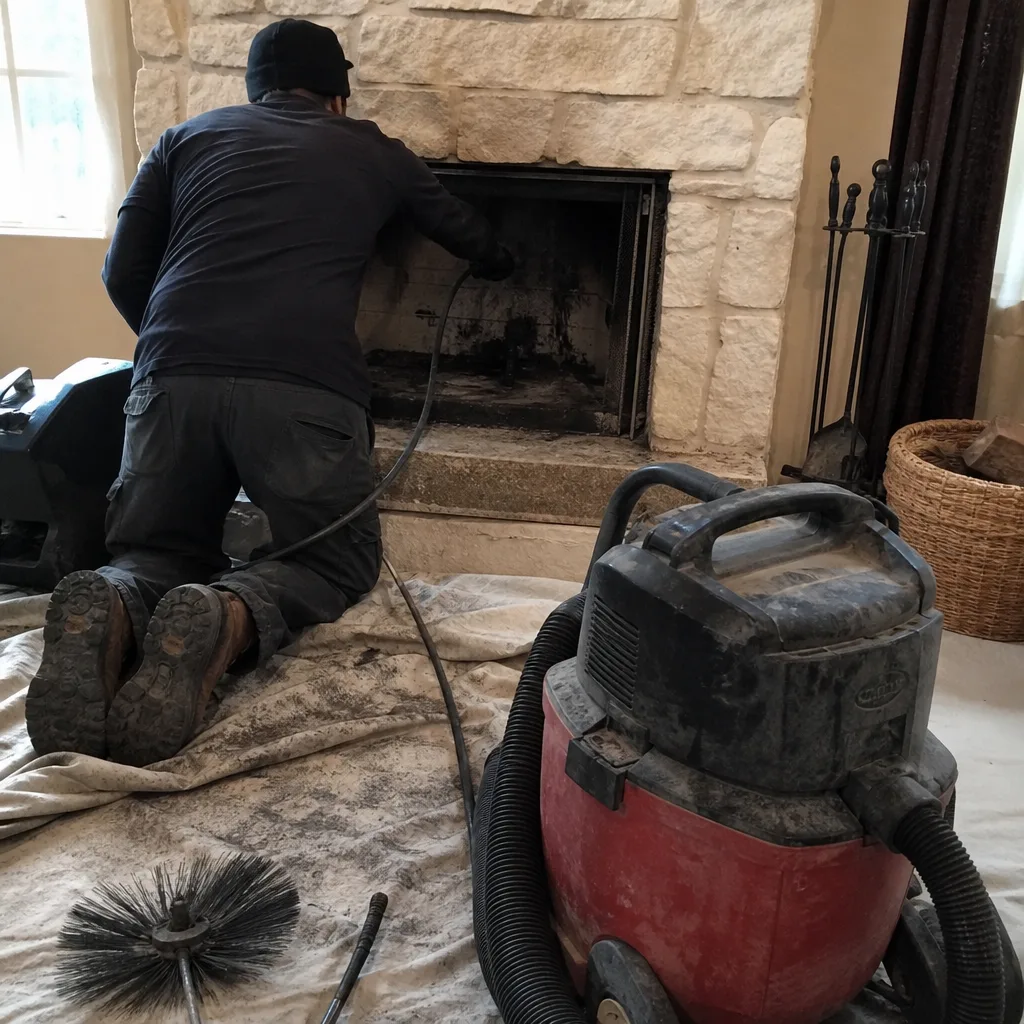 Before
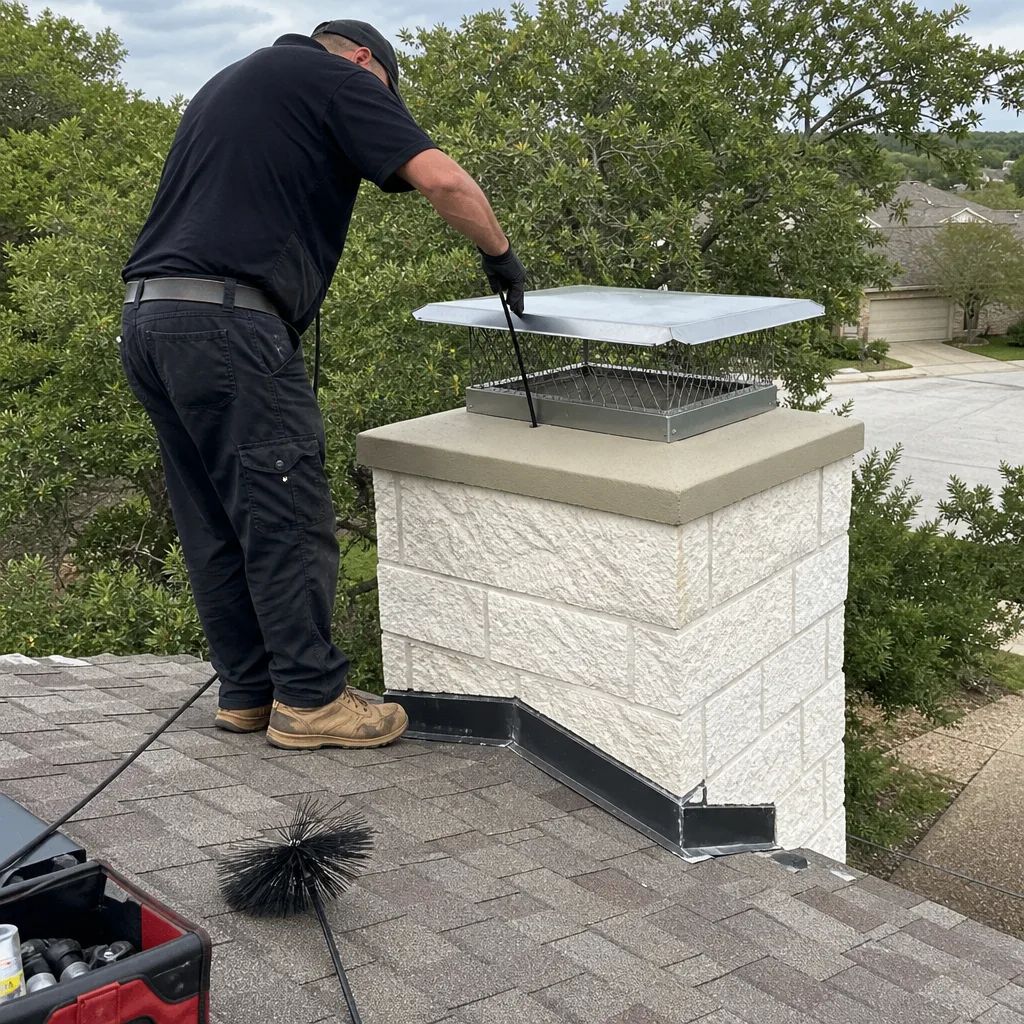 After
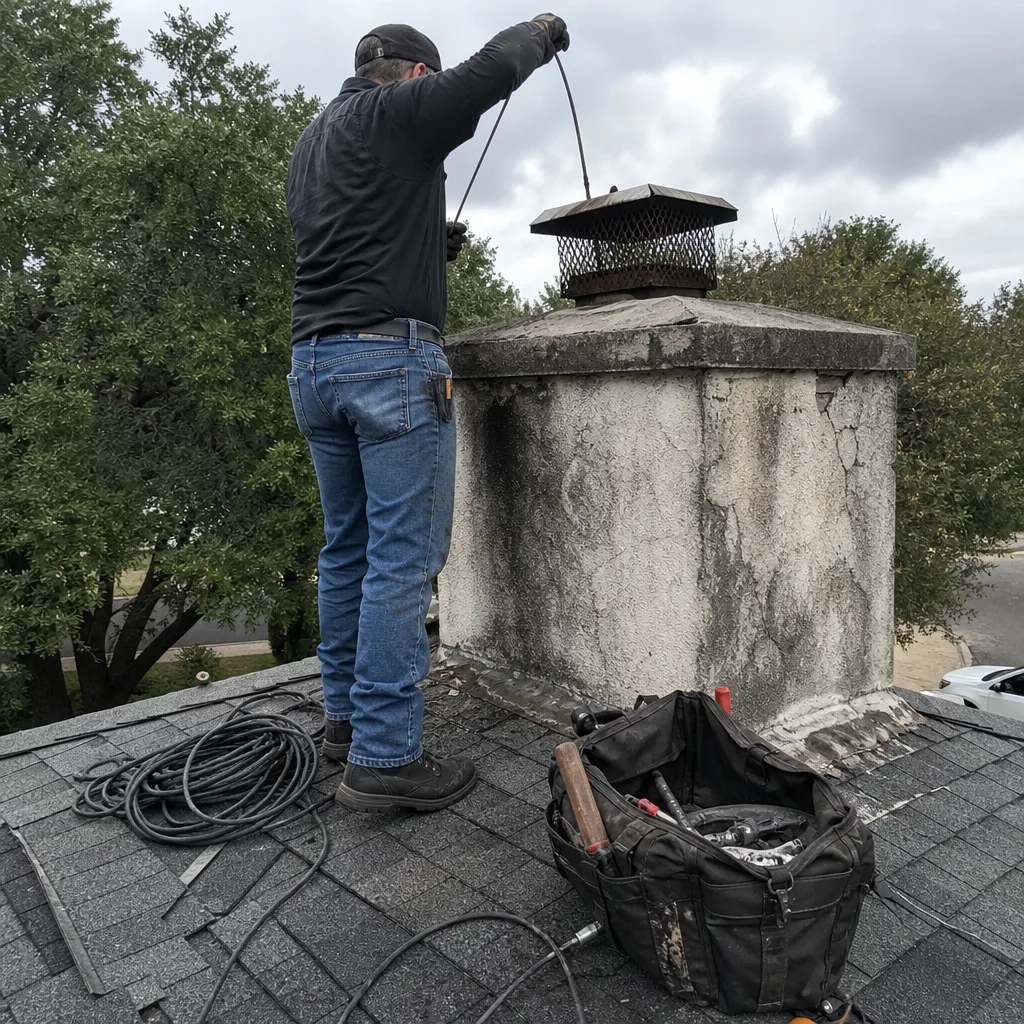 Before
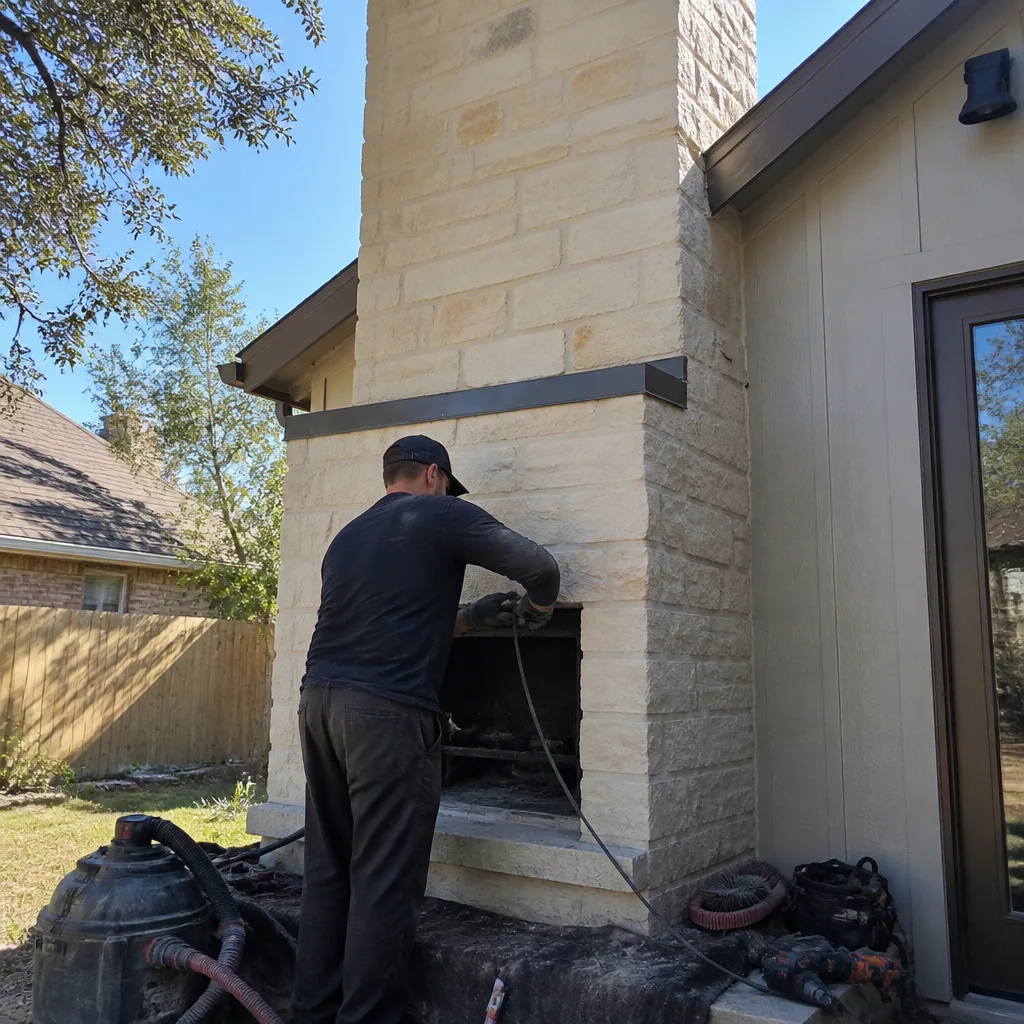 After
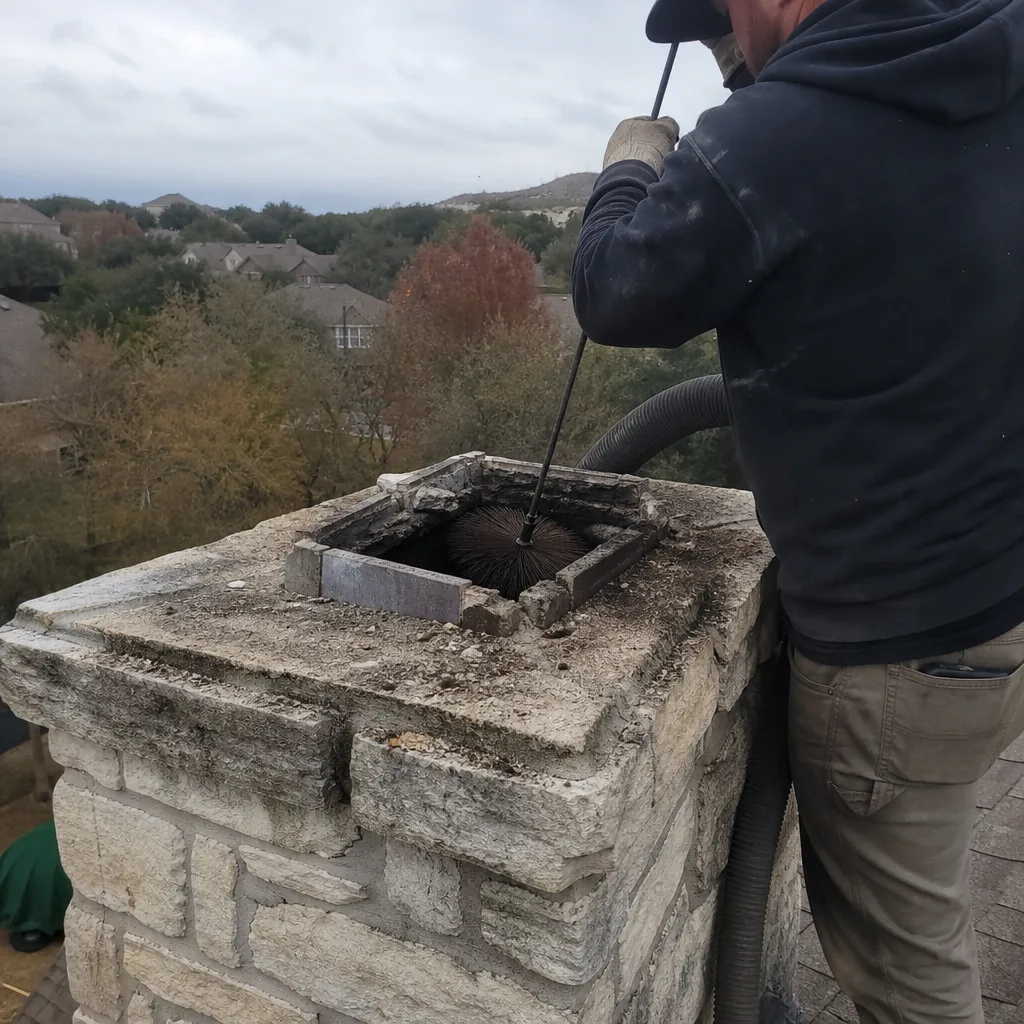 Before
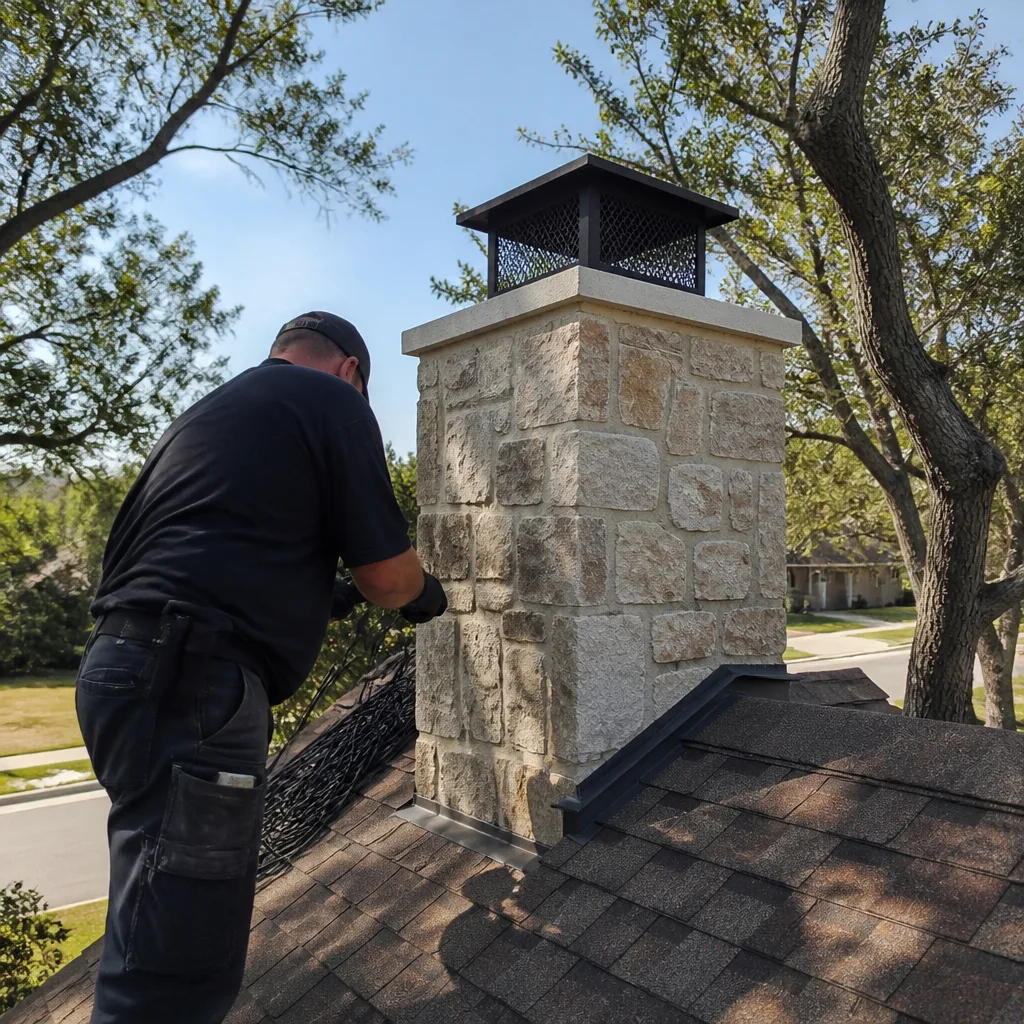 After