Last updated October 31, 2026
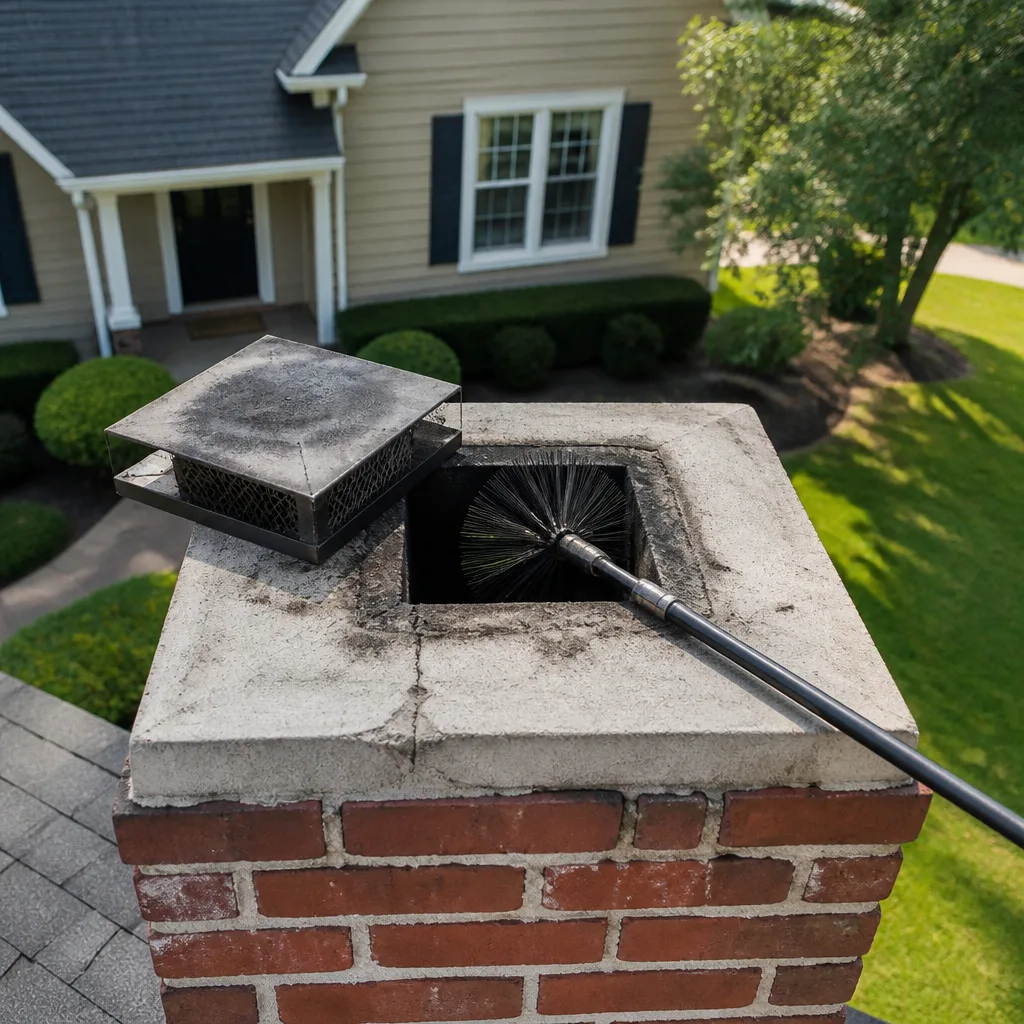 Sweep & inspection
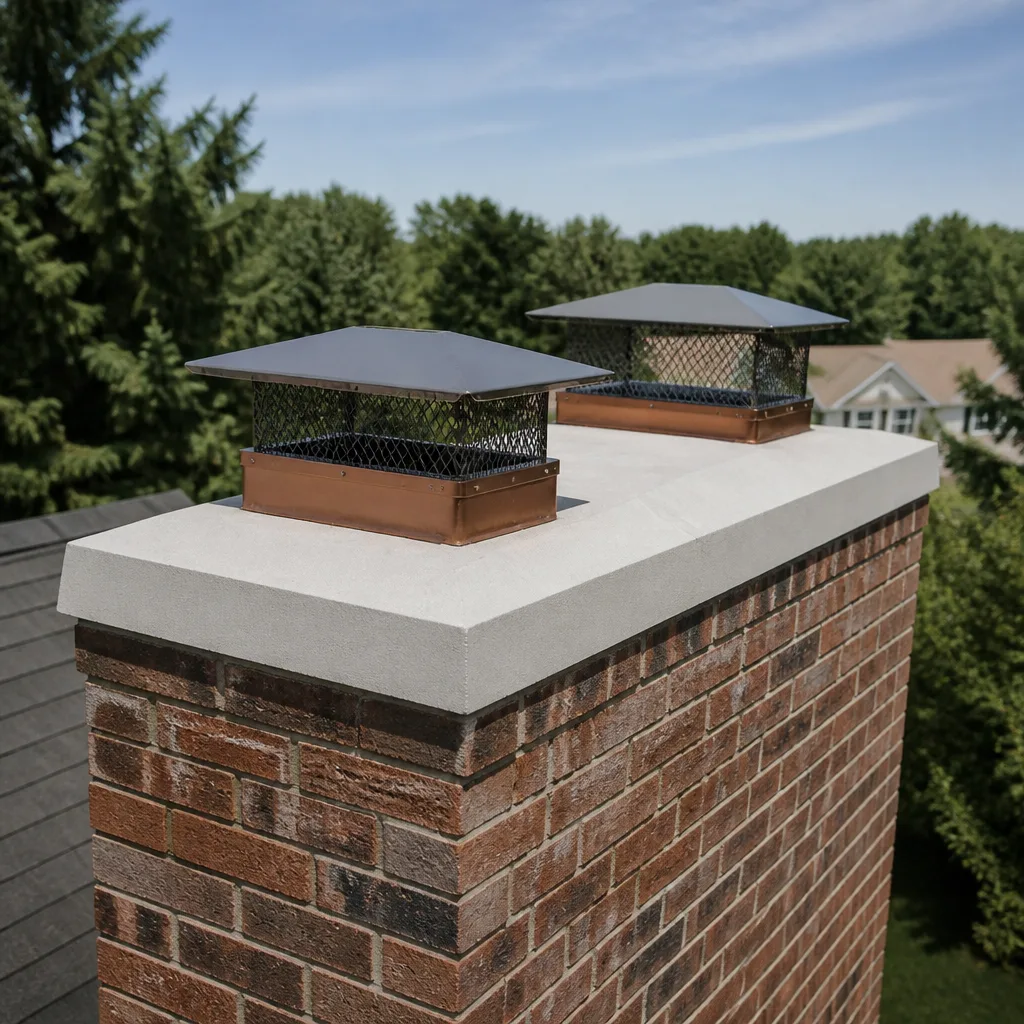 Caps & crowns
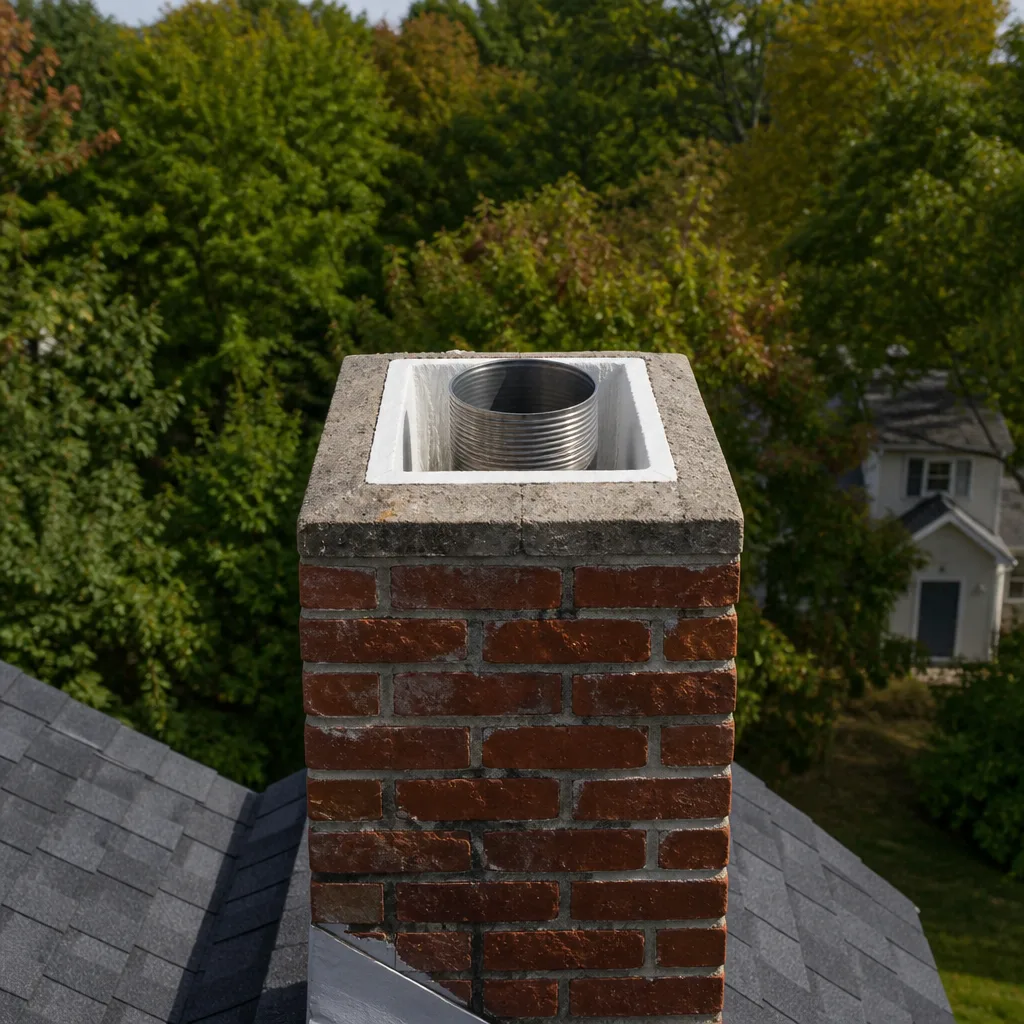 Flue relining
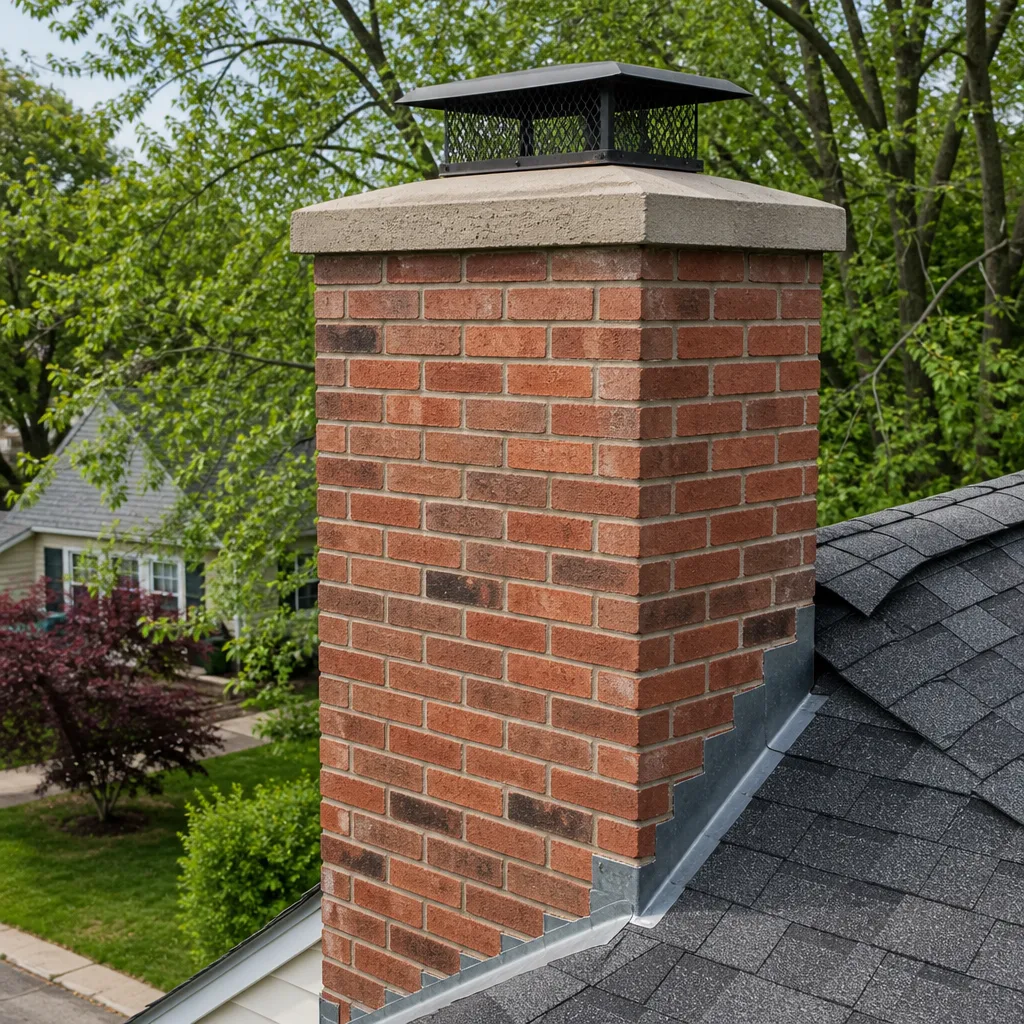 Masonry repair
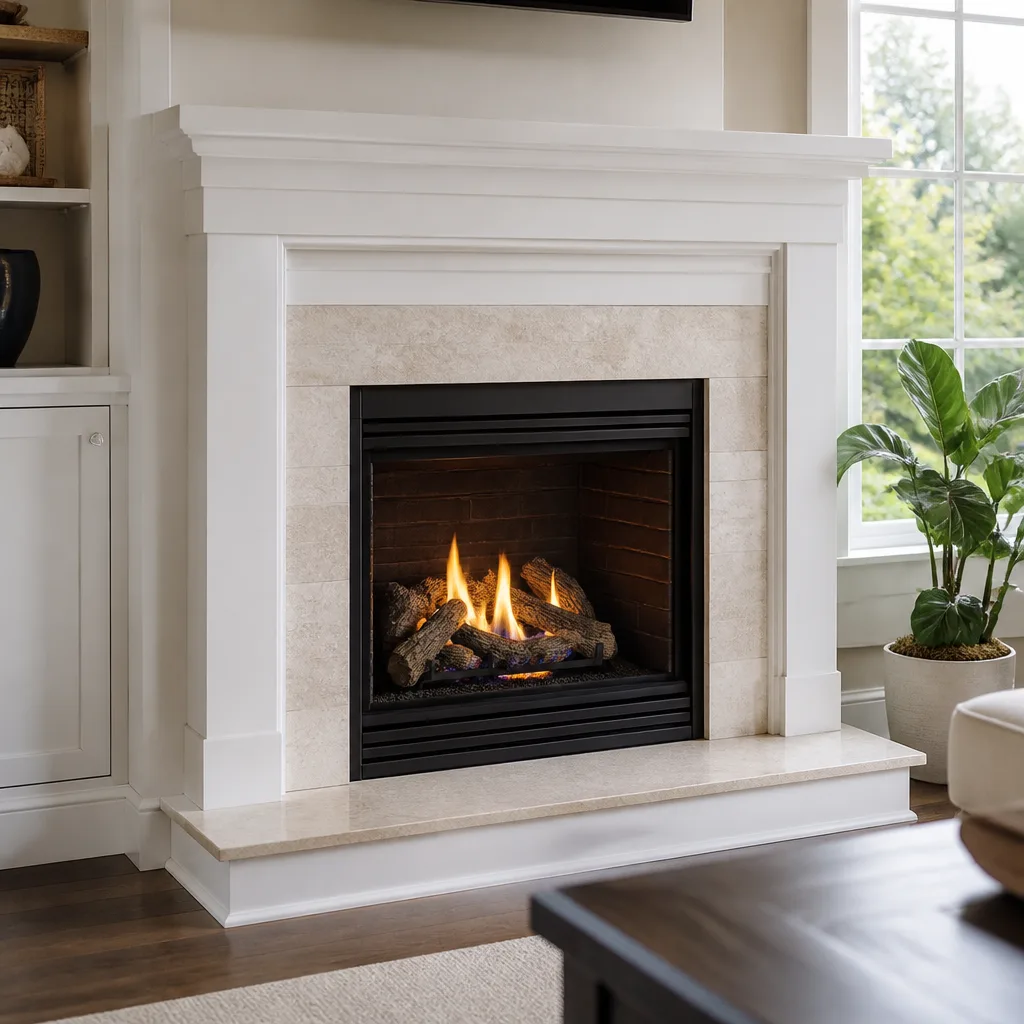 Gas fireplace service
Level 1 sweep and inspection to the NFPA 211 annual standard - flue, crown, cap, and flashing checked and photographed
Chimney sweep logs do not sweep chimneys. They loosen some creosote - which then falls where a brush and vacuum still have to collect it.
How to Hire a Chimney Cleaning Contractor in Cedar Park: A Step-by-Step Guide
After any significant Central Texas hailstorm, chimney complaints to the Texas Attorney General’s office spike. A cracked chimney cap looks alarming in a phone photo, and most Cedar Park homeowners have no baseline to compare it against. This guide gives you the vetting questions, red flags, and specific checkpoints to separate a legitimate chimney specialist from a one-visit upsell operation, and you can find more guides & resources on our blog. We’ll walk through credentials, pricing structure, equipment standards, and what a real service report should include.
Styles & brands we work with
Quick Answer
Hire a chimney cleaning contractor in Cedar Park by verifying CSIA or NFI certification through the credentialing body’s own lookup tool, requiring a written scope of work that itemizes cleaning and inspection separately, and insisting on HEPA-rated dust containment equipment. A legitimate contractor will provide a detailed post-service report with photos and condition notes, not a one-line invoice. Call (855) 507-9184 for a free estimate from a Cedar Park chimney specialist.
Table of Contents
- Why Credentials Matter More Than a Magnet on a Truck
- What Cedar Park’s Climate and Market Mean for Hiring
- The Three Red Flags That Catch Most Homeowners
- Step 1: Verify Credentials Through Independent Lookup Tools
- Step 2: Separate the Cleaning Bid from the Inspection Bid
- Step 3: Demand a Written Scope of Work Before Comparing Numbers
- Step 4: Ask the Equipment Questions That Matter
- Step 5: Know What a Legitimate Post-Service Report Looks Like
- Common Mistakes to Avoid
- When to Call a Professional
- Frequently Asked Questions
- The Bottom Line
Why Credentials Matter More Than a Magnet on a Truck
The chimney industry has a credentialing problem that works in favor of bad actors. In Texas, there is no state license required to call yourself a chimney sweep. Anyone with a ladder, a brush, and a logo can print business cards and start knocking on doors in the Brushy Creek area tomorrow morning. That means the burden of verification falls entirely on you, the homeowner.
The two credentials that carry real weight are from the Chimney Safety Institute of America (CSIA) and the National Fireplace Institute (NFI). A CSIA Certified Chimney Sweep has passed a technical exam covering fire codes, clearances, flue dynamics, and inspection protocols. An NFI certification is more specialized, typically focused on gas hearth systems and venting. Neither credential is easy to earn. Both are easy to fake on a website.
This is where the verification step comes in, and it is the single most underused tool in Cedar Park. We will walk through the exact lookup process in the step-by-step section below. Before that, understand what is at stake. A chimney that is swept but not properly inspected can hide a cracked flue liner, a failing mortar joint, or a blocked chase cover. The sweep removes the symptom. The credentialed inspection finds the cause. The difference between those two things is the difference between a $200 maintenance visit and a chimney fire in the Buttercup Creek neighborhood during the first cold snap of November.
What Cedar Park’s Climate and Market Mean for Hiring
Cedar Park sits at a weather crossroads. We get the hail and high wind of Central Texas spring storms, the prolonged summer heat that bakes roofing and crown materials, and the sudden cold snaps in winter that send homeowners rushing to light the first fire of the season. Each of these conditions creates a predictable chimney problem, and each problem attracts a predictable type of bad contractor; our Seasonal Chimney Cleaning Care for Cedar Park: Year-Round Homeowner’s Guide breaks down what to watch for in every season.
Hail damage is the big one. After a storm moves through the Leander and Cedar Park corridor, out-of-state companies set up shop in hotel conference rooms and start offering free roof and chimney inspections. Their model is simple: find damage, file an insurance claim, and collect a check. Some of these operations do legitimate work. Many do not. What they all share is a financial incentive to find damage that requires a claim, even when the chimney is structurally sound. A cap with a small dent becomes a “compromised system requiring full replacement.” We have seen quotes for $4,000 of work on chimneys that needed a $200 cap replacement.
The summer heat is a quieter problem. Central Texas clay soil contracts during drought, which shifts foundations and settles chimneys. Hairline cracks in the crown or the brick veneer are common, and most are cosmetic. A contractor who does not know the difference between a settlement crack and a structural failure will recommend a rebuild every time. A contractor who works in Cedar Park regularly will know which cracks to monitor and which to address. Local experience matters in ways that do not fit on a spec sheet. The company that has worked on homes in Ranch at Brushy Creek and Twin Creeks knows the soil, the common construction styles of the early 2000s boom, and the failure patterns that come with them.
Winter brings the rush. When the first freeze hits, every chimney company in Williamson County is booked solid. The low-bid operations know this and use it. They schedule a “cleaning” that turns into a high-pressure sales pitch for a liner replacement, knowing you have no time to get a second opinion before you want to use the fireplace. Hiring in the off-season, September or October at the latest, is the single best way to avoid this dynamic.
The Three Red Flags That Catch Most Homeowners
Before we get into the step-by-step process, understand the three most common failure points. If you remember nothing else from this guide, remember these.
Red Flag One: The Bundle Quote with No Itemization
A contractor who quotes “cleaning and inspection” as a single line item is either hiding something or does not understand the value of what they are selling. A cleaning is a mechanical process: remove the creosote, soot, or debris from the flue. An inspection is a technical evaluation: assess the liner, the crown, the cap, the flashing, the clearances, and the firebox. They are different jobs that require different skills and different documentation. Itemize them separately, or walk away.
Red Flag Two: The “Free” Inspection That Always Finds a Problem
Free inspections are a sales tool. That does not make them inherently dishonest, but it does mean the incentive structure is tilted. A company that offers a free inspection has to convert that inspection into paid work at a high rate to stay in business. The ethical version of this model is simple: do the free inspection, tell the homeowner what is wrong, and let them decide. The unethical version is the storm-chaser model: free inspection, insurance claim, and a check. Ask how the company makes money on the free inspection. The contractor who explains their model calmly is one you can work with. The one who gets defensive is not.
Red Flag Three: No Photographic Evidence
This one is absolute. A legitimate chimney contractor in 2025 has a camera system that can show you the inside of your flue. If a contractor tells you that your liner is cracked, your firebox is failing, or your crown needs replacement, and they cannot show you a photo of the specific problem on a screen right there in your living room, they have not done the work required to make that diagnosis. No photo, no diagnosis, no sale. This rule has saved Cedar Park homeowners from more fraudulent repair bills than any other single checkpoint.
Step 1: Verify Credentials Through Independent Lookup Tools
- Ask for the certification number. A CSIA or NFI certification comes with an identification number. The contractor should provide it without hesitation. If they hesitate, note that.
- Go to csia.org and use the “Find a Certified Sweep” tool. The CSIA maintains a public lookup directory. Enter the contractor’s name or company name. If they do not appear, they are not currently certified, regardless of what their website says.
- For NFI, use nficertified.org and run the same check. NFI certifications are tied to individuals, not companies, and can be specific to gas or wood systems. A contractor who claims NFI certification should be able to tell you exactly which certification they hold and for what fuel type.
- Check the expiration. Both CSIA and NFI certifications require continuing education and periodic renewal. A certification from 2018 is not a certification today. Check the status on the lookup tool.
- Ask about insurance, but verify it differently. A certificate of insurance can be forged. Ask for the insurance company’s name and the general liability coverage amount, then call the insurer to confirm the policy is active. Legitimate contractors expect this call. Fraudulent ones will not like it.
This process takes fifteen minutes. It is the single highest-value fifteen minutes in the entire hiring process. Do it before you schedule, not after you sign.
Step 2: Separate the Cleaning Bid from the Inspection Bid
A chimney cleaning in Cedar Park is a fairly standardized service with predictable pricing. You are paying for the contractor’s time, their equipment, and their skill at removing creosote and debris without damaging the flue or turning your living room into a soot disaster. An inspection is a different service with a different value proposition. You are paying for the contractor’s technical knowledge, their camera equipment, and their ability to spot problems before they become dangerous or expensive.
When the two are bundled into a single price, you lose the ability to evaluate the contractor on the component that matters most. Consider a common scenario from our service area. A homeowner in the Cypress Creek area gets three quotes. Company A quotes $189 for “complete chimney service.” Company B quotes $165 for cleaning plus $95 for inspection, itemized. Company C quotes $175 for cleaning plus $85 for a Level 1 inspection, also itemized. The cheapest bundled quote is Company A. But the most valuable quote for the homeowner is Company C, because they specified the inspection level. The specification tells you they know what they are evaluating.
Ask every contractor to itemize. If they will not, they are the wrong contractor. This holds true whether you are hiring for a standard fireplace sweep in Cedar Park or a more involved dryer vent or chimney system evaluation.
Step 3: Demand a Written Scope of Work Before Comparing Numbers
Comparing chimney bids without a written scope of work is like comparing home prices without square footage. The numbers do not mean anything. A written scope of work is the document that makes your bids comparable. Here is what it must include.
- Flue length and diameter. A two-story chimney is a different job than a single-story fireplace. Without the flue length on paper, one contractor may be pricing a 15-foot flue while another is pricing a 30-foot flue.
- Liner material. Terra cotta tile, stainless steel, and cast-in-place liners all require different cleaning techniques and equipment. If the contractor does not know your liner material before quoting, they have not done their homework.
- Inspection level. The NFPA 211 standard defines three levels of inspection. Level 1 is the standard annual check. Level 2 is required when the system has changed, such as a new appliance or a property transfer. Level 3 is invasive and rarely needed. If your contractor cannot tell you which level they are providing, they are not providing an inspection.
- Cleaning method and containment approach. This is covered in more detail in the next section, but the scope should state the method (rotary brush, manual brush, or chemical) and the containment system (HEPA vacuum, negative air, floor protection).
- Access requirements. Will they need to go on the roof? If so, what is the roof material and how will they protect it? A contractor who does not ask about roof access on a chimney quote is already telling you they will not be careful.
- Disposal. Where does the creosote and debris go? A legitimate contractor bags it and removes it from the property. A sloppy one dumps it in your flower bed.
- Follow-up documentation. The scope should commit to a written report with photos. If it does not, ask why not.
In our experience, the contractor who pushes back on a written scope is the contractor who planned to do less work than they were quoting for. The contractor who provides a detailed scope without being asked is the one who knows what they are doing.
Step 4: Ask the Equipment Questions That Matter
The difference between a professional chimney cleaning and a guy with a ladder is most visible in the dust containment equipment. This is not a minor detail. Combustion particulates from a chimney are not the same as ordinary household dust. Creosote is a known respiratory irritant, and the dust created during a sweep contains whatever has accumulated in your flue over the past year: soot, ash, creosote flakes, and sometimes animal waste.
A consumer shop-vac, even a strong one, is not designed to capture this material. The filters are not fine enough, the seals are not tight enough, and the exhaust will blow fine particulate back into your living space. A HEPA-rated vacuum system, ideally paired with negative air pressure and floor protection, is the professional standard. Here are the questions to ask.
- “What vacuum system do you use for dust containment?” The answer should include the words HEPA and should sound specific. If the contractor pauses, you have learned something.
- “Do you use negative air pressure during the sweep?” This means setting up a system that pulls air from the room into the fireplace area and out through the vacuum, preventing dust from escaping into the room. Not all legitimate contractors use negative air on every job, but they should be able to explain when they do and why.
- “How do you protect the floors and furniture?” Drop cloths, shoe covers, and plastic sheeting over furniture within the work zone are standard. A contractor who does not mention this without prompting is likely to leave a mess.
- “Do you clean the roof and gutter area after the sweep?” Creosote and soot end up on the roof, not just inside the flue. A professional cleans up both.
Step 5: Know What a Legitimate Post-Service Report Looks Like
A one-line invoice that says “chimney cleaned, $185” is not a service report. It is a receipt. It documents that you paid, not that the work was done properly. A legitimate post-service report from a chimney cleaning contractor in Cedar Park should include the following.
- Pre-service condition notes. What did the flue look like before cleaning? How much creosote buildup was present? What was the creosote stage? A contractor who cannot tell you the pre-existing condition was not paying attention to it.
- Post-service photos. Digital photos of the flue interior before and after cleaning, and of any areas of concern discovered during the process. These photos are your evidence, both for your own records and for any future insurance claim.
- Condition ratings for the key components. The liner, the crown, the cap, the flashing, the firebox, and the damper should each have a note, even if the note is “no issues observed.” Silence on a component is not the same as a clean bill of health.
- Creosote measurement or estimate. A professional can estimate the thickness of creosote buildup and should record it. This is useful baseline data for future years.
- Photo documentation of any recommended repairs. If the contractor recommends a liner repair, a crown rebuild, or a cap replacement, the report should include photos of the specific defect. No photo, no recommendation. This is the same rule from the red flags section, and it applies just as strongly here.
- Inspection level documentation. If a Level 1 or Level 2 inspection was performed, the report should state which level and summarize the findings.
Why do these details matter? Because your homeowners insurance policy almost certainly requires you to maintain your home’s systems, and if you ever file a claim related to a chimney fire or water damage, the insurance company will want documentation that you had the chimney inspected and maintained. A one-line invoice does not establish that. A detailed report does. In a city like Cedar Park, where hail and storm damage claims are common, good documentation and emergency preparedness are not nice-to-haves. It is baseline risk management.
Common Mistakes to Avoid
- Hiring the cheapest quote without reading the scope. A $99 special from a national franchise almost always means a short flue, a quick brush, no inspection, and a high-pressure upsell at the end. The $99 gets them in the door. The bill gets bigger after that.
- Accepting a verbal diagnosis without photos. “Your liner is cracked” is a claim, not a finding. A finding includes a photo. If they cannot show you the crack on a camera screen, the crack does not exist as far as your wallet is concerned.
- Skipping the insurance verification. A forged insurance certificate takes ten minutes to create in Photoshop. A five-minute call to the insurer is the only way to know if the policy is real and current.
- Trusting a storm-chaser because they have a truck with a logo. The storm-chasers who arrive in Cedar Park after hail events are professionals at their sales process, not necessarily at chimney work. Check their local history before you let them on your roof.
- Waiting until the first cold snap to schedule. The best chimney contractors in Williamson County are booked out weeks in advance during the winter rush. Schedule in September or October and you will get better pricing, more thorough work, and a contractor who is not cutting corners to hit the next appointment.
- Letting the contractor leave without explaining the report. The report is not the paperwork. The report is the conversation about the paperwork. A good contractor will sit down with you, show you the photos, and explain what they mean in plain language. If they hand you a report and run, ask them to stay.
When to Call a Professional
Some chimney situations are DIY-able with the right tools and knowledge. Most are not, and the dangerous ones are not obvious to the untrained eye. Call a professional if you see white or brown staining on the interior walls near the fireplace, which can indicate water intrusion through the chimney. Call if you smell a campfire-like odor in the house on humid days, a sign of creosote accumulation or a draft problem. Call if you notice animals using the chimney as a nesting site, if the damper is stuck or rusted, or if you have not had an inspection in more than two years. And call immediately if you see smoke exiting the chimney at anything other than the chimney top, or if you hear a rumbling sound from the chimney during a fire. Ashton Chimney’s chimney sweep service in Cedar Park includes a full inspection with photographic documentation. Call (855) 507-9184 for a free estimate.
Frequently Asked Questions
Go to csia.org and use the “Find a Certified Sweep” search tool. Enter the contractor’s name or the name of their company. If they do not appear in the CSIA directory, they are not currently certified, regardless of what their website claims. The lookup takes less than five minutes.
A standard chimney cleaning and Level 1 inspection in Cedar Park typically runs between $150 and $350 depending on flue length, access difficulty, and the condition of the system. Prices climb for two-story chimneys, heavy creosote buildup, and systems that have not been serviced in several years. If a quote is significantly below $150, ask what is being omitted. Call (855) 507-9184 for a specific quote.
The National Fire Protection Association recommends an annual inspection and cleaning as needed. Most Cedar Park homeowners using their fireplace 20 to 40 nights per winter should have a cleaning every year. A wood stove used daily during the cold months may need cleaning twice per season. Gas fireplaces can go longer between cleanings but still need an annual safety inspection.
A Level 1 inspection is a visual check of the readily accessible parts of the chimney with no tools and no climbing inside the flue. A Level 2 inspection adds camera inspection of the flue interior, roof and attic access, and is required for property transfers, after a chimney fire, or after a major weather event. If a contractor cannot tell you which level they are providing, they are not providing an inspection.
Most homeowners policies in Texas cover hail damage to chimneys, caps, and crowns, but the claim process depends heavily on documentation. You will need photos of the damage, a written inspection report, and often a professional assessment of the cause. A detailed post-service report from your chimney contractor is the foundation of any successful claim. This is why the report matters more than the receipt.
You can buy the brush kit, but you cannot buy the knowledge of what to look for while you are in there. A DIY brush cleaning removes creosote but provides no inspection, no photographic documentation, and no professional assessment of the liner, crown, or flashing. For a standard fireplace used a few dozen nights a year, the cost of a professional sweep in Cedar Park is a fraction of the cost of fixing a chimney problem that gets caught late. Ashton Chimney’s chimney repair service exists because too many DIY cleanings end with missed damage that would have been caught on a camera inspection.
The Bottom Line
Hiring a chimney cleaning contractor in Cedar Park is not about finding the cheapest brush. It is about finding a contractor who will document your system’s condition, use professional containment equipment, and tell you the truth about what needs repair and what can wait. The process comes down to three commitments: verify credentials through independent tools, demand a written scope of work, and refuse to accept any diagnosis without photographic evidence. Do those three things and you will end up with a contractor worth keeping for years. Skip them and you are rolling the dice on a system that sits above your family while you sleep. Ashton Chimney home provides free estimates in Cedar Park. Call (855) 507-9184 to schedule.
Written by the team at Ashton Chimney, serving Cedar Park since 2014.
See the difference
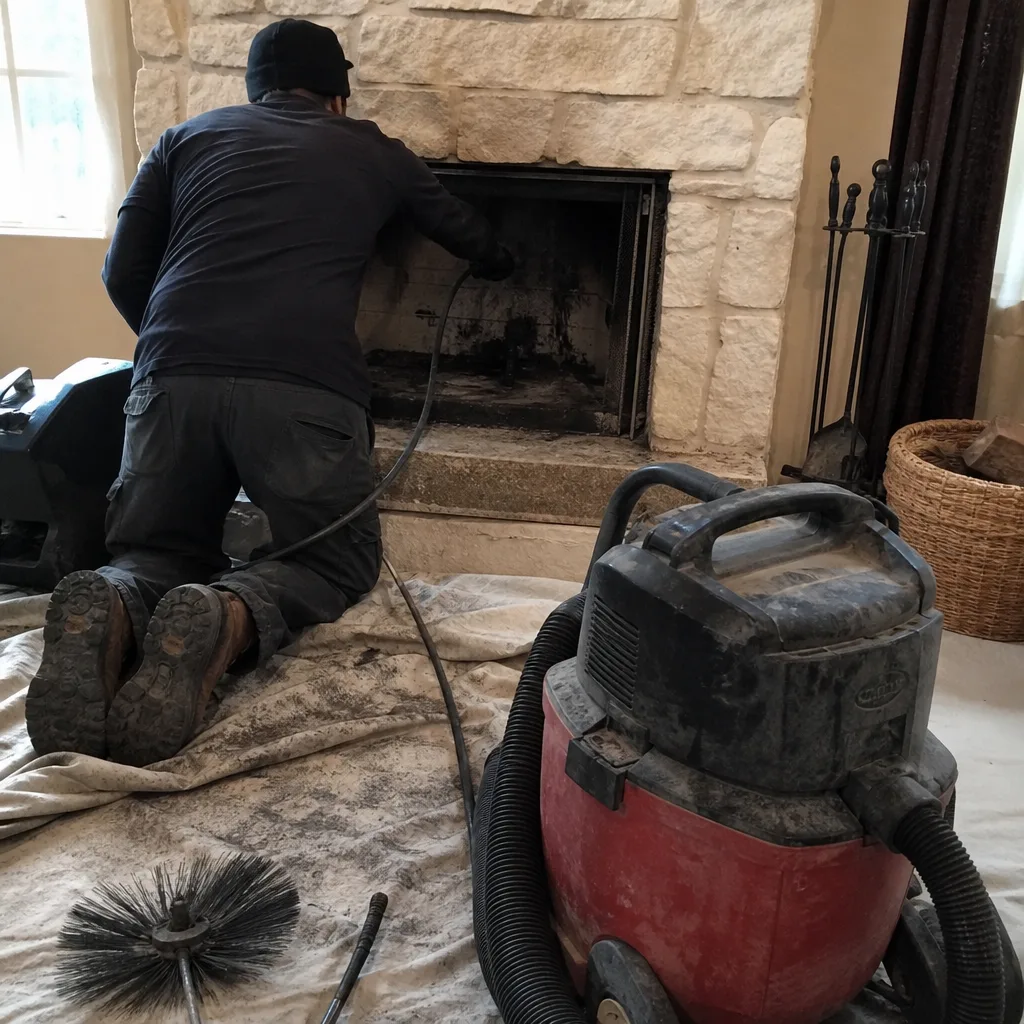 Before
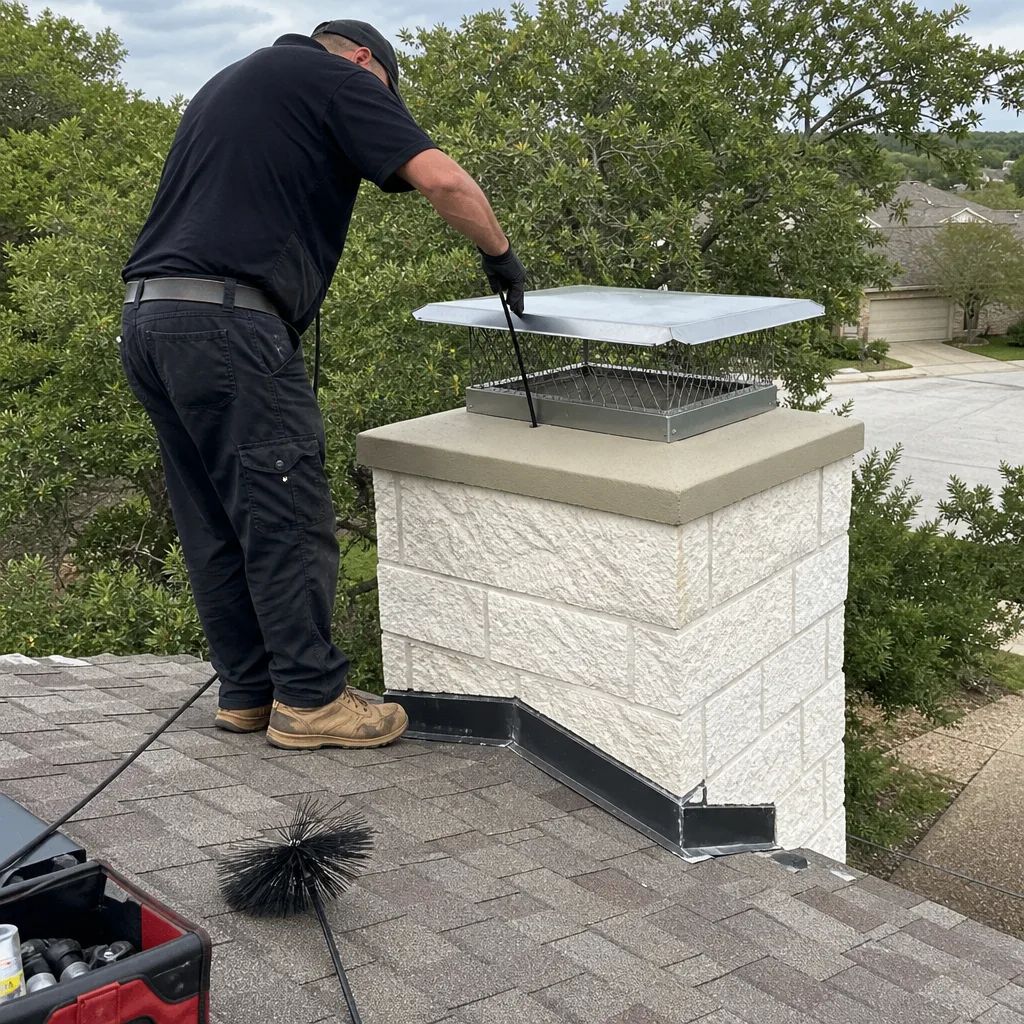 After
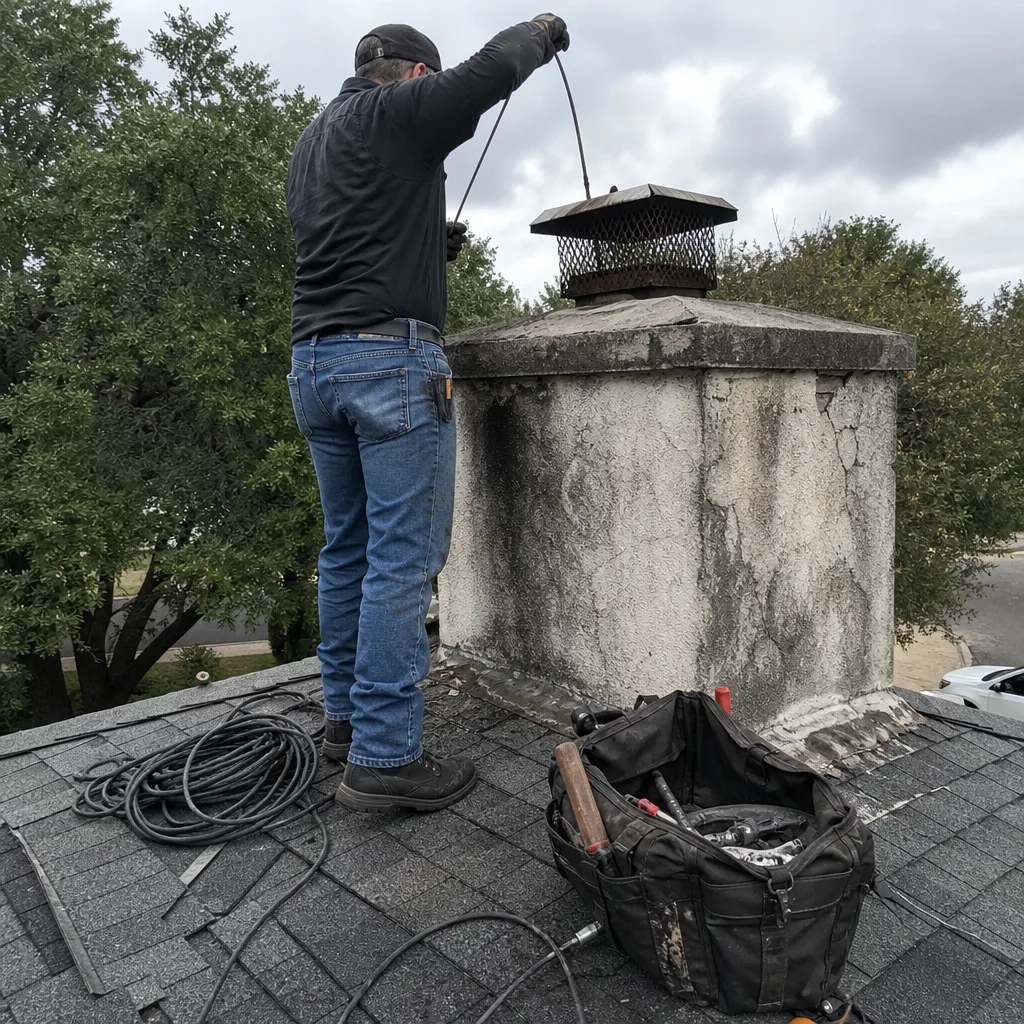 Before
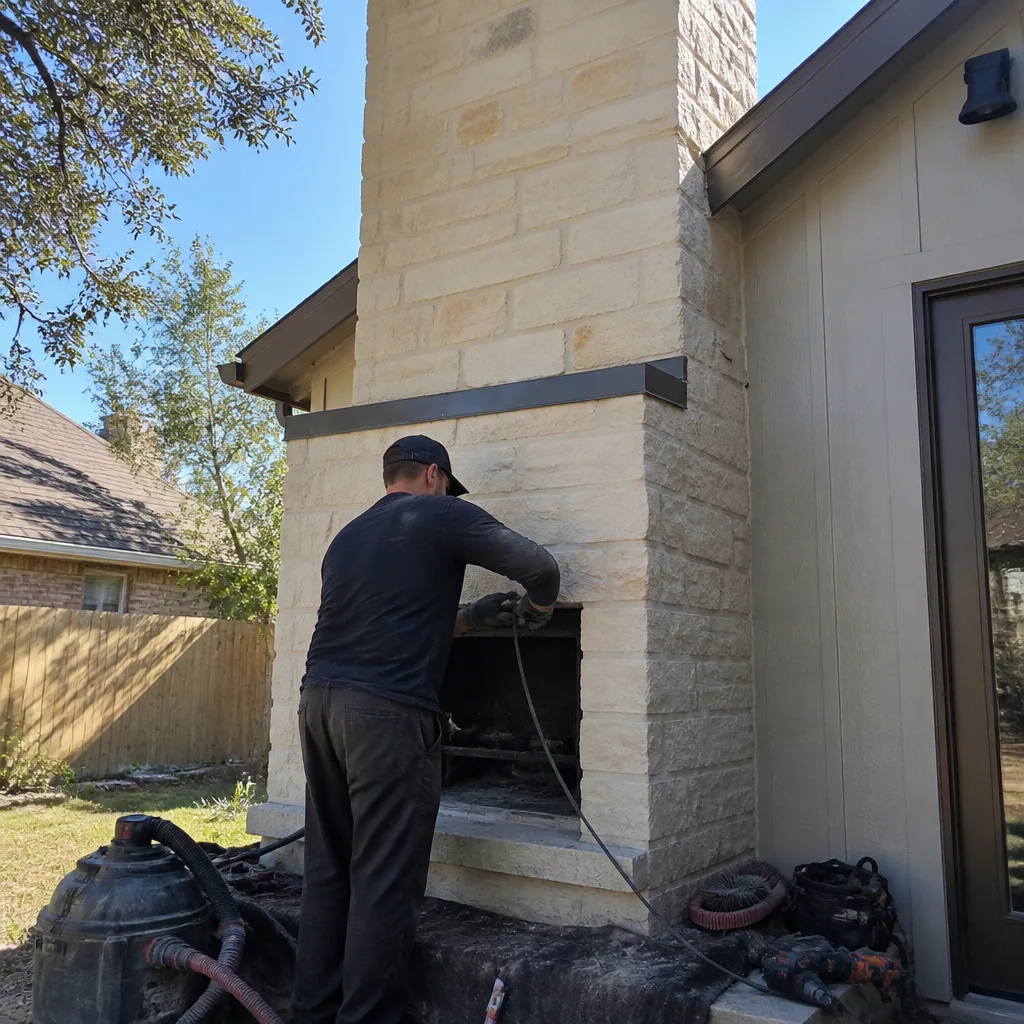 After
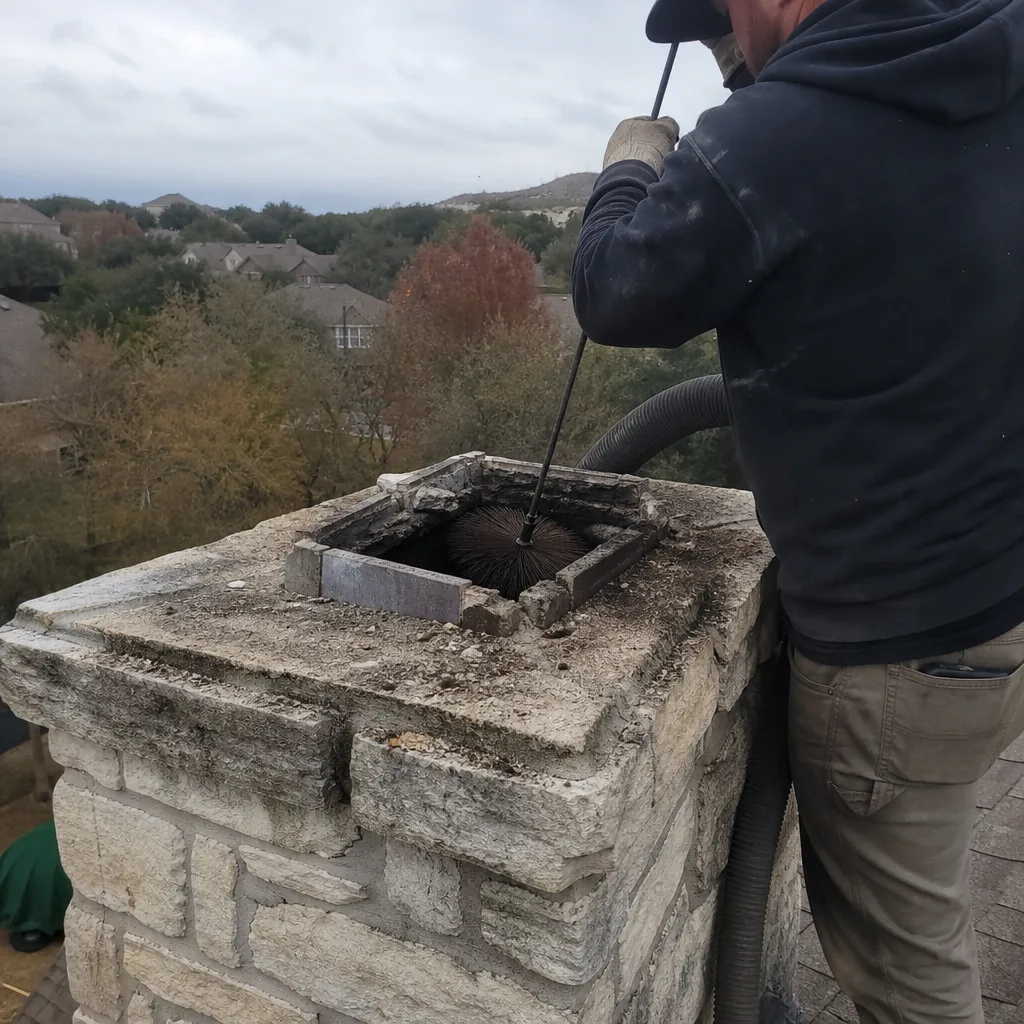 Before
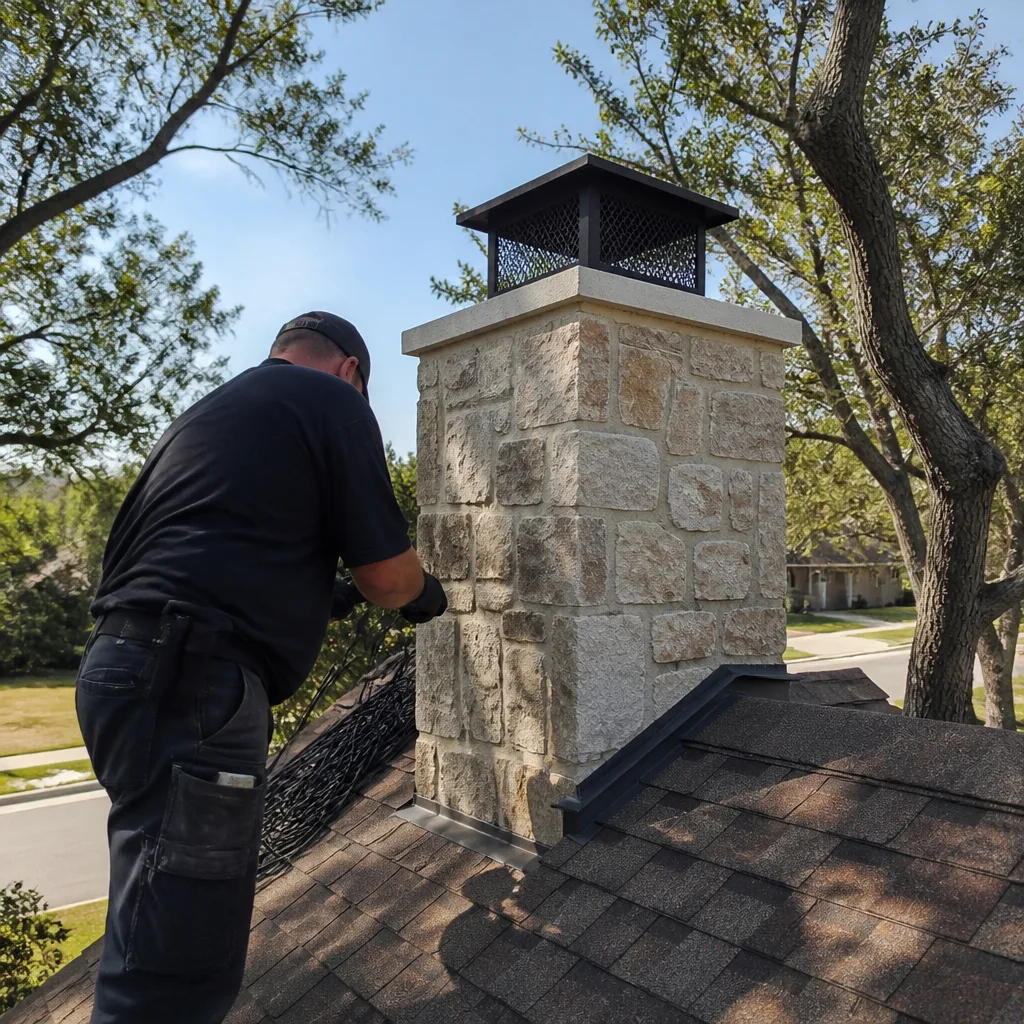 After