Last updated October 31, 2026
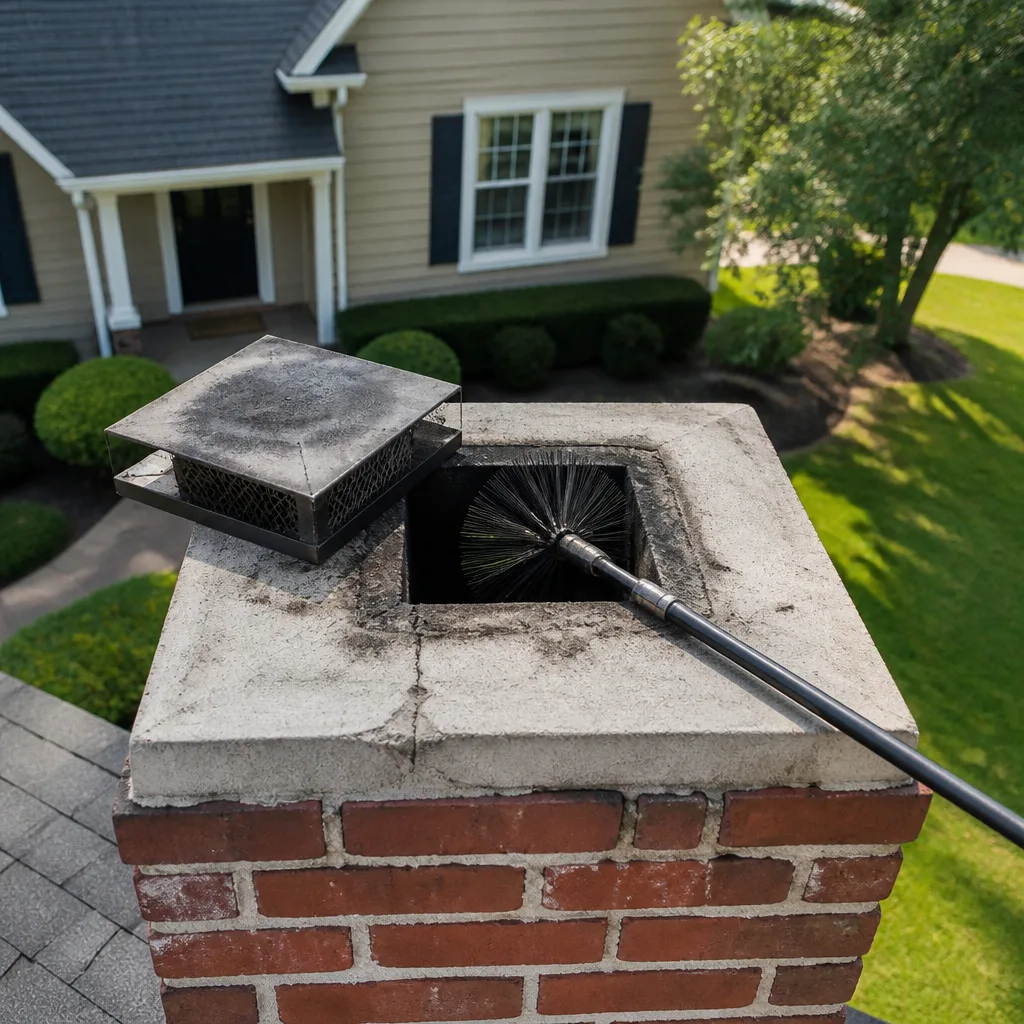 Sweep & inspection
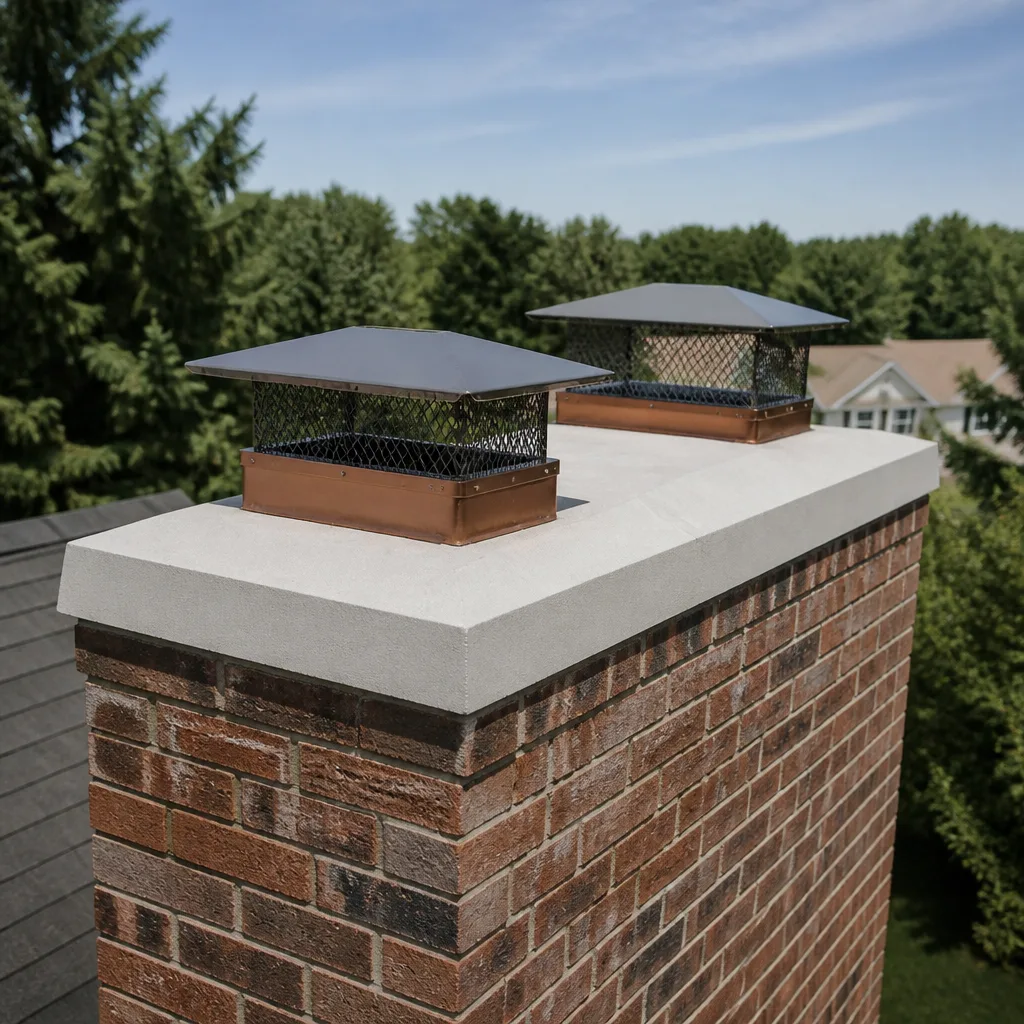 Caps & crowns
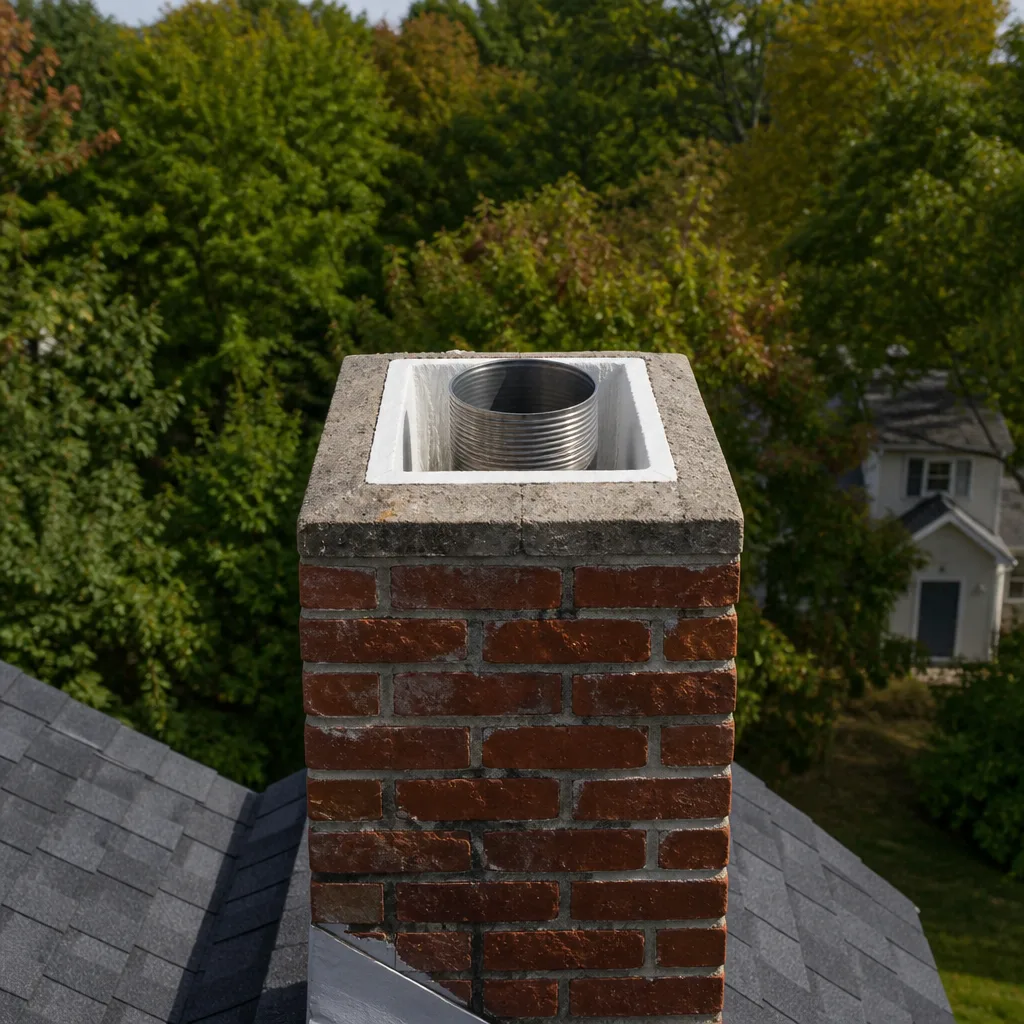 Flue relining
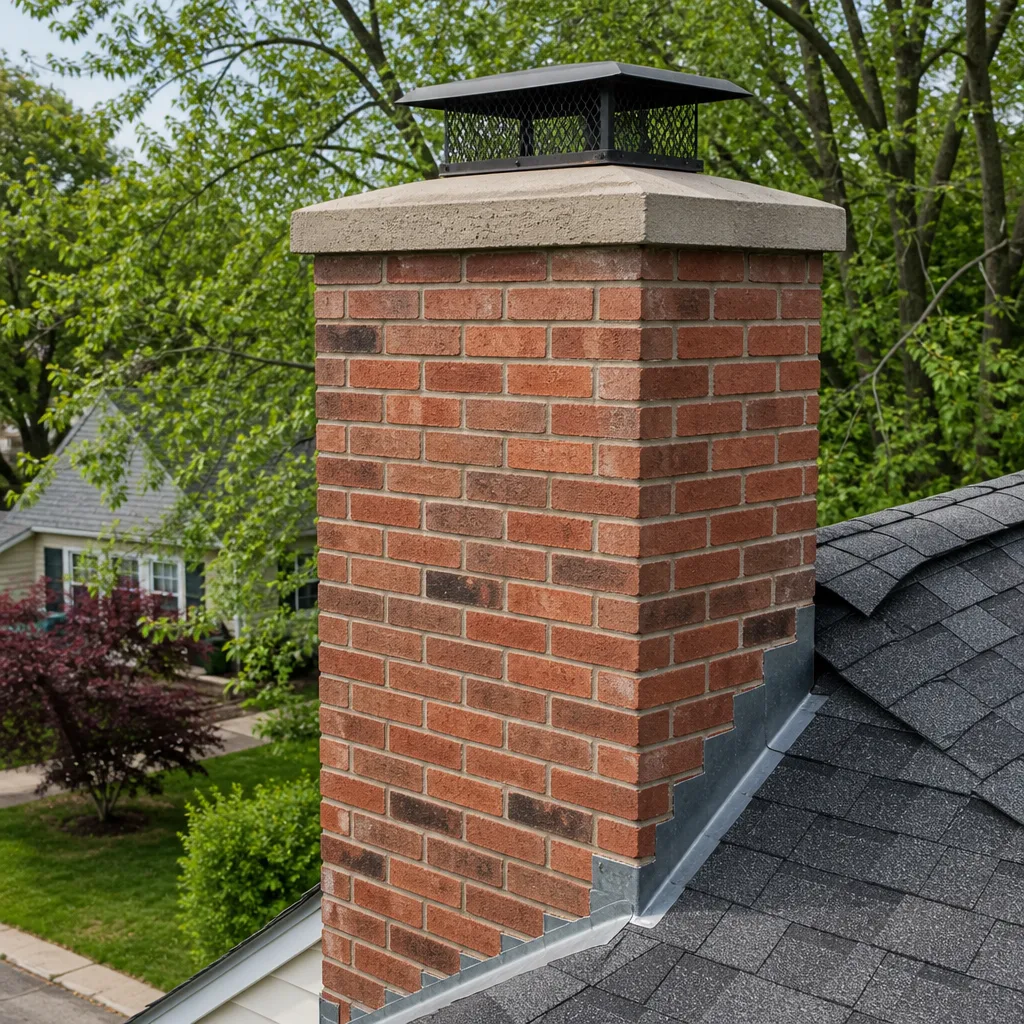 Masonry repair
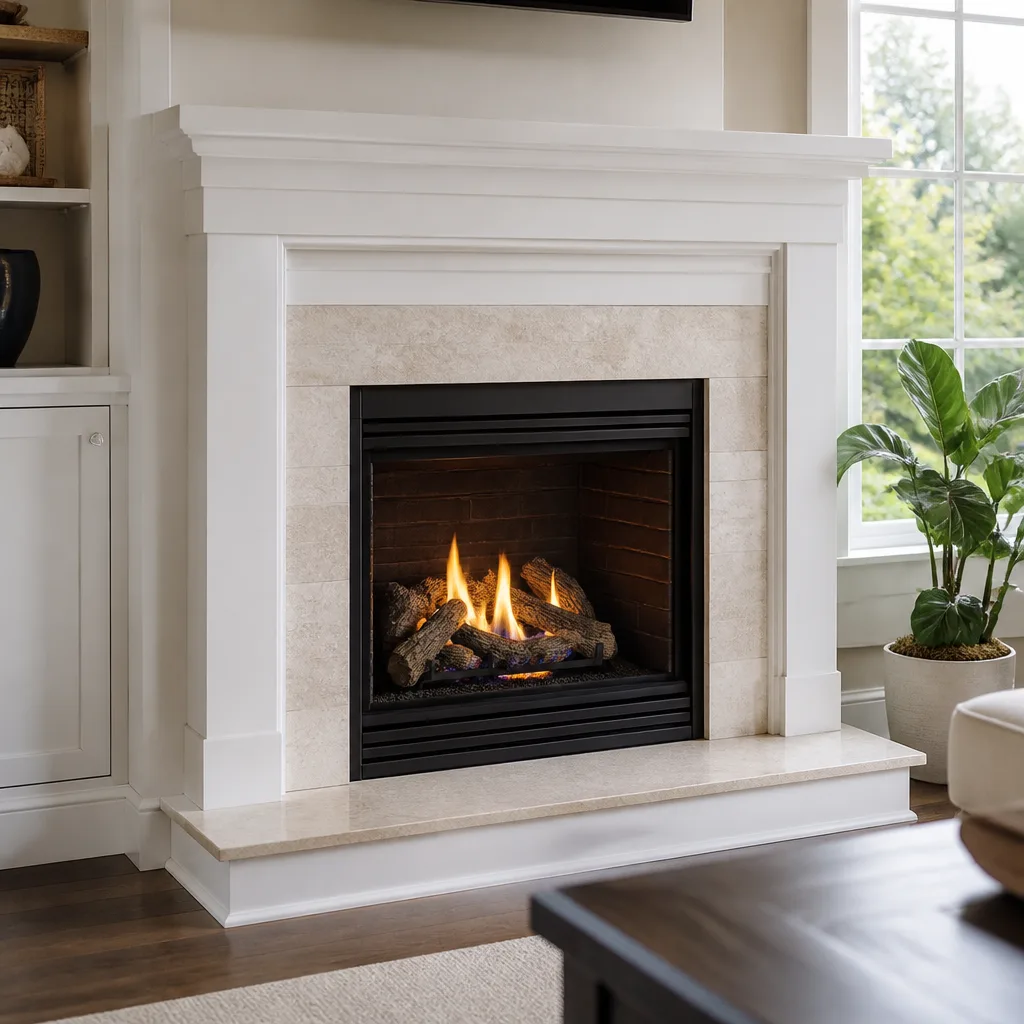 Gas fireplace service
Level 1 sweep and inspection to the NFPA 211 annual standard - flue, crown, cap, and flashing checked and photographed
Chimney sweep logs do not sweep chimneys. They loosen some creosote - which then falls where a brush and vacuum still have to collect it.
Chimney Sweep Maintenance Checklist for Cedar Park Homeowners
Six out of ten Cedar Park homes we inspect have at least one chimney issue that the homeowner could have spotted months earlier with a flashlight and ten minutes of attention. That’s not a knock on homeowners. It’s a failure of the checklists they’ve been given. Most are written by well-meaning marketers who have never climbed onto a Texas roof in August. This guide is different. It follows the exact sequence a CSIA-certified technician walks through on a service call in Cedar Park, translated into tasks you can actually perform safely between our Chimney Sweep services. You’ll learn what to check on a wood-burning fireplace, a gas log insert, and a dryer vent, and when to put down the flashlight and make the call.
Styles & brands we work with
Quick Answer
A chimney maintenance checklist for Cedar Park homeowners should cover six areas: the firebox floor, damper seal, smoke chamber, exterior masonry, cap and spark arrestor, and the flue liner itself. Check these monthly during burning season and seasonally otherwise. Wood-burning systems need visual inspection for cracked firebrick and creosote buildup, gas inserts need log position and vent termination checks, and dryer vents need airflow testing and lint screen inspection. If you see white staining on exterior brick, hear a rattling damper, or notice a lazy flame, call a professional before the next fire.
Table of Contents
- The Real Sequence: What a Sweep Actually Checks
- Wood-Burning Fireplace Checklist
- Gas Log Insert Checklist
- Dryer Vent Maintenance Checklist
- Exterior Masonry Checks for Cedar Park’s Clay Soil
- The Dollar-Bill Damper Test (And Why It Matters in Texas)
- Homeowner Task vs. Call a Pro Decision Matrix
- Common Mistakes to Avoid
- When to Call a Professional
- Frequently Asked Questions
- The Bottom Line
The Real Sequence: What a Sweep Actually Checks
When a chimney sweep in Cedar Park arrives at your home, they’re not just shoving a brush up a flue. They’re running diagnostics on six distinct system components in a specific order, because each one reveals something about the next. Firebox first. Then damper. Then smoke chamber. Then flue liner. Then cap and crown. Then exterior masonry and flashing. It’s a bottom-up sequence, and for good reason: debris and damage at the firebox level often indicates what’s happening higher up. A cracked firebrick at floor level rarely happens in isolation. It usually means the liner above is letting moisture in, which expands and contracts with heat, which stresses the firebox below. Understanding this sequence is what lets an attentive Cedar Park homeowner catch developing problems before they become four-figure repairs. You don’t need to be a technician to run through it. You need a flashlight, a ladder you’re comfortable on, and the willingness to actually look.
Wood-Burning Fireplace Checklist
Wood-burning fireplaces are the most demanding systems in Cedar Park homes, partly because they get used inconsistently. A fireplace that sits dormant through a humid Texas spring and then gets fired up on the first cold snap in November is a fireplace that’s been quietly absorbing moisture and settling. Here’s what to check, in the order a technician would.
- The firebox floor. Look at the firebrick at the base of the firebox. Hairline cracks are normal and cosmetic. Cracks you can fit a dime into are not. Gaps between firebrick and the metal frame of the fireplace insert are also worth noting. These indicate the firebox is shifting, which often traces back to foundation movement or moisture intrusion from above.
- The back wall. Shine a flashlight up the back wall of the firebox and look for white, chalky staining. That’s efflorescence, and it means water is coming down the flue and evaporating through the masonry. It’s the single most common early warning sign of a failing cap or crown in Cedar Park’s freeze-thaw cycles.
- Creosote stage. Run a fireplace poker or metal scraper along the inside of the smoke chamber wall above the damper. If the residue is flaky and black, that’s stage one creosote. If it’s tar-like and shiny, that’s stage three, and it’s a chimney fire waiting for an ignition source. Stage three creosote does not come off with a brush. It requires chemical treatment or mechanical removal.
- The damper operation. Open and close it fully. Listen for grinding or scraping. A damper that doesn’t seat fully is a constant draft leak, which in a Cedar Park summer means conditioned air pouring out of your home.
- Ash depth. Keep ash below two inches. Deeper than that restricts airflow to the fire and accelerates creosote formation by cooling the flue gases too quickly.
One thing we tell every wood-burning fireplace owner in Cedar Park: the tools you use for these checks matter less than your consistency. A monthly flashlight inspection during burning season catches issues that a single annual sweep never will, simply because the sweep sees a snapshot while you see the trend. For Chimney Sweep Troubleshooting: Common Problems and How to Fix Them, see our dedicated guide.
Gas Log Insert Checklist
Gas log inserts are the most misunderstood fireplace systems in Cedar Park. Homeowners assume that because there’s no wood, there’s no creosote, and therefore no maintenance. That assumption is how you end up with a gas insert that’s slowly filling your living room with carbon monoxide. Gas inserts have their own failure points, and they’re almost entirely different from wood-burning systems.
- Log position. Vented gas logs are designed to sit in a specific arrangement. If a log has shifted even two inches, it can direct flame against the firebox wall or over the top of the logs, creating soot and overheating components. Take a photo of the correct arrangement right after your next professional service, and compare it monthly.
- Soot accumulation. A properly operating gas insert produces very little soot. If you’re seeing black buildup on the logs or the firebox walls, the air-to-fuel mixture is off, which usually means the burner ports are partially clogged. This is a call-a-pro item, not a clean-it-yourself item.
- Vent termination. Go outside and find where your insert vents. For most Cedar Park homes with direct-vent inserts, it’s a small cap on an exterior wall. Check for bird nests, wasp nests, or debris. A blocked vent on a gas insert is a carbon monoxide risk, plain and simple.
- Carbon monoxide detector. If you have a gas insert and you don’t have a functioning CO detector on the same floor, stop reading and go buy one. We’ll wait. Gas inserts in Cedar Park that get used three months out of the year are exactly the kind of system where a slow vent failure goes unnoticed until it’s serious.
Dryer Vent Maintenance Checklist
Your dryer vent is a venting system too, and in our experience it’s neglected at roughly ten times the rate of chimneys. That’s a problem, because the leading cause of dryer fires is exactly what you’d expect: lint accumulation in the vent line. Cedar Park homes with laundry rooms on interior walls often have long, multi-turn dryer vent runs that are particularly prone to clogging. Here’s the maintenance sequence.
- Lint screen check after every load. Not just cleaning it. Checking it. If you’re seeing lint on the screen, run it under water. If water pools on top of the screen instead of passing through, you’re using dryer sheets, and the residue they leave is silently restricting airflow even with a clean-looking screen.
- Airflow test monthly. Run the dryer on high heat for five minutes, then go outside to the vent termination. The flap should be fully open and you should feel a strong, steady stream of air. A weak stream or a fluttering flap means restriction somewhere in the line.
- Vent line inspection annually. If you can access the duct run, check connections. Lint escaping at the joints means gaps, and gaps mean lint is collecting in your wall cavity. That’s both a fire risk and a moisture risk in Cedar Park’s humid summers.
- Professional cleaning. Most dryer manufacturers recommend professional vent cleaning once a year for households that run the dryer more than twice a week. A professional dryer vent cleaning in Cedar Park removes the lint that a homeowner can’t reach, particularly in long runs and vertical risers.
Here’s a number that puts this in perspective: the U.S. Fire Administration reports roughly 2,900 dryer fires annually, and the majority are caused by exactly the lint buildup this checklist catches. This isn’t a rare occurrence. It’s a preventable pattern.
Exterior Masonry Checks for Cedar Park’s Clay Soil
Cedar Park sits on expansive clay soil. If you’ve lived here through a dry summer followed by a wet fall, you’ve watched your yard crack open like a dried lakebed. That same soil movement is acting on your foundation, and through the foundation, on your chimney. A freestanding masonry chimney is essentially a tall, rigid column sitting on a base that’s slowly shifting. The stress shows up in specific places, and if you know where to look, you can catch it early.
- Stair-step cracks in mortar joints. This is the classic sign of differential settling. Walk around the chimney and look for cracks that follow the mortar joints in a stair-step pattern. Hairline is worth photographing and monitoring. Cracks wider than 1/8 inch need a professional assessment.
- Crown condition. The crown is the concrete cap at the top of the chimney. Walk to where you can see it and look for cracking or spalling. A cracked crown in Cedar Park is a water intrusion problem waiting to happen, because every rain event pushes water into the masonry below it.
- Flashing separation. Where the chimney meets the roofline, the metal flashing should be tight against the masonry. Look for gaps, lifted edges, or missing sealant. Flashing is the most common point of water intrusion in Cedar Park chimneys, and water is the enemy of everything.
- White staining on the brick face. As mentioned in the firebox section, efflorescence on exterior brick means water is moving through the masonry. It’s not just cosmetic. It’s a diagnostic sign that moisture is getting in somewhere above that point.
- Spalling brick. When water gets into brick and then freezes, the surface of the brick pops off. With Cedar Park’s occasional hard freezes, spalling is more common than homeowners expect. A spalled brick face means the brick’s protective outer layer is gone, and deterioration accelerates from there.
The Dollar-Bill Damper Test (And Why It Matters in Texas)
Here’s a test you can do in thirty seconds that tells you whether your damper is sealing properly. Close the damper fully, then open it just enough to slide a dollar bill through. Close the damper on the bill. Try to pull the bill out. If it slides out easily, your damper seal is weak. If it resists or tears, the seal is doing its job.
Why does this matter in Cedar Park specifically? Because a leaky damper seal is a permanent hole in your home’s thermal envelope. During a Cedar Park summer, when your AC is running fourteen hours a day, a failing damper seal is letting conditioned air escape up the flue at a constant rate. We’ve talked to homeowners in the Buttercup Creek and Ranch at Brushy Creek neighborhoods who replaced a damper and noticed the difference on their very next electric bill. A damper replacement is typically a few hundred dollars. The cumulative cost of running your AC against an open flue for years is far more than that. The dollar-bill test tells you which side of that equation you’re on.
Homeowner Task vs. Call a Pro Decision Matrix
This is the section where most checklists fail. They list tasks without telling you which ones are safe for a homeowner and which ones require training and equipment. Here’s the straight answer.
| Task | Homeowner Safe? | When to Call a Pro |
|---|---|---|
| Visual firebox inspection | Yes, with a flashlight | Any crack wider than a dime |
| Damper dollar-bill test | Yes | Damper won’t open/close fully or leaks significantly |
| Creosote level check | Yes, visual only | Stage two or three creosote (tar-like, shiny) |
| Exterior masonry walk-around | Yes, from ground level | Stair-step cracks, spalling, or flashing separation |
| Chimney cap inspection | Yes, with binoculars | Missing cap, damaged spark arrestor, or water staining below |
| Flue liner inspection | No, requires scoping equipment | Annual during your professional sweep |
| Creosote removal | No | Any significant buildup requires professional tools and technique |
| Dryer vent airflow test | Yes | Weak airflow or visible lint at exterior vent |
| Gas log cleaning | No, risk of damaging burner ports | Annual during professional service |
The rule we use: if a task requires a ladder taller than six feet, reaching into a confined space, or tools you don’t already own, it’s a pro task. A chimney repair professional in Cedar Park carries scoping cameras, rotary cleaning equipment, and fall protection for a reason.
Common Mistakes to Avoid
- Using the fireplace as a trash incinerator. Burning wrapping paper, cardboard, or treated lumber creates intense, fast-burning fires that deposit creosote rapidly and can crack firebrick. Burn seasoned hardwood only.
- Closing the damper too early. The fire needs to be completely out, with no glowing embers, before you close the damper. Closing early traps carbon monoxide in your home. This is not a minor point.
- Ignoring the cap because you can’t see it. A missing chimney cap in Cedar Park is an open invitation to birds, squirrels, and rain. If you can’t see your cap from the ground, use binoculars or ask your sweep to photograph it during their next visit.
- Treating all creosote the same. Stage one creosote brushes off. Stage three creosote is a fuel source. Knowing the difference is the difference between routine maintenance and a chimney fire.
- Forgetting that gas inserts need maintenance too. Gas doesn’t mean maintenance-free. Log position, vent termination, and CO detector function are all on the homeowner’s checklist for a reason.
- Cleaning the dryer lint screen but never the vent line. The lint screen catches maybe 60-70% of lint. The rest goes into the vent line. A clean screen does not mean a clean line.
- Waiting for a problem before calling anyone. The whole point of a maintenance checklist is to find issues when they’re small. A cracked crown that costs a few hundred dollars to repair becomes a water-damaged liner that costs thousands if you wait.
When to Call a Professional
Some situations shouldn’t wait for the next scheduled maintenance. If you see stage three creosote (shiny, tar-like buildup), stair-step cracks in exterior masonry wider than 1/8 inch, a damper that won’t operate, white staining spreading across your firebox, or a dryer vent with weak airflow despite a clean lint screen, stop using the system and make the call. These are signs of active failure, not normal wear. In Cedar Park, where summer storms and winter freezes alternate unpredictably, a small water intrusion becomes a structural problem faster than in drier climates. Ashton Chimney offers free estimates in Cedar Park. Call (855) 507-9184 and we’ll tell you what we found, what it means, and what your options are, in plain language. No scare tactics. Just straight answers.
Frequently Asked Questions
A chimney in Cedar Park should be swept at least once a year if you burn wood regularly, and at least once every two years for occasional use. The National Fire Protection Association recommends sweeping when creosote reaches 1/8 inch of buildup, which is about a season of regular burning for most households. Cedar Park’s humidity makes creosote formation slightly worse than in drier Texas cities like El Paso, because moisture in the flue helps creosote components bond to the walls. Call (855) 507-9184 for an exact recommendation based on your usage.
A professional chimney sweep in Cedar Park checks six system components in sequence: the firebox floor and walls, the damper operation and seal, the smoke chamber for creosote stage, the flue liner condition via scoping camera, the cap and crown for damage, and the exterior masonry for settling cracks and water intrusion. Each check informs the next, allowing the technician to trace root causes rather than just cleaning surfaces.
Chimney maintenance in Cedar Park ranges from a few hundred dollars for a standard sweep and inspection to several thousand for a full liner replacement. The variables are system type, creosote stage, and whether your masonry has pre-existing damage. We name the products we install, including HeatShield for flue restoration and DuraFlex for stainless relining, so you know exactly what’s going into your home. For help selecting products, read Choosing the Right Chimney Cleaning Brand: A Buyer’s Guide for Cedar Park. Estimates are free for Cedar Park homeowners.
You need a new liner only when your existing liner is cracked, spalled, or otherwise compromised to the point that flue gases can escape into your home’s structure. The only honest way to know is with a camera inspection. At Ashton Chimney, we don’t recommend liner replacement without camera evidence you can see for yourself, and when a HeatShield resurfacing repair will restore the existing flue, we say so. Call (855) 507-9184 for a no-pressure assessment.
If your dryer takes longer than 40 minutes to dry a standard load, the vent flap outside doesn’t open fully during operation, or you notice a burning smell while the dryer runs, your vent needs cleaning. Cedar Park homes with longer vent runs are especially prone to restriction. A professional dryer vent cleaning service removes lint from the full run, not just the first few feet.
You can perform visual inspections and the dollar-bill damper test, but actual creosote removal requires professional equipment and technique. A rotary chimney cleaning system with proper containment is not something most homeowners own, and climbing onto a Cedar Park roof without fall protection is a risk not worth taking. Schedule a professional sweep and ask the technician to point out what they’re seeing along the way. Most are happy to show you.
The Bottom Line
A chimney is a system, not a single component, and maintaining it means checking six distinct points in sequence: firebox, damper, smoke chamber, liner, cap, and exterior masonry. Wood-burning fireplaces, gas inserts, and dryer vents each have their own failure points, and a checklist that lumps them together misses the specifics that prevent fires and carbon monoxide exposure. Cedar Park’s clay-heavy soil and freeze-thaw cycles add stress to chimneys that homeowners in other markets don’t face. Run through the checklists in this guide monthly during burning season, do the dollar-bill damper test twice a year, and call a professional when you find something you don’t understand or can’t safely reach. For more guides & resources, visit our blog. The cost of inspection is always less than the cost of repair. The cost of maintenance is always less than the cost of failure.
Written by the team at Ashton Chimney, serving Cedar Park since 2014.
See the difference
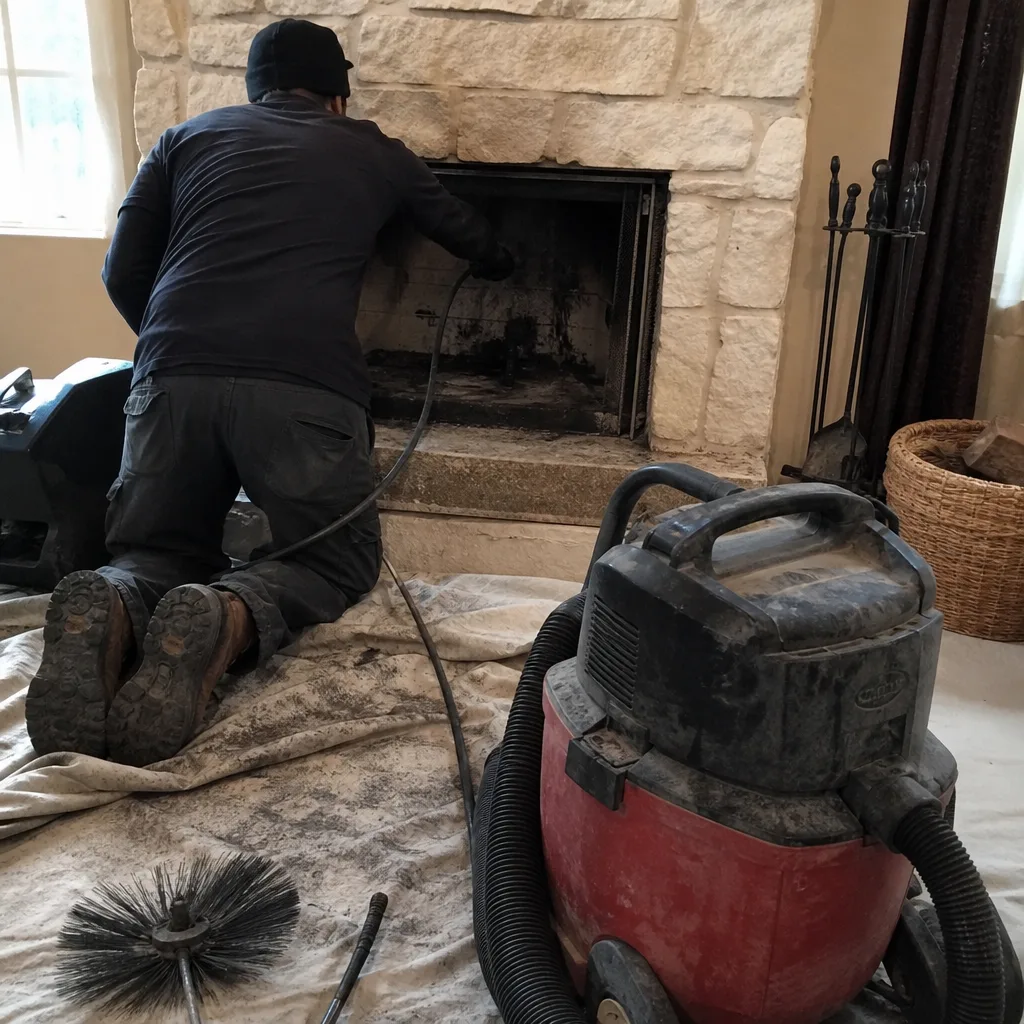 Before
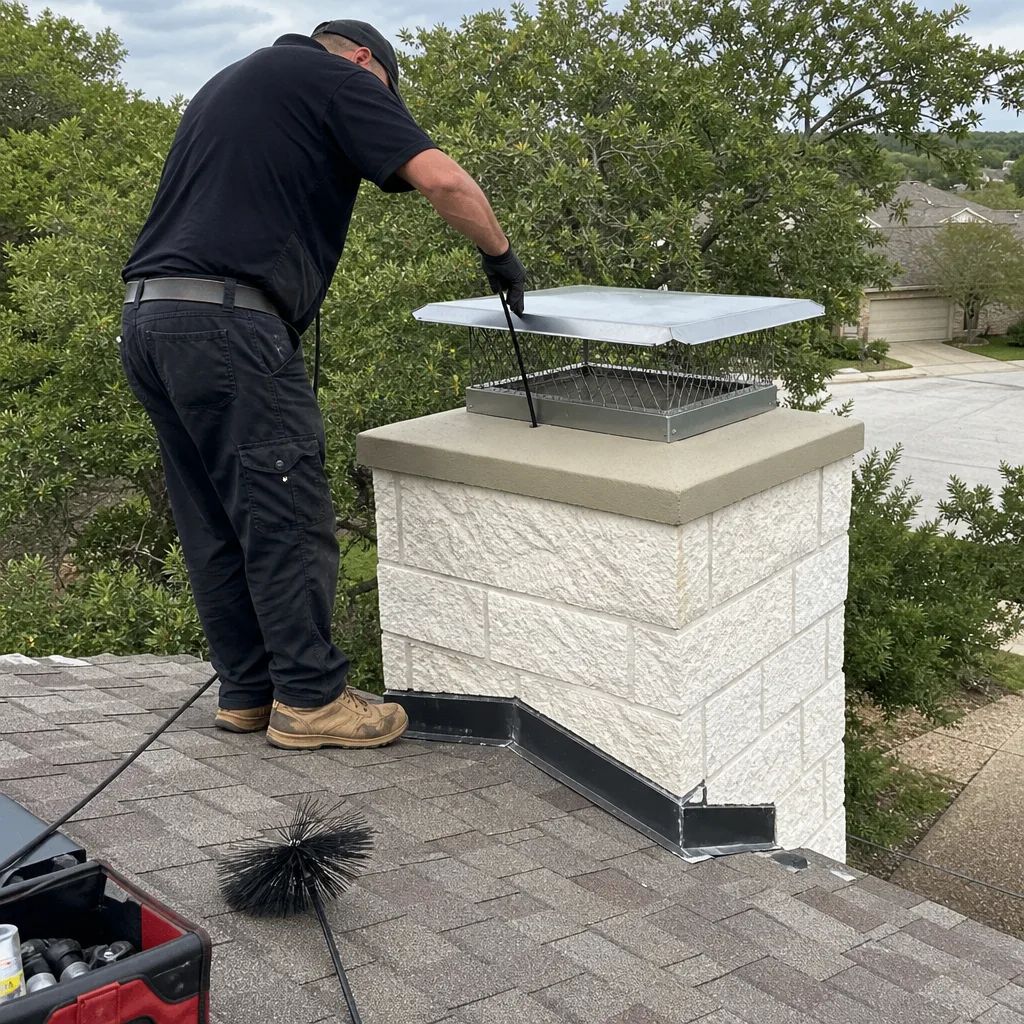 After
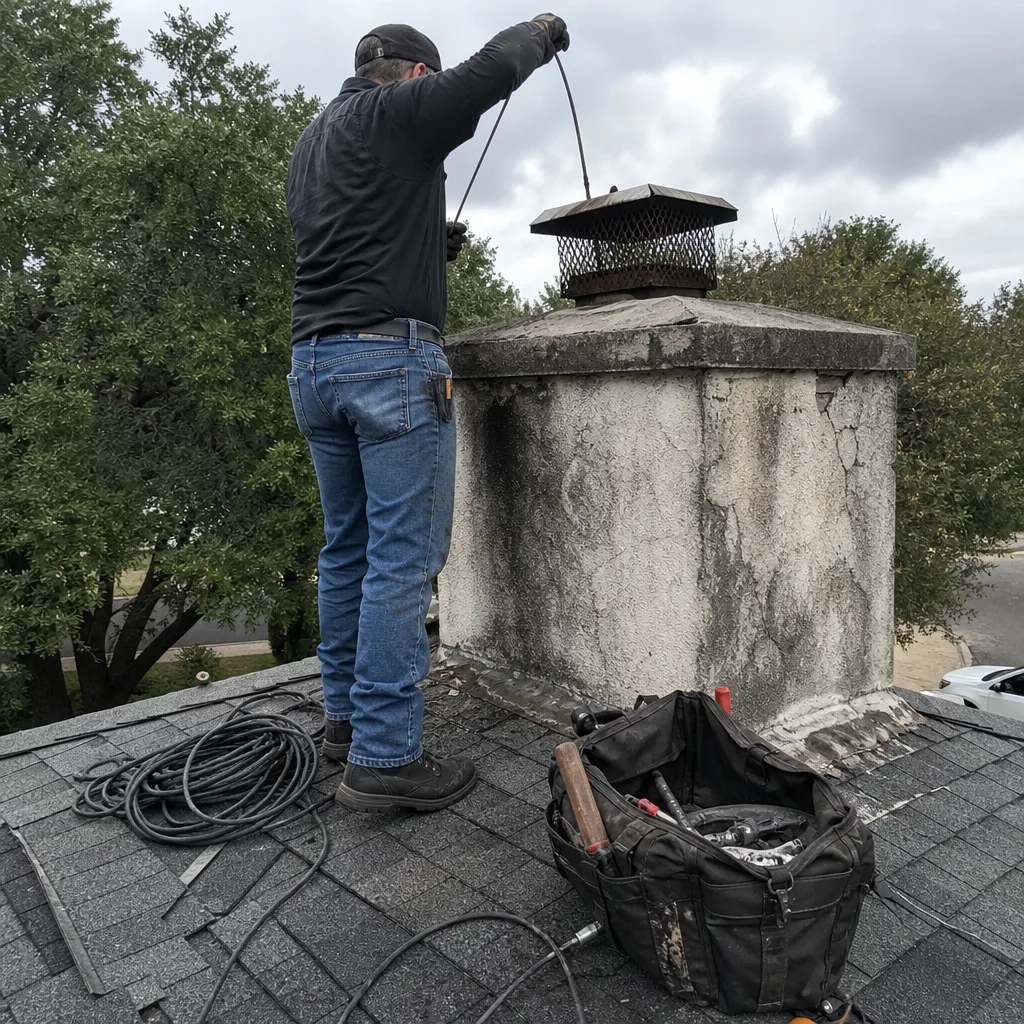 Before
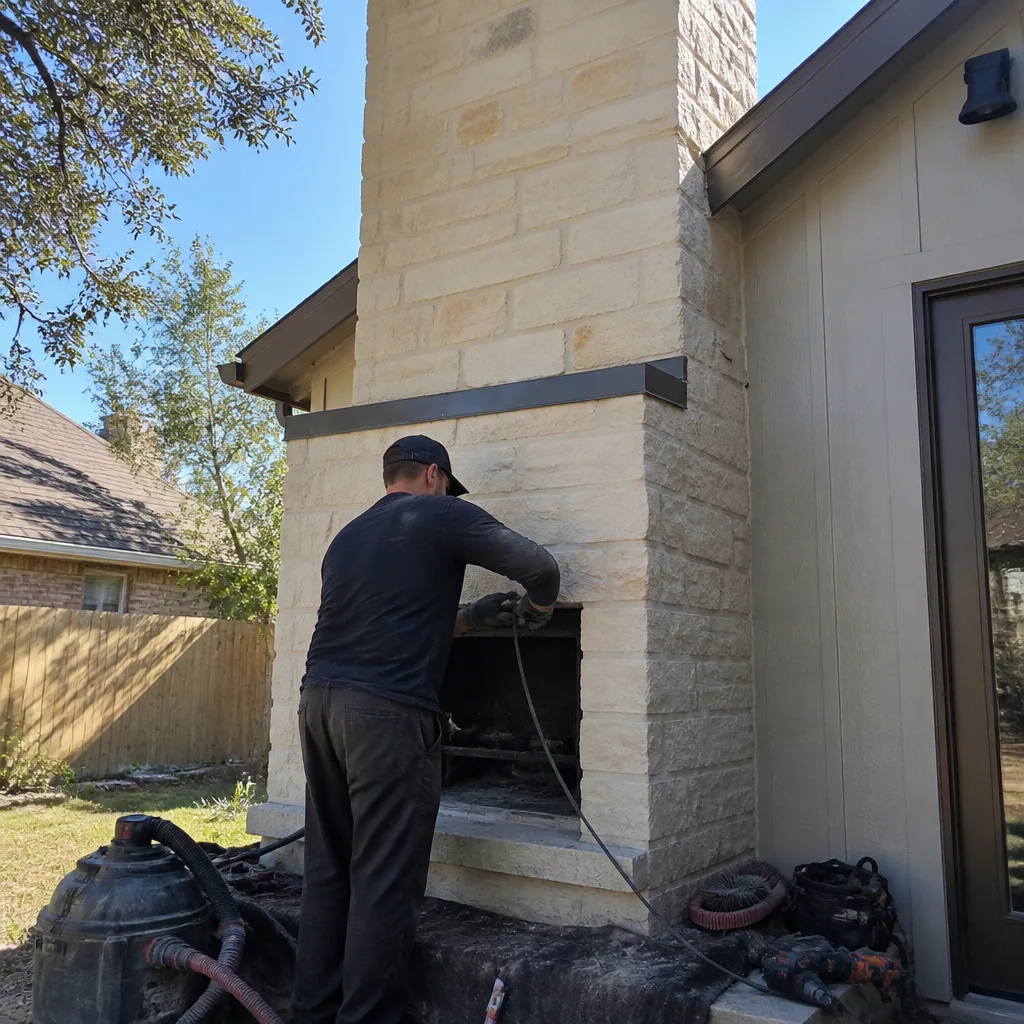 After
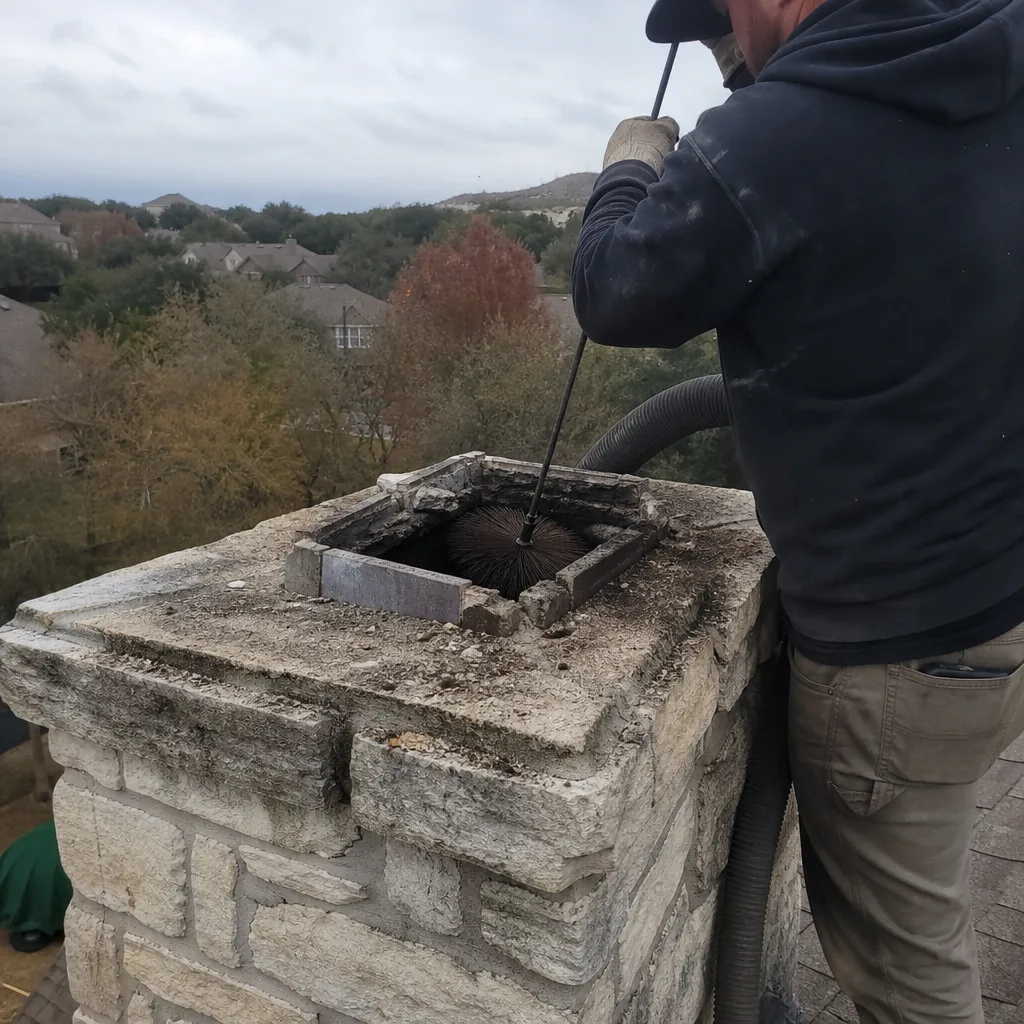 Before
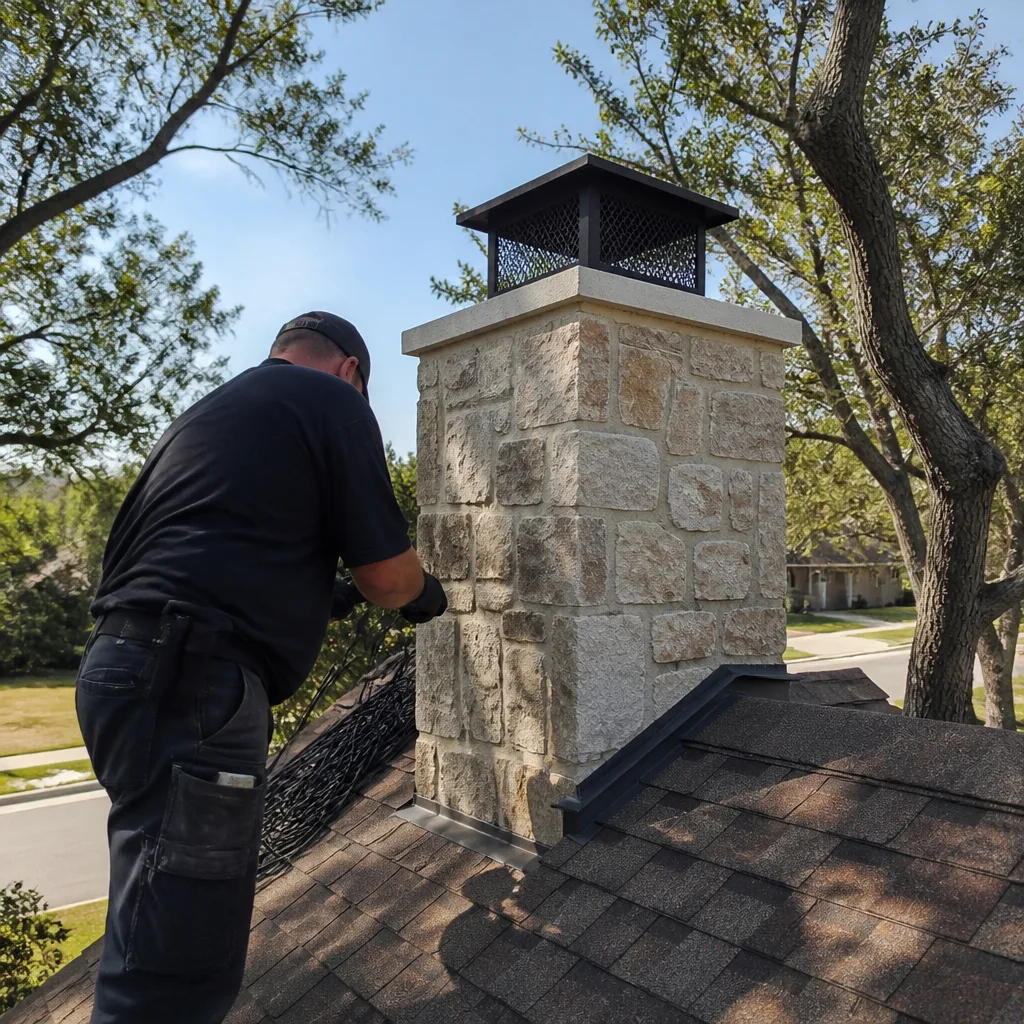 After